Single mother status of teenagers
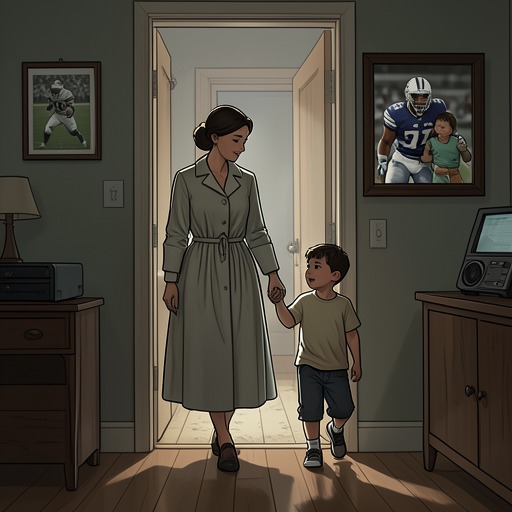
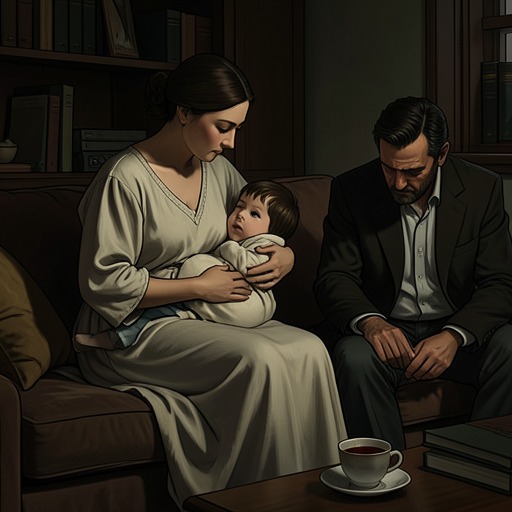
The Journey CollectionTeenage single motherhood shapes Penelope Stone’s adulthood long before Travis McCoy returns to Clarendon. Left to raise Max after learning she was pregnant only after Travis had gone, she builds a life around her son’s needs while carrying the hurt of his father’s absence. Her experience is not simply a period of hardship: it establishes her independence, informs her choices about Max’s well-being, and sets the conditions under which a family can later be reconstituted.
Becoming a Mother Alone
Penelope says she did not know she was pregnant when Travis left. Two months later, after realizing she was expecting, she struggled to decide what to do. Her parents were angry with Travis, and her mother even threatened him, but Penelope’s own fear was rooted in the way he had ended their relationship. The night before leaving, he had said they should see other people so they would not be tempted to cheat. Although she spent the night driving to Austin to tell him about the pregnancy, she found that he had already moved on from her. She had wanted to tell him, but the relationship’s rupture and his apparent new life made that attempt collapse.
Travis’s departure had already wounded Penelope; discovering that she was pregnant made the separation consequential for both her and the child. She says she had picked up the phone to call him every day for the next decade but could not bring herself to do it. She also says she received no call or email from him. Rather than use the pregnancy to bind him to her, she decided not to trap him with a child. Her choice was shaped by what she understood of his plans and by the fear that Max would be hurt if placed in a relationship with a father who did not choose to be present.
Max was born on April 15, at 3:13 in the morning, after nearly twenty hours of labor and another three hours of pushing. Penelope recalls that he arrived screaming. Travis later says he should have been there, but her account makes clear that he was not part of the birth or the immediate work of raising their son. Penelope was eighteen and pregnant, and although her parents helped when they could, she describes herself as alone. Her decision to put Max first arose from that reality: she felt she had already endured enough pain for both of them and did not want her son to suffer the same uncertainty.
Work, Care, and Support
The first months of motherhood were difficult. Max was colicky, and Penelope’s mother sometimes came over to hold him for an hour so Penelope could shower or sleep. When he outgrew the colic, daily life became somewhat easier, though not effortless. Her mother cared for Max while Penelope attended school and later went to work. Her parents also helped with bills, while Penelope watched her spending carefully.
Penelope eventually began writing and found work at the local newspaper, covering subjects from Lions Club dinners to sports. The job was modest, but the arrangement allowed her to work from home and be available when Max needed her. Her parents’ later move to Colorado changed the practical balance of that support, making the flexibility of her work more important. These details show how her independence was sustained not by isolation but by a network of family assistance, careful budgeting, and employment fitted around caregiving.
Russ McCoy also offered help several times. One summer, he took Max’s Cub Scout den on a hike at the ranch, and Max continued to talk about him afterward. This limited but meaningful connection complicates the idea that Travis’s absence left Max entirely without access to his paternal family. Penelope had maintained the child’s connection with Travis’s father even while keeping her own son’s stability at the center of her decisions.
Protecting Max and Making Room for Travis
When Travis returns, Penelope’s caution reflects the years in which she alone made decisions for Max. She explains that she did not want to put her son in a position where he could be hurt by an absent father. Her concern is not that Travis has no biological claim—she acknowledges that he is Max’s father—but that parenthood carries responsibilities beyond biology. She had raised Max without contact from Travis and had learned to make choices without relying on his participation.
Max has already pieced together the truth by the time the adults discuss it. He notices Penelope becoming emotional when the Miami Sharks play, finds photographs of her and Travis in a box under her bed, and recognizes that the timing makes him Travis’s son. When he asks when Travis planned to tell him, he says he is not angry: Travis is there now, and they can be a real family. His acceptance does not erase the years of absence, but it gives Penelope’s guarded family life a new possibility. Travis responds by promising to be present, while Penelope’s earlier experience explains why such a promise must be demonstrated rather than simply spoken.
Max’s later words reveal the cost of Penelope’s long effort to shield him. Before Travis came back, Max says, his mother was lonely, rarely smiled or laughed, and sometimes cried when she thought he could not hear. He makes protecting her part of his own role as Travis prepares to marry her. The exchange gives the single-parent household an emotional perspective beyond its practical burdens: Penelope’s attempts to hide her sadness did not keep Max from noticing it, and his concern becomes one of the tests Travis must meet as he joins their family.
From a Single-Parent Household to a Family
As Travis and Penelope rebuild their relationship, their family changes through both emotional commitments and public acts. Travis proposes after finding Penelope and Max, and asks that Max’s last name legally become McCoy so that the three of them can be a family. Penelope agrees. At their wedding, Max stands between them as they light an eternity candle together. These gestures do not make the years of single motherhood disappear; they mark a transition in which the family Penelope sustained on her own becomes a family Travis joins through commitment and shared recognition.
The transition is also visible in Max’s growing trust. After the Broncos win the state championship, he climbs onto the bench, embraces Travis, and calls him Dad. Travis understands the name as something Max has chosen after learning to trust that his father will not leave or hurt his mother. The moment reverses the long absence at the heart of Penelope’s experience: the child she raised without Travis now welcomes him into the family, while the responsibility for keeping that family secure rests on more than Penelope alone.
Later, Penelope’s water breaks, and Travis scrambles to her side as they prepare to call Dr. Chan and go to the hospital. The scene places her on the threshold of another birth, this time with her husband present and responding immediately. The evidence does not establish the baby’s birth here, but the contrast with Max’s arrival is already clear. Teenage motherhood began for Penelope amid separation and self-reliance; the later pregnancy unfolds within a household Travis has chosen to share. Her experience remains the foundation of the family’s history, even as its responsibilities and membership change.