Tamara Roberts
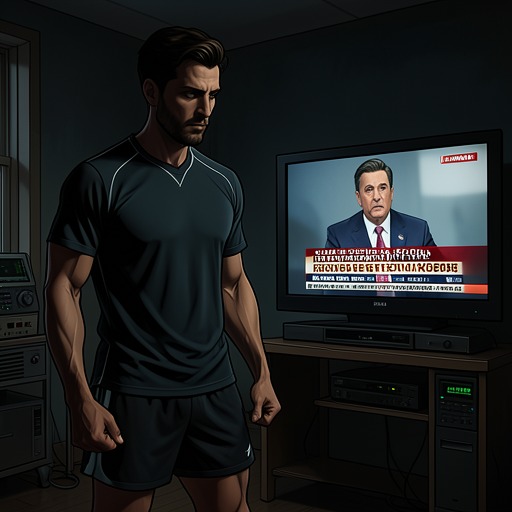
The Journey CollectionTamara Roberts functions as the most persistent public interpreter of Travis McCoy’s career crisis. A young, blond, conspicuously upbeat reporter, she appears through television, newspapers, and an in-person interview, repeatedly framing his shoulder injury and departure from the Miami Sharks as a story of failure, uncertainty, or concealed motive. Against her insistence on a dramatic explanation, Travis presents retirement as a deliberate return to his family in Texas.## Identity and Public FunctionTamara is identified by her recognizable voice and manner before she becomes a physical presence in the narrative. When Travis watches local news from his small apartment, she reports that the Miami Sharks’ star quarterback is not expected to return for the rest of the season. She emphasizes that the injury is the latest in a series and invites viewers to doubt whether he will recover in time for the following year. The report turns a medical and professional setback into a question about the end of a six-year career, leaving Travis to absorb the public uncertainty while already struggling with his own doubts.
Her importance lies less in personal biography than in her role as a media apparatus surrounding a famous athlete. Travis recognizes her voice immediately and experiences it as aggravating because it repeats the fears he is trying to suppress. The television image of his own face, paired with her report, makes his private crisis impossible to keep private: his body, employment, and future have become material for public consumption.## Reporting Travis’s DepartureWhen reports begin circulating that Travis is leaving the Sharks after rejecting an offer to become the team’s special-teams coach, Tamara again supplies the dominant public version of events. She states that the departure has not yet been confirmed, then links it to Malcolm Rollins’s successful performance against Denver and presents Malcolm as the player ready to lead the team. Her phrasing makes Travis’s absence resemble displacement: a younger quarterback is rising while the injured veteran disappears from the field.
The report nevertheless preserves Travis’s emotional attachment to the game. Watching it with Russ McCoy, Travis admits that he had wanted the opportunity to take his team to the championships and remembers the intoxicating feeling of being regarded as the best. Tamara’s coverage therefore activates a contrast the narrative keeps returning to. Publicly, the story can be organized around replacement, competition, and lost status; privately, Travis is deciding whether a life built around football can still contain the people who love and need him.## The Parking-Garage InterviewTamara’s most direct intervention occurs after Travis has met with Stewart Thornton and formally declined the coaching offer. While Travis is moving boxes through his apartment’s parking garage, Tamara approaches in high heels with a microphone, accompanied by a cameraman. The setting briefly removes the protective distance of television, but it does not soften her method. She asks for his time while treating his refusal as effectively unavailable, then tells him that he thrives on attention and challenges him to deny it.
Her questions pursue a specific theory of the retirement. She identifies the shoulder injury that placed Travis on the reserved list and asks whether his refusal to replace Jerry Morton as special-teams head coach is connected to Stewart’s decision not to clear him to play. Travis rejects that explanation directly, saying that his retirement has nothing to do with Stewart or the Sharks and that, after six seasons with an organization he considers remarkable, he needs to spend time with his family.
Tamara responds with skepticism rather than acceptance. She asks whether he is considering offers from Seattle, Los Angeles, or Denver, treating retirement as a cover for another professional move. Travis denies entertaining those possibilities and says he is leaving football altogether. When she asks about Malcolm Rollins becoming the Sharks’ starting quarterback, however, he offers a generous public endorsement: Malcolm is young, passionate, suited to the job, and supported by a team capable of going all the way. Tamara records the answer, but the exchange makes clear that Travis will not allow her competitive framing to turn his departure into bitterness toward Malcolm.
After dismissing the cameraman, Tamara presses for a private confession. She argues that the sequence of shoulder injury followed by retirement must conceal something more. Travis maintains that he has already explained the situation and returns to packing. His final position is not that football has become meaningless, but that a time comes when a person must go home, and his time has arrived. The confrontation establishes the central conflict between Tamara’s demand for a hidden agenda and Travis’s insistence that family is an adequate, truthful explanation.## Recurring Media PresenceTamara continues to shape the public afterlife of the decision. At an airport bookstore, Travis notices his picture on the front page of the daily newspaper and sees her name on the byline. He expects the article to repeat the same information reported by every other paper and news channel, and that expectation proves correct. He buys the paper, drops it in Russ’s lap, and observes that the media are determined to make more of his departure than there is.
Her reporting also reaches Travis indirectly through the reactions of strangers. At the airport, a fan recognizes him, recalls his victory over Chicago, and expresses disbelief that he is quitting. The fan suggests that Travis could not get over the last hit, echoing the injury-centered explanation circulating around him. Although the fan does not quote Tamara directly, the encounter shows how her broader media narrative becomes a public script: strangers interpret Travis’s decision through the most visible account of his damaged shoulder and fading athletic future.
The same pattern appears earlier, when Travis’s phone rings and the caller identification shows Stewart Thornton. Travis assumes the owner’s call can mean only a trade or release because he has been dreading the decision for more than a month. Stewart instead offers him a coaching position, demonstrating how little the media’s simplified alternatives capture the actual range of possibilities. Tamara’s reports repeatedly compress a complicated transition into a marketable question—whether Travis is injured, replaced, secretly negotiating, or unable to recover.## Narrative SignificanceTamara is a relatively narrow but effective character: she is defined by pursuit, skepticism, and the conversion of private uncertainty into a public story. Her presence gives the novel a visible counterforce to Travis’s attempt to reorder his life around Penelope Stone and Max. The Sharks’ owner can offer him a professional continuation, teammates can ask whether he will regret leaving, and fans can insist that the game still defines him; Tamara gathers these pressures into a media voice that refuses to let retirement remain an inward decision.
Yet her reporting also clarifies Travis’s development. Each encounter requires him to state what he is leaving and why. He moves from reacting angrily to news coverage of his uncertain recovery to answering questions with composure, praising Malcolm Rollins, denying offers from other teams, and naming his family as the center of his future. In that sense, Tamara does not change her method, but her pressure helps make Travis’s new identity legible. The former quarterback is no longer defined solely by the stadium, the injury, or the possibility of another contract; he becomes a man who chooses home over continued professional visibility.
Her final narrative function is to dramatize the limits of celebrity knowledge. Tamara can report the injury, the reserved-list status, the rejected coaching offer, and the succession of Malcolm Rollins, but she cannot authorize Travis’s private reason for leaving. The story gives that authority to Travis’s repeated conduct: packing his apartment, enduring press attention, returning to Texas, and affirming that the people waiting there need him. Tamara’s public version remains part of the record, but it is not the final meaning of his decision.