The spring dance
The Journey CollectionThe spring dance is the remembered beginning of Travis McCoy and Penelope Stone’s relationship. As teenagers, Travis asked Penelope to accompany him, and her acceptance turned an uncertain invitation into the first public movement of a bond that would shape both their lives. Years later, the dance remains more than a youthful social occasion: it is the place where their affection first became an acknowledged relationship and where Travis recognizes that his love for Penelope existed long before he understood its importance.
The First Invitation
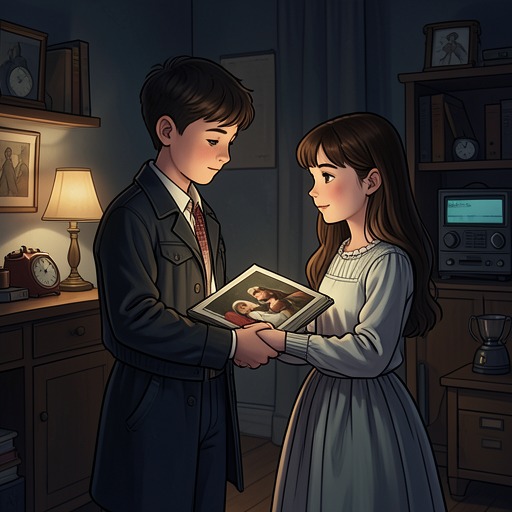
When Travis and Penelope revisit the memory, Travis recalls that they were freshmen when he gathered the courage to ask the most beautiful girl he had ever seen to the spring dance. He presents his own action as almost inexplicable, but Penelope supplies the history beneath it. She had carried a crush on him since third grade, while Travis was the popular boy and she was the shy, quiet girl who liked to read. Her feelings remained unspoken because she feared that confessing them might destroy the friendship he had chosen to offer her.
The invitation therefore resolves a private imbalance that had existed for years. Penelope had loved Travis silently, while Travis’s decision to ask her out gave that hidden attachment a form she could accept without having to risk an explicit declaration. The spring dance marks the moment when friendship, adolescent attraction, and public courtship converge. It is also the first occasion on which Travis actively chooses Penelope in front of others rather than leaving their connection undefined.
A Memory of Mutual Choice
Penelope remembers that Travis brought her to the dance and that, when other girls tried to cut in, he refused because she was his girl. His recollection confirms the possessive but affectionate language of that teenage choice: even before he could admit the depth of his feelings, he treated Penelope as the person who belonged beside him. The dance thus becomes a scene of selection and recognition, with Travis’s refusal of interruption making their bond visible through action rather than confession.
The memory also reveals that Penelope’s understanding of the relationship was more emotionally advanced than Travis’s. She already regarded him as her world, whereas he only later recognized that she had always possessed his heart and soul. The event consequently carries a double meaning: it is the beginning of their romance as Penelope experienced it, and the delayed beginning of Travis’s self-knowledge about what she meant to him.
The Lost Future and Return
Travis’s departure later crushed Penelope, and he regards leaving her as the hardest moment of his life until the return home proves even more difficult. Against that history, the spring dance represents the future he failed to protect. The remembered evening contains the version of their relationship before abandonment, separation, and the consequences of Travis’s absence from Penelope’s life and from Max’s childhood.
When Travis and Penelope recover the memory as adults, it helps move their relationship from regret toward renewed commitment. Penelope tells him that she never stopped loving him, in part because she saw pieces of him in Max every day. Travis answers that, if he could return to the past, he would not have let her go and would have fought harder for her. The spring dance therefore functions as a counterpoint to the later separation: the first time Travis chose Penelope becomes the standard against which his failure to remain with her is measured.
From Dance to Marriage
The emotional geography of the spring dance is carried forward into Travis’s proposal. He tells Penelope that he has loved her since he was fourteen, perhaps even earlier, and identifies their adolescent encounter as the point at which he admitted that he needed her to be his girl. Kneeling before her with a small black velvet box, he asks her to be his forever and marry him; she answers yes. The adult proposal transforms the old dance’s temporary promise into a permanent one.
That transformation is completed when Travis asks to change Max’s last name to McCoy before the marriage. He connects Penelope’s future membership in the McCoy family with Max’s legal belonging, insisting that the three of them should share the family name. At the wedding, Max stands between Travis and Penelope as they light the eternity candle together, making the family they once began as teenagers visible within a formal ceremony. The spring dance’s private adolescent choice thus culminates in a publicly witnessed family union.
Narrative Significance
The spring dance is a recurring origin point in the book’s romance structure: meeting, mutual but unevenly understood attraction, separation, return, and renewed commitment. Its importance comes from the way later scenes reinterpret it. At first it is a remembered high-school date; after Travis returns, it becomes evidence that Penelope’s love was enduring and that his own attachment preceded his professional identity and adult decisions.
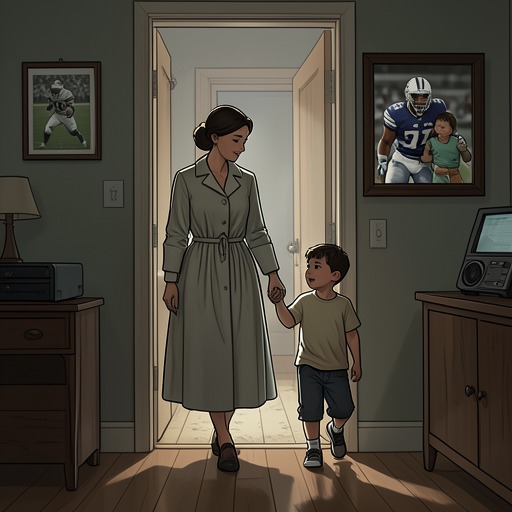
The event also establishes the story’s movement from youthful choice to familial continuity. Travis later takes Max to the football stadium where he first watched the Broncos win a title with his own father, and Max identifies the visit as a family tradition because his first time there is with his father. In the same pattern, the spring dance links the family’s present to its emotional origin. It is the remembered threshold at which Travis and Penelope first became a pair, and its meaning reaches completion only when that pair becomes a family with Max included.