The ten-year separation
The Journey CollectionThe ten-year separation is the central interval of absence in Travis McCoy’s life. It begins when he leaves Penelope Stone and continues through the years in which Max grows up without knowing Travis as his father. By the time Travis returns, the separation has become more than a gap in the calendar: it is the lost childhood he cannot recover, the love he believes he destroyed, and the family role he must learn to inhabit. The story’s later reunions and ceremonies gain their force from this history of missed time.
Definition and Origin
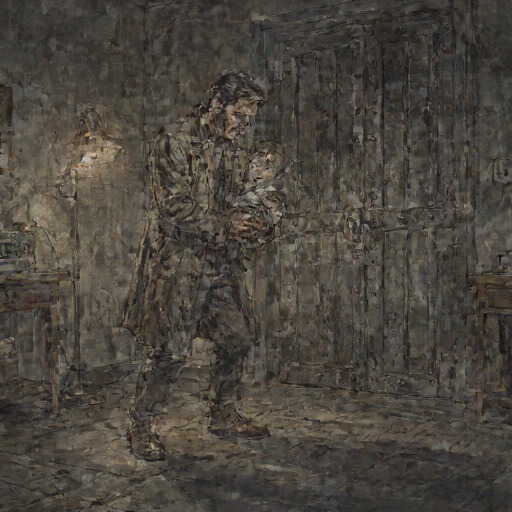
The separation originates in Travis’s decision to leave Clarendon and pursue professional football. His departure breaks his relationship with Penelope, the woman who had believed in him and who, in his own understanding, owned his heart and soul. The narration presents leaving her as the hardest moment of his life until the return journey forces him to confront what that choice cost. His ambition brings him the success he once wanted, including the experience of standing on the fifty-yard line before enormous crowds, but it also keeps him away from the family life that was forming without him.
The interval is especially painful because Travis does not merely miss Penelope; he misses ten years of Max’s life. When he finally learns that Max is his son, the fact reorganizes his understanding of the past. The professional dream that once seemed worth the sacrifice is no longer sufficient compensation for the birthdays, ordinary conversations, private jokes, and accumulated trust that cannot be recreated. His return therefore begins as an encounter with consequences rather than a simple homecoming.
The Lost Years and Their Emotional Cost
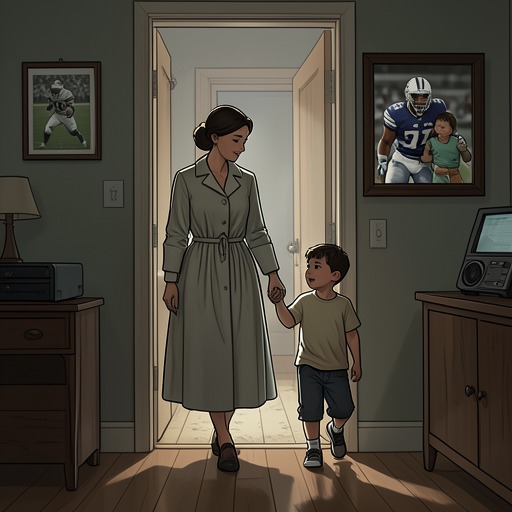
The separation leaves Penelope to raise Max alone and to protect him from a truth she fears might damage Travis’s career or alter the future he had worked toward. When Max discovers the relationship through his mother’s emotional reactions to the Miami Sharks and photographs kept in a box under her bed, he does not respond with anger. Instead, he imagines that Travis’s arrival might allow them to become a real family. His acceptance exposes the contrast between the years Travis experienced as a professional ascent and the years Max and Penelope experienced as an incomplete household.
Travis’s guilt is intensified by his awareness that Max already has established bonds with other people. He envies everyone who possesses a part of his son, including Penelope’s father and Russ McCoy, whose friendship with Max has developed naturally. Travis wants to be Max’s dad rather than merely his biological father, but the wording reveals the problem created by the separation: biological connection is immediate, while fatherhood has been built through ten years of daily presence by others. Penelope reassures him that Max’s attention and affection are genuine, yet Travis continues to measure himself against the childhood he missed.
The same history complicates Travis’s relationship with Russ. After Loralie McCoy’s death, Travis and Russ responded to grief by lashing out at each other instead of allowing the loss to bring them closer. Their later work toward reconciliation becomes another attempt to repair time damaged by silence and anger. When Travis reads Russ’s loving note, he is able to accept his father’s love at last. The ten-year separation thus belongs to a wider pattern of interrupted family relationships, in which absence, grief, and pride keep affection from being spoken until much later.
Return, Recognition, and Re-entry
Travis’s return places him in familiar spaces that have become strange through absence. At the high-school gymnasium, he hears the fight song and remembers the Friday afternoons when he sat before the town’s watchful gaze, both hating and loving the experience. The homecoming rally turns that private memory into a public re-entry. When he leads the football team onto the field, the roar of the crowd does not resemble the acclaim of professional stadiums; it feels like being held by the community he left. His speech tells the players that their work has earned the crowd’s respect, while his own presence suggests that belonging must be earned again through participation.
The return also changes the meaning of football. Once, football represented the future Travis chose over Penelope and the child he did not know he had. Now it becomes a means of serving Max, Clarendon, and the young players who look to him. The contrast between professional success and domestic absence remains visible, but Travis begins to understand that the field can lead him home rather than draw him away from home.
Repair Through Family Commitments
The story does not erase the separation; it answers it with deliberate commitments. Five months after finding Penelope and Max, Travis decides that his future rests with them. He proposes to Penelope with a small black velvet box and explains that he has loved her since he was fourteen. Before proposing, he consults Max, recognizing that Max has been the main man in Penelope’s life for ten years and that his feelings must matter. This gesture reverses the old pattern in which Travis made a life-changing choice by leaving; now he makes a family decision through consultation and inclusion.
Travis also asks Penelope to change Max’s legal surname to McCoy. He understands why she originally gave Max her surname, but he wants the name to express the family they are becoming. The request is not presented as a way to claim ownership of the years he missed. Instead, it is a symbolic and legal effort to join the present family to Travis’s identity while acknowledging that Penelope carried the family alone during the separation.
At the wedding, Max stands between Travis and Penelope as they light the eternity candle together. The ceremony makes the repaired family visible: the child born during the years of absence is not placed outside the marriage but at its center. The shared ritual converts private reconciliation into a witnessed family identity, while the vows to remain together in sickness, health, hardship, and happiness answer the instability that once defined Travis’s relationship with Penelope.
Aftermath and Narrative Significance
The separation continues to shape Travis even after reunion. When Penelope’s water breaks and the baby is coming, his immediate response is physical and protective: he scrambles toward his wife, holds her waist, places a hand on her belly, and asks whether she is all right. The scene marks a decisive reversal of his earlier absence. He is present for the next generation at the moment when a new life enters the family, occupying the role that he could not occupy during Max’s birth and childhood.
The period also prepares the family for further beginnings. Russ eventually tells Travis that he plans to propose to Nadine, showing that grief does not have to become permanent isolation. Travis encourages him to move forward rather than remain trapped in mourning for Loralie. The family’s movement from loss to remarriage, from reunion to marriage, and from marriage to the birth of another child gives the ten-year separation a clear structural function: it is the long darkness against which renewed family bonds become legible.
Ultimately, the ten-year separation is both wound and measure. It cannot be undone, and Travis cannot recover Max’s lost childhood or remove the pain caused by leaving Penelope. What he can do is remain, listen, accept love, and participate in the rituals that establish him as husband and father. The story’s idea of a second chance therefore depends not on pretending that the years never happened, but on transforming their absence into responsibility. Travis returns too late to reclaim the past, yet early enough to build a future with Penelope and Max.