Travis McCoy returns home to Penelope and Max
The Journey CollectionTravis McCoy returns home to Penelope and Max after sixteen-and-a-half days of travel, and the event is the decisive emotional homecoming of his story. After leaving behind the woman who owned his heart and soul and missing ten years of Max’s life while pursuing professional football, he reaches Clarendon not merely as a traveler returning to a familiar town but as a father and partner reclaiming the family he had once abandoned. The reunion converts regret into presence: Penelope is back in his arms, Max is openly his son, and the house becomes the place where his future can begin.
Causes and Background
Travis’s return is shaped by the cost of his earlier departure. When he left, he crushed Penelope, the one woman who had believed he could accomplish whatever he set his mind to. Although professional football brought him the spectacle of standing on the fifty-yard line before enormous crowds, the achievement was inseparable from the life he had forfeited. His return therefore carries two opposing memories: the pride attached to the career he chased and the pain attached to leaving Penelope and remaining absent from Max’s childhood.
The journey itself makes the return feel earned rather than instantaneous. Travis and Russ McCoy travel together, and at last Travis boards the plane home. The flight lands just after noon at Rick Husband Amarillo International Airport, where Travis releases a relieved sigh and calculates that he is little more than an hour from Clarendon and Penelope. The concrete duration—sixteen-and-a-half days to get back to Texas—turns homecoming into a measure of endurance, while his impatience at baggage claim shows how little the remaining wait matters to him compared with reaching his family.
The Return to Clarendon
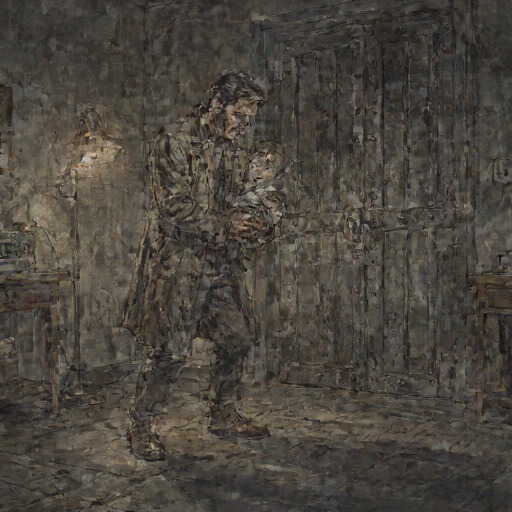
Russ drives them from the airport toward Clarendon. An hour later, he pulls up outside Penelope’s house, and Travis has barely opened the passenger door before Penelope rushes out with Max close behind her. Travis meets Penelope halfway, lifts her into his arms, and buries his face against her neck. Her relief is expressed in the fear that he might never make it back; his reply acknowledges that he had shared the same fear. Their kiss is not a formal reconciliation but an immediate bodily confirmation that the separation has ended.
The scene then shifts from romantic reunion to restored fatherhood. Travis turns toward Max, drops to his knees, and opens his arms. Max whimpers before launching himself into his embrace. Travis cries as he holds his son and stands with him, while Penelope watches with tears streaming down her face. Max had refused to go to school because he was afraid he would miss Travis, and Travis admits that he would have hated to miss this first moment with him. The child’s decision and the father’s response make the reunion reciprocal: Max is not simply receiving a returning parent; he is actively waiting for and choosing him.
Russ’s presence gives the arrival a further familial dimension. After placing Travis’s midnight-blue luggage on the porch, Russ observes that what Travis is holding is more important than the baggage. Travis kisses Max’s head and Penelope’s, agreeing that the people in his arms matter more than everything he has carried home. He manages to enter the house without letting go of either of them, releases a happy breath, and recognizes that he is home at last. The threshold crossing completes the movement from airport and highway into domestic belonging.
Homecoming as a New Family Identity
The return quickly becomes more than a private reunion. At the high school gymnasium, Travis hears the band’s fight song and the roar of students, fans, and parents gathered for the football team’s pep rally. The familiar town has changed little, and the football culture that once defined his public identity remains visible everywhere. Yet the memory of having both hated and loved those Friday afternoons now meets a different understanding of what home means. The old stadium world is no longer the only place where Travis belongs.
When he leads the team through the inflatable tunnel and onto the field, the crowd’s response gives the homecoming a communal form. Travis has stood in larger stadiums before thousands of spectators, but none of those moments compares with being home. He tells the players that the crowd’s cheers have been earned through hard work and that their responsibility is to honor the community’s faith in them. His words separate victory from worth: the boys are already valued because they have become men with the courage of an entire community behind them. The return thus joins private restoration to public service, as Travis redirects his football experience toward Clarendon’s young players.
Consequences and Aftermath
The homecoming establishes the family structure Travis will continue building. Max already understands that Travis is his father and believes the three of them can become a real family. Travis gives Max his word that they can. Months later, the promise takes formal shape when Travis holds out a small black velvet box and prepares to propose to Penelope. He understands that he has found not only her and their son but also where his future rests, and he is ready to give up the professional football life he once treated as his dream for the life represented by Penelope and Max.
His commitment also produces legal and symbolic consequences for Max. Before the wedding, Travis asks to change Max’s last name legally to McCoy, explaining that if Penelope is going to be a McCoy, Max should be one too. The proposed name change expresses his desire for the family’s emotional reality to receive public and legal recognition. It is not a replacement for the reunion at the house, but its institutional continuation: the father who once missed ten years now seeks a permanent name shared by all three.
The family’s next major ritual is the wedding. During the ceremony, Travis and Penelope bring Max between them to light the eternity candle together. The act makes the child an active participant rather than a spectator and presents the marriage as the joining of three lives. Their vows and exchanged rings complete the romantic promise begun at the house, while the shared candle gives the earlier embrace a lasting familial form.
The return also opens the family to further generations. At a later gathering, Nadine reveals an ultrasound photo, and Russ realizes that Penelope is pregnant. The shock and tears surrounding the silver picture frame place the coming child within the same chain of family recognition that began with Travis embracing Max. When Penelope’s water breaks, Travis reacts with immediate alarm and care, rushing to his wife and asking whether she is all right before they call Edward Chan and head to the hospital. The homecoming therefore ends one separation while initiating a new life stage: Travis’s return makes possible a family that can expand rather than merely recover.
Narrative and Thematic Significance
Travis’s return is a reversal of the departure that wounded Penelope and left Max without a known father. The earlier journey away from Clarendon represented ambition at the expense of intimacy; the journey back makes intimacy the standard by which ambition is judged. Football remains important, but its meaning changes. The town’s rally and the team’s entrance show Travis retaining his athletic identity, while his emotional response to Penelope and Max proves that success no longer depends on choosing the field over home.
The event also functions as the story’s clearest movement from separation to reintegration. Airports, planes, baggage, highways, and the house mark successive thresholds, but the decisive crossing occurs when Travis refuses to let go of Penelope and Max as he enters the home. The physical gesture condenses the plot’s central change: the absent man becomes a present father, the abandoned relationship becomes an active partnership, and the hoped-for family becomes a lived reality. In that sense, Travis McCoy returns home to Penelope and Max not simply to resume an old life, but to accept a new identity founded on love, responsibility, and belonging.