Travis and Penelope reunite
The Journey CollectionTravis and Penelope reunite when the love that survived their ten-year separation is finally spoken aloud and accepted. The reconciliation transforms Travis’s return to Clarendon from a painful homecoming into the beginning of a shared future: he and Penelope resume their relationship, Travis embraces Max as his son, and their renewed bond develops through public promises, legal family recognition, marriage, and the expectation of another child.
Separation and the Return Home
The reunion carries the weight of an earlier failure. When Travis left, he crushed the one woman who had cared for him and believed he could accomplish anything he pursued. Penelope still owned his heart and soul, but returning home proved even harder than leaving her. His drive through Clarendon brings the past into the present: the town looks almost unchanged, and the familiar football culture leads him toward the high school gymnasium, where he hears the fight song and remembers the Friday afternoons he had both hated and loved.
The homecoming rally places Travis inside the community he once left behind. The packed bleachers, cheering students, parents, maroon jerseys, silver and white decorations, and the band’s fight song establish the public setting against which his private reconciliation will be measured. Later, when Travis leads the team onto the field, the homecoming ritual becomes more than a football entrance. Standing at midfield, he recognizes that thousands of spectators in professional stadiums never gave him what this moment does: the feeling of being held by home. His return to Clarendon therefore prepares two reunions at once, one with the community and one with Penelope.
The Declaration of Love
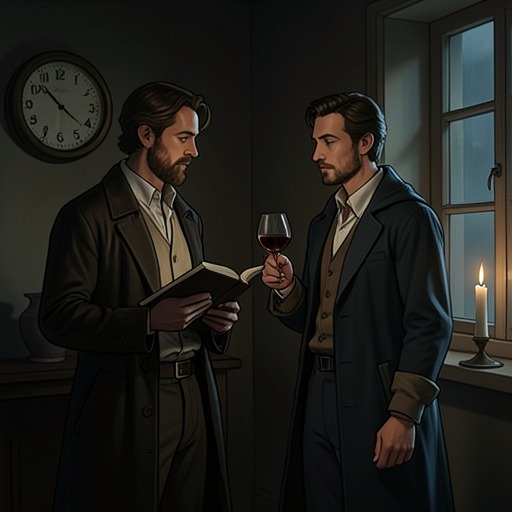
The decisive change occurs when Travis stops treating his feelings as an implication and makes them a direct commitment. During a playful exchange involving Max, Penelope identifies Max as unmistakably Travis’s son. Travis accepts the connection with a smirk, pulls Penelope into his lap, and then abandons the teasing surface of the moment. With Russ McCoy and Max looking on in shock, he tells Penelope that he loves her and explains that she was the first person he thought of every day they were apart and the only woman who appeared in his dreams at night.
Penelope initially fears that Travis is saying what he believes she wants to hear. His response is not a new romantic impulse but an acknowledgment of continuity: he insists that he never stopped loving her and that the prospect of being separated from her again terrifies him. He also recognizes his earlier error, admitting that he had been too foolish to understand how empty his life would be without her. The scene moves from performance to vulnerability, with Travis holding her wrist, touching her cheek, and asking her to look at him while Penelope’s doubt gives way to hope.
Penelope answers that she loves him too. Travis kisses her before she can say more, and the kiss becomes the physical confirmation of a relationship that has been emotionally present throughout the separation. The value at stake shifts from lost love to mutual possession and renewed possibility: Travis’s admission is met not with rejection, but with Penelope’s reciprocal confession and the restoration of intimacy.
From Reconciliation to Commitment
The reunion is not treated as a temporary emotional release. Travis converts it into a lasting promise when he kneels before Penelope and asks her to marry him. He explains that he has loved her since he was fourteen, perhaps even earlier, and recalls the moment when he understood that he needed her to be his girl. The proposal therefore links adult commitment to the relationship’s adolescent origin, presenting marriage as the fulfillment of a bond interrupted rather than replaced.
Penelope’s acceptance is represented through a small black velvet box, trembling fingers, tears, and a single affirmative answer. Travis’s immediate reaction is exuberant: he rises, grabs her, spins her around, and celebrates while she laughs through her tears. The scene makes the emotional reversal unmistakable. The woman he once left wounded now becomes the woman who freely agrees to a future with him.
Travis then extends the meaning of reconciliation beyond the couple. Before the wedding, he asks to change Max’s last name legally to McCoy. He understands why Penelope had given Max her surname, but he wants Max to share the McCoy name if Penelope is going to become a McCoy, because he sees that shared name as part of becoming a real family. Penelope accepts without resistance and agrees that they can contact the judge to learn what is required. The request turns Travis’s emotional return into parental responsibility: he is no longer merely reclaiming Penelope, but actively claiming a place in Max’s life.
Family Reunification and Public Recognition
The wedding completes the movement from private reconciliation to public family identity. During the ceremony, Travis and Penelope exchange vows to love each other in prosperity and poverty, sickness and health, good times and bad. Max is called to stand between them while the three of them light the eternity candle together. The action makes the child part of the marital union rather than an observer of it; the couple’s reconciliation is fulfilled as a family formation.
Reverend Brown’s pronouncement gives the relationship a recognized social status, and the couple’s first kiss as husband and wife confirms the transition. Travis addresses Penelope as Mrs. McCoy, while she answers him as Mr. McCoy. The names that once represented separate histories now signal a shared household and a publicly witnessed commitment.
The family’s future expands again when Nadine opens a box containing an ultrasound photograph. Penelope’s pregnancy introduces another consequence of the reunion, while Russ McCoy’s startled reaction and Max’s amusement give the announcement a comic, domestic energy. The ultrasound image turns the restored couple into an enlarging family and confirms that their reconciliation has effects beyond the two people who are reunited.
Narrative Significance and Ending
Travis and Penelope reunite through a romance structure built from separation, return, confession, reciprocal acknowledgment, proposal, and marriage. The sequence does not erase the pain of Travis’s departure; instead, it makes the past failure the measure of the new promise. Travis’s fear of losing Penelope again gives emotional force to his declaration, while Penelope’s admission that she never stopped loving him reveals that the separation damaged the relationship without extinguishing it.
Their reconciliation also joins several forms of belonging. Travis returns to the town, leads the Clarendon Broncos onto the field, and discovers that home is more meaningful than the professional stadiums where he once stood before thousands. He reconnects with Penelope through a confession made in the presence of Max and Russ McCoy, then turns romantic renewal into fatherhood through Max’s proposed name change. Finally, the wedding and the shared candle place all three within a publicly affirmed family, while the ultrasound photograph points toward continued family growth.
The reunion is consequently the central value shift of Travis’s story. He begins from guilt, emotional restraint, and the knowledge that leaving Penelope was the hardest moment of his life. He reaches a future in which love is spoken, returned, legally and ceremonially recognized, and embodied in a family that includes both Penelope and Max. Its decisive significance lies not simply in the lovers’ kiss, but in the conversion of regret into responsibility and of a homecoming into a permanent home.