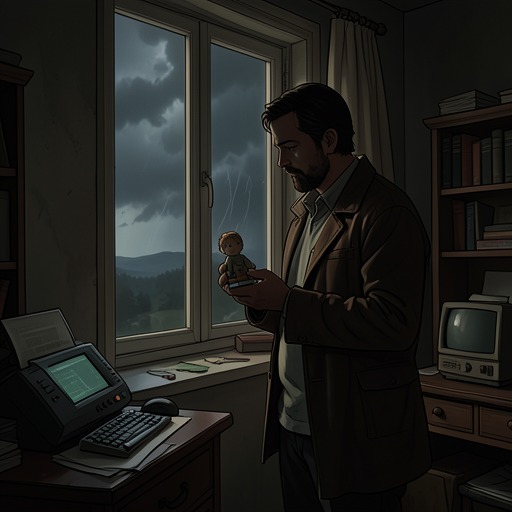
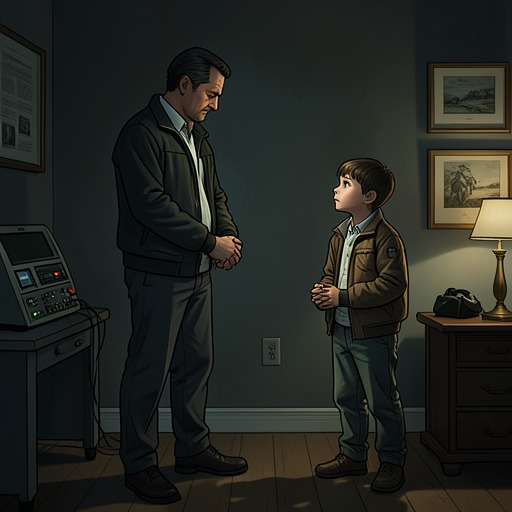
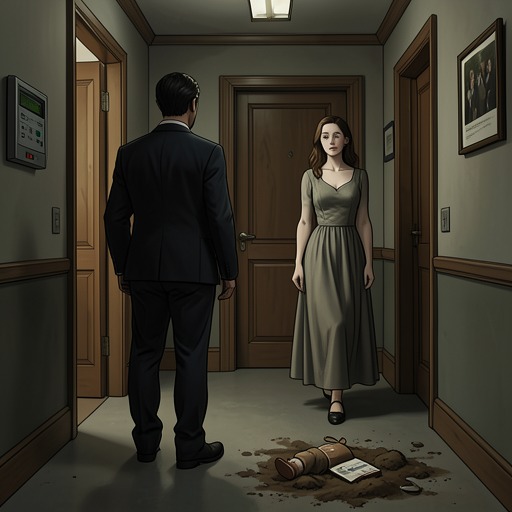
Travis confronts Russ about Max
The Journey CollectionTravis confronts Russ McCoy about Max at the moment when the discovery of possible fatherhood collides with the history of his own family. After leaving the school office, Travis sits on the front steps of Russ’s house because he cannot yet make himself go inside. He is caught between two explanations: the painful possibility that Penelope Stone betrayed him and the stronger conviction that the girl he left behind had loved him. The uncertainty does not lessen the shock. It makes the past unstable, turning Max from an unexpected child into the living question of what Travis abandoned when he left Clarendon a decade earlier.
Causes and Background
The confrontation is rooted in two forms of silence. Penelope did not know she was pregnant when Travis left; she discovered the pregnancy two months later and struggled with fear, parental anger, and the memory of Travis’s decision to separate rather than remain with her. She says that she tried to reach him and drove to Austin to tell him, but Travis had already made his plans clear. His absence therefore becomes part of the circumstances that allowed Max’s identity to remain unknown to him.
Russ’s silence is more direct but not entirely certain. When Travis asks whether he knew about Max, Russ admits that he did not know for sure whether the boy was Travis’s son because he never asked Penelope. The omission nevertheless feels like concealment to Travis. The resemblance between Max and Loralie McCoy, which Travis notices while leaning against Russ’s truck, gives his suspicion an emotional as well as a practical force. The question is no longer merely whether Russ possessed a fact; it is whether a father had a responsibility to tell his son about a child who might be his.
The dispute also draws strength from Travis’s unresolved grief over Loralie. She was diagnosed with Acute Lymphoblastic Leukemia when Travis was nine and died after two years of illness and repeated chemotherapy, when he was eleven. Travis remembers watching her struggle to rise from bed and hearing her pray for God to spare her. He believes Russ abandoned her by retreating into his workshop instead of caring for his dying wife, and he has never forgiven him. The possible concealment of Max therefore enters an already damaged father–son relationship: Travis judges Russ’s present silence through the memory of a father who, in Travis’s eyes, was absent during the family’s most desperate need.
Course of the Confrontation
When Russ’s truck pulls up beside Bertha, Travis rises immediately and demands to know whether Russ already knew about Max. Russ initially challenges Travis’s attitude, but the exchange quickly becomes explicit. Travis accuses him of knowing and asks why he was never told. Russ answers by pointing to Travis’s own ten-year absence and his infrequent calls, turning the confrontation from a simple accusation into a contest over who forfeited the right to demand information.
Travis rejects that defense. He insists that Russ should have told him, while Russ maintains that uncertainty prevented him from doing so. The factual disagreement is inseparable from their emotional one: Russ sees an unconfirmed possibility, whereas Travis sees a life-changing truth that should have been placed before him regardless of the difficulty. The conversation shifts the value at stake from knowledge to accountability. Travis is not merely trying to establish Max’s paternity; he is demanding an explanation for why his father did not act as a father when the consequences could have altered several lives.
The physical arrangement intensifies the scene’s pressure. Travis first confronts Russ beside the truck, then pushes away from it when the argument widens. Russ stands with his arms crossed and later flinches when Travis invokes Loralie, while Travis uses the space between them to press forward rather than retreat. Their bodies register what their arguments conceal: Russ’s defensive posture cannot contain the old accusation, and Travis’s anger is not limited to Max. It carries the force of a child who still believes that both his mother and his younger self were left without the protection they needed.
The Older Wound Resurfaces
Travis tells Russ that he was absent even when Travis played football at school, arguing that Russ did not come to watch him. Russ answers that work, bills, and the need to keep the place running prevented his physical presence, though he claims to have been there in spirit. Travis refuses the distinction. For him, parental presence cannot be replaced by intention, labor, or an unseen form of support.
The argument reaches its sharpest point when Travis compares Russ’s claimed spiritual presence with his failure to be present for Loralie. He accuses Russ of leaving his mother when she needed him and leaving Travis when he needed him, identifying what he sees as a repeated pattern rather than two isolated failures. Max’s possible paternity thus becomes the immediate occasion for a broader indictment. Travis is asking Russ to answer not only for withheld information but also for the family history that made withheld information feel like another abandonment.
The scene’s anger is complicated by Travis’s own guilt. He recognizes that he abandoned Penelope and their child by leaving Clarendon and failing to maintain contact. His demand that Russ should have told him about Max exists alongside the knowledge that he did not return to ask what had happened. This contradiction prevents the confrontation from becoming a simple division between innocent son and guilty father. Travis seeks justice from Russ while being forced to recognize that fatherhood can be neglected through absence as surely as through silence.
Consequences and Later Reconciliation
The immediate confrontation does not resolve Max’s paternity through proof, nor does it erase the history between Travis and Russ. Its decisive consequence is that the secret and the older grievances are finally spoken aloud. The father–son relationship moves from avoidance to direct negotiation: Russ explains his uncertainty, Travis names his anger, and both men are compelled to hear the other’s account of the past.
Later, Russ’s letter gives the conflict a different dimension. Read aloud while Max sits with Travis, the letter recalls Russ’s failure to take four-year-old Travis into the fields, followed by the moment when Loralie warned him that his son would be grown before he knew it. Russ remembers finding a picture clenched in Travis’s sleeping hand, taking him out on the tractor the next day, and recognizing how quickly childhood passes. He tells Travis that he has always been proud of him and that Loralie would look down on him with pride. This recollection does not cancel Travis’s accusation, but it supplies the emotional acknowledgment that the confrontation demanded and helps make reconciliation possible.
The changed family arrangement at the later meal shows the long consequence of that movement toward repair. Travis observes Russ, Nadine, Max, Penelope, and the future child together and recognizes that he now has a mother and father, a son, a wife, and a baby on the way. The earlier scene begins with Travis outside Russ’s house, unable to enter because the past has become unbearable. The later image places him inside a family he once believed was irreparably broken. The confrontation is therefore a threshold event: it does not solve the past by itself, but it makes the truth, grievance, and responsibility necessary for a new family structure to exist.