
The Limits of Imperial Knowledge
The Jungle BookThis flow contrasts official human claims to organize nature with the persistent mysteries and resistances of animal life.
increasing Bearing strength in each event
 decreasing
Bearing strength in each eventdecreasingGovernment Elephant Policy
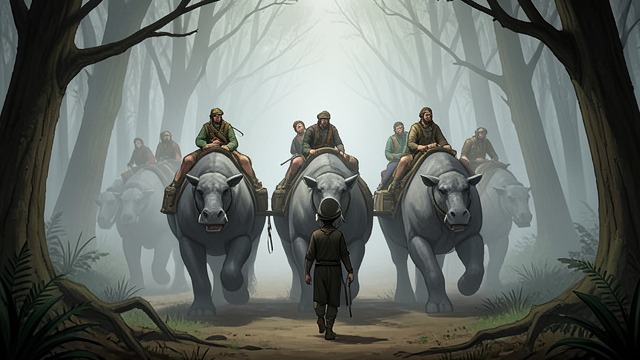
Nature as Administration
State Classification
The Government of India preserves, captures, trains, and assigns elephants.
Partial Mastery
Administrative language makes the animals seem manageable, but the system relies on specialized trackers and never eliminates uncertainty.
Buldeo's Jungle Myths

Authority Without Accuracy
Human Storytelling
Buldeo explains Shere Khan through a ghost narrative and claims expertise in animal behavior.
Correction by Experience
Mowgli exposes the errors because he knows the jungle directly. Official or communal authority proves weaker than lived observation.
The Unreadable Dance
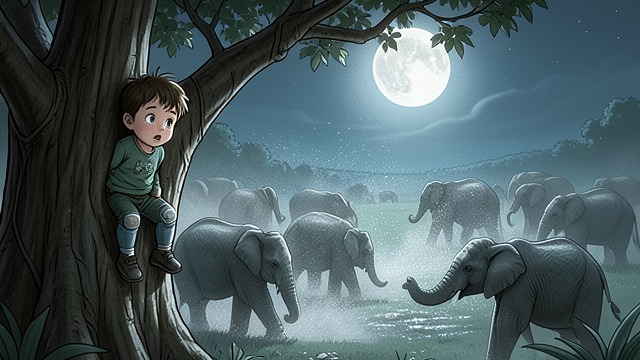
Elephants Beyond Explanation
Human Witness
Little Toomai sees the elephants create and use a secret clearing.
Limits of Interpretation
Petersen Sahib can verify tracks but cannot explain the ritual. Evidence confirms the event while preserving its mystery.
Seal Geography

Human Reach Across Islands
Repeated Traces
Kotick finds that humans have reached and exhausted many former rookeries.
A Remaining Blind Spot
The Sea Cow's tunnel survives because it lies beyond ordinary human access. Nature's refuge is found not through human benevolence but through a place human systems have missed.
Animal Voices at Review
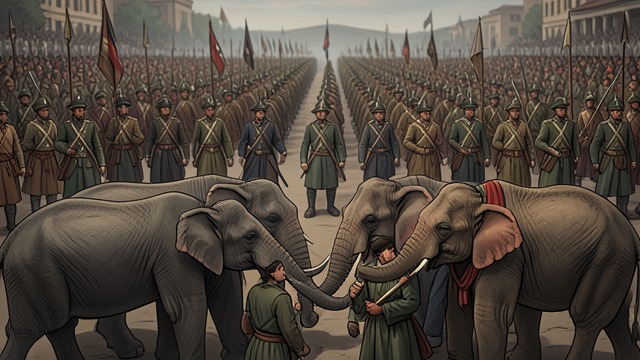
Spectacle and Interior Life
Human Display
The military review presents animals as components of imperial power.
Hidden Perspectives
The animals' earlier conversation reveals fear, disagreement, memory, and self-understanding beneath the formation. The spectacle cannot exhaust what the animals are.
during the opening Keddah explanation
during Mowgli's village life
before dawn in the Garo Hills
during Kotick's five-year search
during the Rawal Pindi review
