Buldeo
The Jungle BookBuldeo, also known as Buldeo the village hunter, is the armed storyteller and local authority figure who opposes Mowgli during the boy’s return to human society. Carrying a Tower musket and speaking with the confidence of an experienced woodsman, he claims knowledge of the jungle that the narrative repeatedly shows to be inferior to Mowgli’s lived understanding. His decisive function is not to defeat Mowgli, but to expose the weakness of human explanations when they are separated from observation: Buldeo converts ignorance into authority, while Mowgli’s conduct makes the jungle’s actual laws visible.
Identity and Position
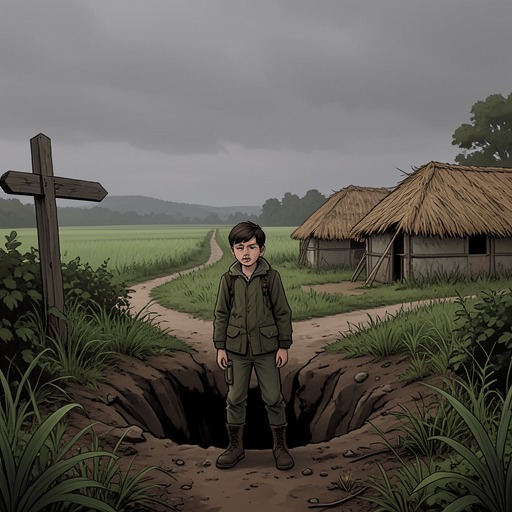
Buldeo belongs to the village circle that gathers each evening on a masonry platform beneath a great fig-tree. The head-man, the watchman, the barber, and Buldeo sit there smoking large huqas and exchanging the village’s accumulated gossip, while monkeys occupy the branches above and a sacred cobra receives its nightly platter of milk beneath the platform. Buldeo’s musket gives him a visible claim to practical authority, and his stories about animals make him one of the principal entertainers of the elders and children gathered around the club.
His social position depends on the contrast between the village and the jungle at its edge. The villagers’ crops are raided by deer and wild pig, and a tiger sometimes carries off a man within sight of the gates, so the forest is both a daily danger and a source of legend. Buldeo speaks as though proximity has made him an interpreter of that world. Yet the setting also places his confident tales beside living animal presence, quietly inviting comparison between what he says and what the jungle actually is.
Conflict with Mowgli
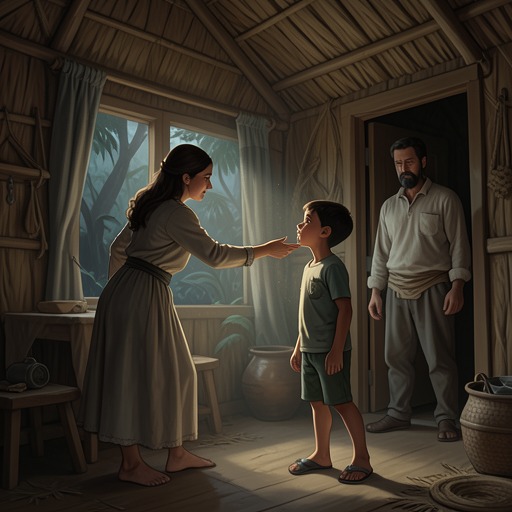
When Mowgli joins the village, he has already been trained by Baloo in the Law of the Jungle and in the Wood and Water Laws. He knows how to distinguish a rotten branch from a sound one, how to address wild bees near a hive, how to warn water-snakes before entering their pools, and how to use the Strangers’ Hunting Call when hunting outside his own ground. This education gives him a form of knowledge that the village does not recognize as learning. Mowgli can understand the jungle directly, while Buldeo possesses the social confidence to speak about it before an audience.
Buldeo illustrates that difference by explaining that the tiger who carried away Messua’s son is a ghost-tiger inhabited by the spirit of a wicked old money-lender. He treats the tiger’s limp as proof: the dead money-lender had limped after a riot, and the tiger’s unequal paw marks supposedly reveal the same ghostly identity. The gray-beards accept the account, but Mowgli identifies the simpler explanation that the tiger was born lame. He dismisses the talk of a money-lender’s soul in a beast as childish superstition and asks how the village can believe Buldeo’s stories of ghosts, gods, and goblins when Buldeo has not spoken truthfully about the jungle at its own doors.
The challenge is especially humiliating because Mowgli does not merely disagree with Buldeo; he strips away the hunter’s authority in front of the very elders who sustain it. Buldeo answers by calling Mowgli the jungle brat and invoking the Government’s reward of a hundred rupees for the boy’s life. His response converts an argument about knowledge into a threat, revealing that his authority rests not only on storytelling but also on the power to label and pursue someone who does not accept the village’s version of reality.
The Tiger’s Hide
Buldeo encounters Mowgli again after the buffaloes have stampeded and killed Shere Khan. Mowgli is working with the wolves to skin the ten-foot tiger, a task he can undertake because he understands how an animal’s skin is fitted to its body. He works for an hour, cutting and tearing while the wolves follow his orders, and the scene reverses the expected hierarchy: the supposed herdsboy demonstrates expertise, while the village hunter arrives late and attempts to claim the result.
Buldeo sees the dead tiger as an opportunity to collect the hundred-rupee reward. He says that he may overlook Mowgli’s failure to keep the herd together and perhaps give him one rupee after taking the hide to Khanhiwara. He then prepares to singe Shere Khan’s whiskers, following the hunters’ custom of preventing the tiger’s ghost from haunting them. The gesture exposes the same mixture of commercial self-interest and supernatural belief that had shaped his earlier story about the ghost-tiger.
Mowgli refuses to surrender the hide. He states that he needs it for his own use and orders Buldeo to remove the fire. When Buldeo persists, Mowgli calls Akela, and the wolf’s presence makes clear that the confrontation is no longer between a village child and an armed elder on equal terms. Buldeo recognizes that Mowgli can command the wolves and asks whether he may leave or whether Mowgli’s servant will tear him to pieces. Mowgli allows him to go, adding that he must not meddle with Mowgli’s game again.
The result is both a defeat and a preservation of evidence. Buldeo leaves without the hide, while Mowgli and the wolves continue their work until nearly twilight, when the great striped skin has been drawn clear of the body. Shere Khan’s hide is destined for the Council Rock, so Buldeo’s attempted seizure would have taken from Mowgli not merely a valuable object but the visible token of the tiger’s defeat and Mowgli’s claim to the act.
Fear, Rumor, and Narrative Role
Buldeo’s retreat completes the reversal begun at the village platform. The man who had presented himself as an interpreter of mysterious animal behavior now looks back over his shoulder as he hurries home, afraid that Mowgli might change into something terrible. At the village he reports magic, enchantment, and sorcery, and the priest takes the account seriously. Instead of revising his beliefs in response to what he has seen, Buldeo absorbs his humiliation into the supernatural vocabulary already available to him.
This response makes Buldeo a revealing counterpoint to the animal teachers and allies surrounding Mowgli. Baloo’s instruction is demanding but practical: it concerns bodies, sounds, boundaries, and the consequences of disturbing other creatures. Buldeo’s knowledge is public and performative, built from tales repeated before an audience. The difference is not simply that one character is correct and the other mistaken. It is that the jungle’s law requires attention and restraint, whereas Buldeo repeatedly seeks status through explanation, reward, and control.
Buldeo therefore functions as a human threshold figure in Mowgli’s movement between worlds. The village expects Mowgli to become a servant and herdsboy, but Mowgli’s conduct reveals that his deepest competence was formed elsewhere. Buldeo’s musket, ghost story, threatened reward, and final tale of sorcery mark the limits of a society that claims possession of the jungle while misunderstanding it. His defeat does not make him a transformed man; it makes the village’s failure of understanding more visible.