Mowgli and the Seeonee Wolf Pack
The Jungle BookMowgli and the Seeonee Wolf Pack is the central belonging relationship of Mowgli’s jungle childhood: the Pack receives him under its own law, raises him as one of the Free People, and later casts him out when fear and political weakness overcome memory, custom, and justice. Its arc moves from formal adoption to intimate participation, from disputed identity to open rupture, and finally to a separation in which Mowgli remains loyal to the jungle even after the Pack has failed him.
Admission Under the Law
The relationship begins at the Council Rock, where the Pack must decide whether a human child can be accepted among wolf cubs. The Law of the Jungle provides a precise procedure. Once a wolf’s cubs are old enough to stand, they must be brought before the monthly Pack Council, generally held at the full moon, so the wolves can identify them. If a cub’s right to admission is disputed, at least two members who are neither its father nor its mother must speak for it. This rule turns Mowgli’s acceptance into a matter of public procedure rather than private pity.
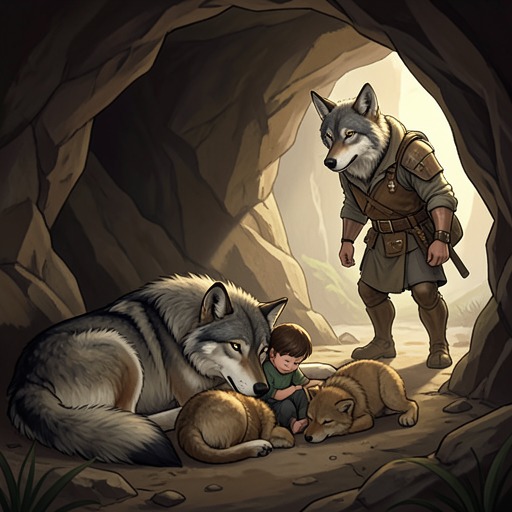
Mowgli’s position is especially precarious because Shere Khan claims him as his prey and questions the Pack’s right to keep a man-cub. Father Wolf and Raksha nevertheless present him with their own cubs, while Akela demands that the wolves look carefully before judging. Baloo, who teaches the wolf cubs the Law of the Jungle and is permitted to attend the Council, speaks in Mowgli’s favor. Bagheera then adds the decisive price: a freshly killed bull in exchange for accepting the child according to the Law. The wolves agree that a naked cub is no danger, that he will probably die from exposure, and that there is no reason to reject him. Akela therefore orders Father Wolf to take him away and train him as one of the Free People. Mowgli enters the Seeonee Wolf Pack not by sentiment alone, but through a combination of legal custom, advocacy, and material obligation.
A Childhood Made in the Pack
After his admission, Mowgli grows among the wolves for roughly eleven years. Father Wolf teaches him the practical knowledge of jungle life until the smallest signs—the movement of grass, the night air, owl calls, bats in the trees, and fish breaking the surface of a pool—become intelligible to him. The Pack is therefore more than a shelter or an adoptive household. It is the environment in which Mowgli’s senses, habits, and understanding are formed.
Baloo’s instruction gives that upbringing a formal intellectual structure. Mowgli learns not only the Hunting Verse but also the Wood and Water Laws: how to distinguish a rotten branch from a sound one, how to address wild bees, how to warn water-snakes before entering their pools, and how to use the Strangers’ Hunting Call when hunting beyond his own grounds. Ordinary wolf cubs learn only what applies to their own pack and tribe, whereas Mowgli must master a broader body of law because he is a human child living among many kinds of Jungle People. His difference initially makes him vulnerable, but it also makes him unusually educated within the Pack’s world.
The Pack’s acceptance is repeatedly enacted through shared practice. Mowgli eats its food, sleeps with its members, and drives game for them. Akela later identifies these actions as evidence that Mowgli has kept the Law and has earned his place through conduct. The bond is thus both emotional and institutional: Mowgli belongs because he is raised by the wolves, but also because he performs the duties by which the wolves recognize one another.
The Crisis of Belonging
The relationship changes when Akela’s authority declines. At a later Council, Akela lies beside his rock as a sign that the Pack’s leadership is open, while Shere Khan and his followers move openly through the gathering. The tiger would not have dared to speak in this manner when Akela was in his prime. The Pack’s political disorder makes Mowgli’s status newly negotiable, even though the terms of his original admission have not changed.
Shere Khan exploits the crisis by presenting Mowgli as an alien presence. More than half the Pack begins to shout that he is a man and should return to his own place. Their rejection contradicts the history they themselves have created: Mowgli has eaten their food, slept beside them, driven game for them, and broken no word of the Law. Akela’s defense rests on continuity and obligation, while Shere Khan’s appeal rests on fear, resentment, and the desire to redirect the Pack’s weakness toward an exposed member.
Mowgli’s response is not a plea for renewed acceptance. He rises with the fire pot, the Red Flower that the wolves fear, and declares that the repeated insistence that he is a man has made the distinction real to him. He no longer calls the wolves his brothers, but dogs, and uses fire to reverse the balance of power. The fire drives the Pack from the Council Rock and makes Shere Khan helpless; Mowgli beats the tiger with the burning branch and orders him away. He also prevents the wolves from killing Akela, showing that his judgment is no longer dependent on the Pack’s decision.
This scene converts belonging into separation. Mowgli still knows the Pack’s law and acts decisively within the political space it has created, but he no longer accepts the Pack as the authority over his identity. The wolves’ words have forced him to recognize himself as human; the Red Flower allows him to make that recognition materially undeniable.
Expulsion and the Broken Return
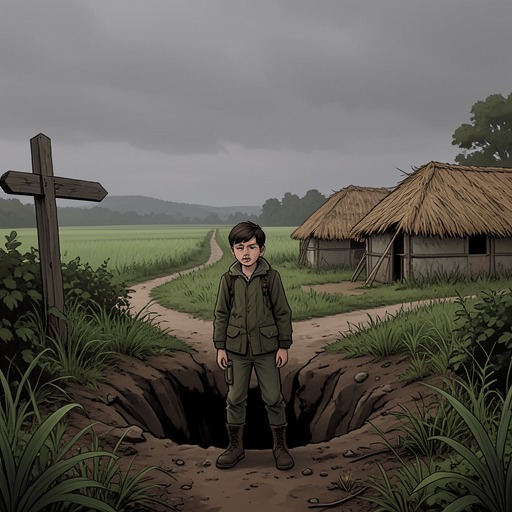
The emotional cost of the rupture appears only after Mowgli has won. Once the wolves flee, he begins to cry and does not understand what is happening. Bagheera explains that these are human tears and that they mark the end of his status as merely a man-cub. The Pack has not simply expelled a member from a territory. It has helped produce a human identity that Mowgli had previously experienced as only one possibility among many.
Years later, Mowgli returns to the Council Rock with Shere Khan’s hide. He spreads the striped skin across the flat stone where Akela once sat, fastens it with four slivers of bamboo, and allows Akela to lie upon it while repeating the old call: “Look—look well, O Wolves.” The gesture deliberately recalls his first presentation before the Pack. The same site, phrase, and leadership figure frame both admission and reckoning, but the meaning has changed. The child once examined by the wolves now returns as the agent who has fulfilled the promise of his own resistance.
The Pack has deteriorated in Akela’s absence. It has hunted and fought without a leader; some wolves are lame from traps, some bear shot wounds, some are mangy from bad food, and many are missing. Seeing Shere Khan’s hide, the surviving wolves ask Akela and Mowgli to lead them again because they are weary of lawlessness and wish to be the Free People once more. Bagheera rejects the request, warning that renewed fullness may bring back the same madness. Freedom, in this judgment, cannot simply be restored by reinstalling a leader or repeating an old ceremony.
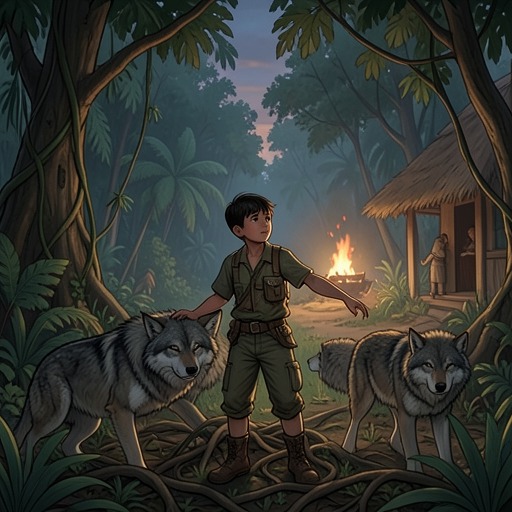
Mowgli answers that both the Man-Pack and the Wolf-Pack have cast him out. He will therefore hunt alone in the jungle. Four wolf cubs choose to hunt with him, preserving a personal remnant of the former bond even though institutional membership has ended. Mowgli is not entirely isolated, but the old relationship cannot be reconstituted: the Pack’s welcome was conditional, its rejection decisive, and its later appeal too unstable to become a home again.
Meaning of the Relationship
The relationship between Mowgli and the Seeonee Wolf Pack tests whether belonging is secured by birth, law, affection, or proven conduct. At first, the Pack’s law makes room for an outsider. It protects Mowgli because the rules are stronger than Shere Khan’s appetite, and because Baloo and Bagheera translate that law into action. During Mowgli’s upbringing, the Pack demonstrates that a social identity can be taught and lived through shared food, work, language, discipline, and landscape.
Its failure reveals the limits of that achievement. The wolves accept Mowgli while he can be treated as a cub, but many turn against him once his humanity becomes politically useful to Shere Khan. The contrast is between law as a durable obligation and the Pack as a crowd vulnerable to appetite and fear. Mowgli’s final independence is therefore not a simple victory over the wolves. It is the consequence of discovering that the community that formed him cannot permanently contain the mixed identity it helped create.
The repeated call to look well gives the relationship its governing image. At the first Council, the wolves are instructed to inspect the strange child before judging him. At the final Council, Mowgli places the tiger’s hide before them and asks whether he has kept his word. The question is answered affirmatively, but the answer does not restore the old fellowship. Mowgli has fulfilled the Pack’s expectations more completely than the Pack has fulfilled its own law, and his departure leaves the relationship as a lasting bond of origin rather than a continuing social home.