Road-Song of the Bandar-Log
The Jungle BookRoad-Song of the Bandar-Log is the characteristic song of the Bandar-log, the monkey people whose public energy is matched by their lack of continuity, discipline, and reliable memory. Its decisive significance lies in the way it makes their disorder audible: the monkeys move in exuberant formations, repeat fragments of thought, claim every utterance they have heard, and then lose the thread of what they meant. The song is therefore both a piece of jungle folklore and a satirical verbal portrait of the group it represents.
Form and Performance
Road-Song of the Bandar-Log appears as a choral performance built from recurring movement, rhyme, and interruption. The monkeys announce, "Here we go in a flung festoon, / Half-way up to the jealous moon!" Their image is one of a chain or garland thrown upward through the trees, animated by motion rather than directed toward a stable destination. The moon becomes an object of playful rivalry, and the song immediately turns outward with the challenge, "Don't you envy our pranceful bands?" The singers define themselves through spectacle: they are a visible, noisy procession whose identity depends on being watched.
The refrain repeatedly addresses a brother whose tail hangs down behind. After moments of anger, forgetfulness, and unfinished thought, the song returns to the same teasing line: "Brother, thy tail hangs down behind!" This recurrence gives the performance a circular structure. The monkeys appear to advance through new ideas, but the refrain pulls them back to an old joke, making repetition the clearest sign of their collective character.
The Monkey People's Self-Portrait
The song presents the Bandar-log sitting "in a branchy row" and "Thinking of beautiful things we know; / Dreaming of deeds that we mean to do," but the promise of action remains only a dream. Their stillness is not disciplined contemplation. It is a pause filled with grand notions that never become completed deeds. The contrast between what they imagine and what they accomplish makes the song comic, but it also gives the monkeys' disorder a precise verbal form: aspiration is abundant, while memory and execution are fragile.
That fragility becomes explicit when the singers admit, "We've forgotten, but—never mind." Forgetting does not interrupt the performance for long; it is absorbed into the refrain and treated as another occasion for careless amusement. The phrase turns failure of memory into a style of life. Instead of correcting themselves or recovering the lost subject, the monkeys shrug it away and continue singing.
The Bandar-log then claim possession of "All the talk we ever have heard / Uttered by bat or beast or bird— / Hide or fin or scale or feather—" Their authority is presented as universal because they have heard words from every kind of creature. Yet the boast also exposes the weakness of their speech. They collect language from others without demonstrating understanding, ownership, or a coherent tradition of their own. The song makes their borrowed vocabulary sound like a hoard of disconnected fragments rather than knowledge transmitted with purpose.
Movement, Imitation, and Disorder
The closing declaration, "This is the way of the Monkey-kind," converts the performance into a statement of collective identity. The monkeys invite others to "join our leaping lines that scumfish through the pines" and to follow them as they rocket past the swinging wild grape. Their society is defined by leaping lines, speed, and improvisation. Even the unusual verb describing their movement reinforces the impression of a group that invents its own gestures while refusing settled order.
The song's movement is inseparable from its social satire. The Bandar-log are not merely lively animals; they are a people who imitate the forms of organized speech, aspiration, ceremony, and communal song without sustaining the responsibilities those forms imply. Their repeated refrains sound communal, yet the repetition reveals that the group cannot preserve a plan. Their boasts sound expansive, yet the admission of forgetting punctures each claim. Their collective voice is loud precisely where their continuity is weakest.
Place in the Jungle Narrative
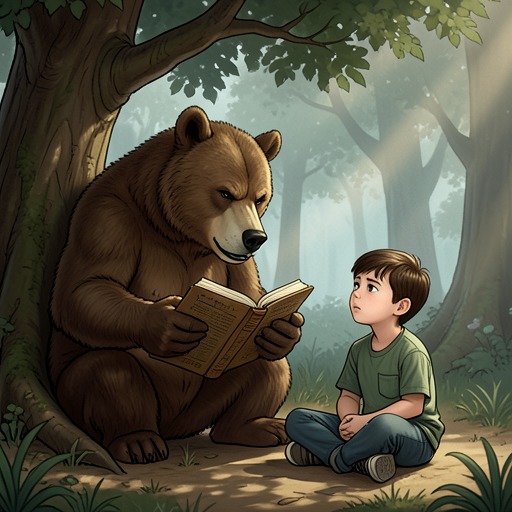
In the surrounding story, Road-Song of the Bandar-Log belongs to the world in which Baloo teaches Mowgli the Law of the Jungle. Mowgli must learn more than the limited hunting knowledge needed by young wolves: Baloo teaches him the Wood and Water Laws, including how to distinguish a rotten branch from a sound one, how to address wild bees near a hive, how to avoid disturbing Mang the Bat, and how to warn water-snakes before entering their pools. The lesson establishes a disciplined system of reciprocal conduct, in marked contrast with the monkeys' restless and self-invented behavior.
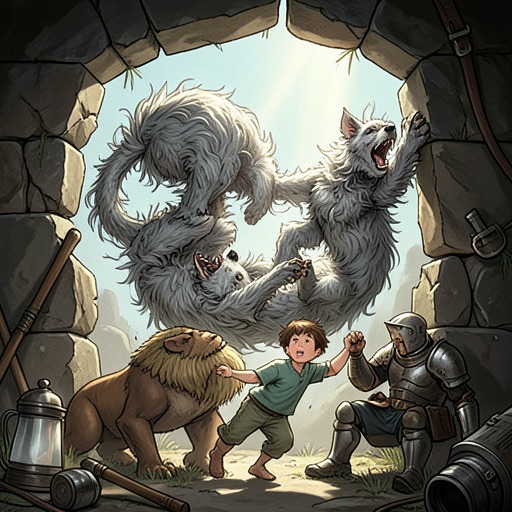
The song is also placed alongside the episode of Mowgli's abduction by the Bandar-log and his rescue at the Cold Lairs. After Mowgli is recovered, he lies on Bagheera's back and sleeps so deeply that he does not wake when he is carried to the home-cave. The song's appearance at this point preserves the monkeys' presence as a lingering sound and a comic counterpoint to the seriousness of the rescue. Their chant does not explain their conduct; it displays the mental and social confusion that made their conduct possible.
Literary Significance
Road-Song of the Bandar-Log functions as a miniature folklore text within the jungle world. Like other animal songs in the book, it gives a group a memorable verbal signature, but its cultural work is unusually ironic. The seal song preserves maternal care, and the song of Shiv places animal life within an origin story; the Bandar-log song instead dramatizes collective forgetfulness, imitation, and performance without inherited law. Its repeated joke is not ornamental. It is the formal mechanism by which the monkeys' failure to remember becomes audible.
The song also clarifies the value of the Law of the Jungle by contrast. Baloo's teaching depends on exact words, remembered rules, and respectful boundaries between groups and territories. The Bandar-log possess songs and slogans, but their language does not produce order. They can repeat what they have heard, imagine deeds, and move together through the trees, yet the refrain continually exposes the distance between noise and knowledge. Road-Song of the Bandar-Log thus stands as a compact comic emblem of a society that mistakes motion for progress and borrowed speech for wisdom.