
The Rebellion Against Duncan
The KillerThis flow follows Glamiss and Candor’s grievance against Duncan from private conspiracy through war and defeat.
increasing Bearing strength in each event
 decreasing
Bearing strength in each eventdecreasingShared Grievance
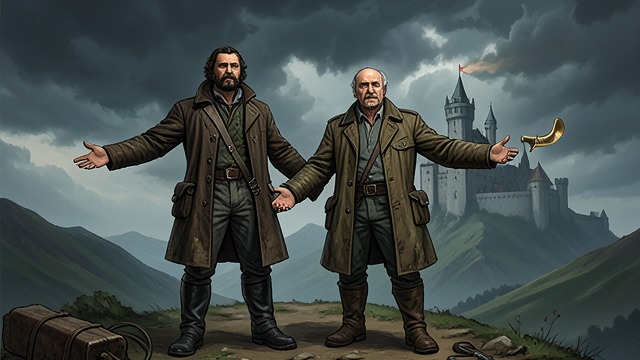
Shared Grievance
Property and Power
Glamiss and Candor complain that Duncan hunts on their land, takes their resources, and drafts their men.
Rebellion Named
They frame their anger as a defense of ancestral rights and freedom from royal exploitation.
Recruiting Around Loyalty
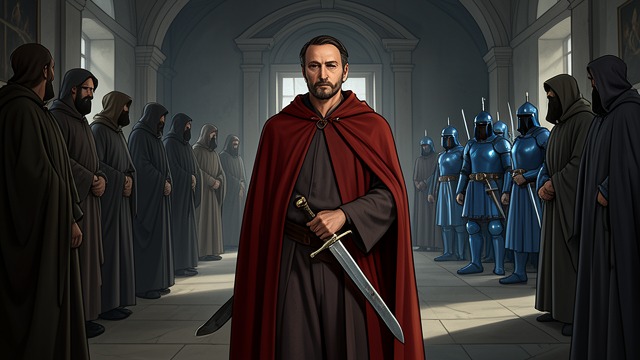
Recruiting Around Loyalty
Macbett Approached
The Barons praise Macbett’s loyalty while concealing their conspiracy, then recognize that he cannot be trusted to join them.
Isolation of the Plot
Their rebellion begins without the support of one of Duncan’s most capable generals.
War on the Field
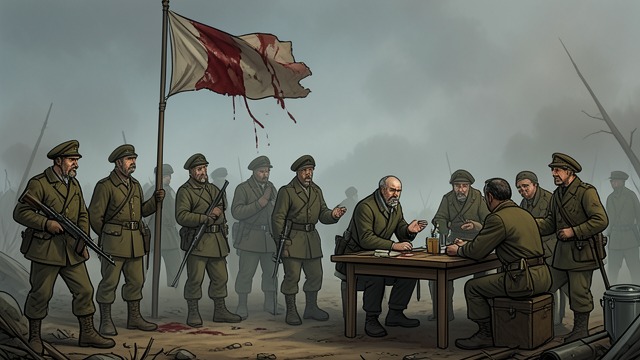
War on the Field
Violence Without Clarity
The battle is shown through confused reports, repeated atrocities, and soldiers unsure which side they are fighting.
Victory Claimed
Macbett and Banco defeat the rebellion, though the play makes the distinction between loyal service and brutality unstable.
Candor Captured
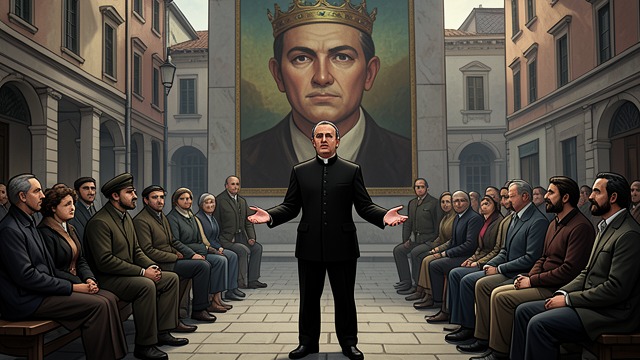
Candor Captured
Defeat Explained
Candor acknowledges that victory determines who is called lawful and who is condemned as a traitor.
Political Lesson
His speech presents survival and allegiance as calculations made after the outcome is known.
The Army Executed
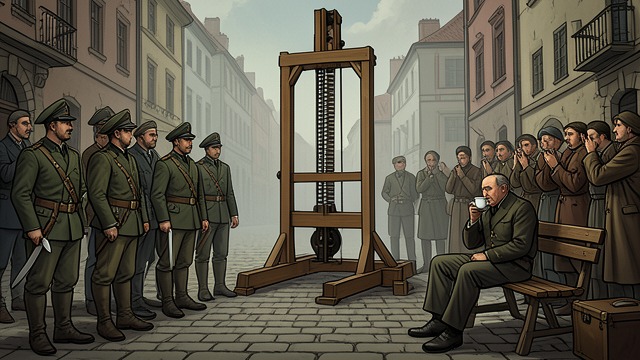
The Army Executed
Punishment Expanded
Duncan orders Candor’s soldiers executed in a mass procession at the guillotines.
Ceremony and Indifference
Tea, conversation, and counting heads make state violence appear routine and socially acceptable.
At the opening field conversation
Before the armies assemble
During the battle between Duncan’s forces and the rebels
After Duncan’s forces claim victory
During the evening executions
