Candor
The KillerCandor is a baron who joins Glamiss in rebellion against Duncan and becomes a prisoner when the uprising fails. His decisive dramatic role comes at the moment of defeat: rather than simply deny his guilt or plead for mercy, he argues that history labels the defeated criminal and the victorious ruler right. His speech makes his impending execution both a personal reckoning and a bleak account of how political power manufactures legitimacy.
Identity and Entry into the Rebellion
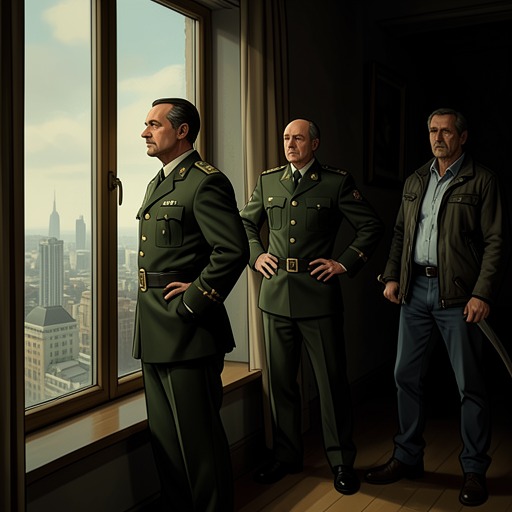
Candor first appears alongside Glamiss. The two enter without acknowledging one another, stand at center stage facing the audience, and pause before turning to exchange formal greetings: each addresses the other by title and surname. That deliberate movement from public distance to direct address gives way to a more intimate register. Glamiss calls Candor beloved, and Candor replies that he is too well beloved. Their exchange establishes a bond, though the scene does not define it more narrowly.
The pair’s shared opposition to Duncan is stated without qualification. Glamiss declares that Duncan must be brought down, and Candor repeats the call. Glamiss gives a specific grievance: Duncan hunts on his land. The rebellion therefore enters the play through both personal attachment and a concrete dispute over authority and property. The scene does not supply a larger account of Candor’s background or political program; it presents him as a baron aligned with Glamiss and committed to opposing Duncan.
Capture and the Transfer of Power
After the danger has passed, Duncan asks Macbett whether Candor has been executed. Macbett answers that Candor has instead been taken prisoner. Duncan immediately questions why the captive has not been killed and what is delaying the execution. Macbett replies that he is waiting for Duncan’s orders, making Candor’s survival a matter of the ruler’s command rather than an independent decision by the captors.
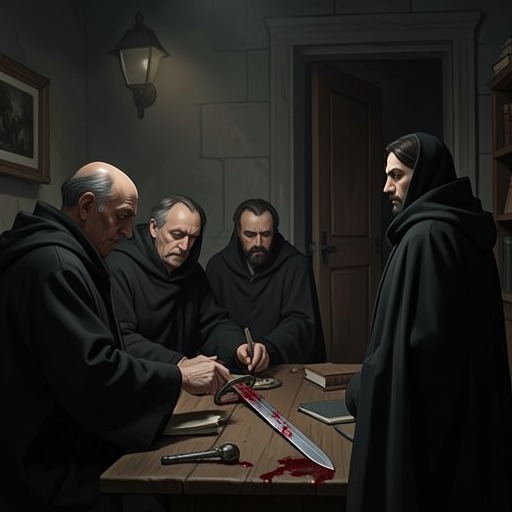
Candor is brought onstage handcuffed, accompanied by Banco, whose head is hooded and who wears a red pullover while carrying an axe. Duncan tells Candor that he will pay for treachery. Candor accepts the consequence as the consequence of losing: had he been stronger and won, he says, he would have been the anointed king; defeated, he is called a traitor and coward. His conditional contrast does not erase the rebellion, but it exposes how the same struggle could be named differently under a different victor.
Candor makes that point directly to Macbett and Banco. Had they fought for him, he says, he would have rewarded them with dukedoms, honor, and riches. The offer recasts the men now standing with the victorious regime as possible beneficiaries of the rebel cause. It also makes their present alignment contingent in Candor’s account: political rewards, like accusations of treason, depend on who wins.
The Execution and Candor’s Argument About History
Duncan asks whether Candor has anything to say, and those present settle down to listen. Candor develops his claim beyond the immediate contest. He calls himself a historical dead end and says that history was against him; in his formulation, historical reason is the only reason that counts, with no transcendent standard available to overrule the logic of events. He accepts guilt, yet insists that the rebellion was necessary if only because its defeat proves him a criminal. The paradox is central to his account: the failed uprising makes the verdict against him appear inevitable, while the act of resisting remains, in his own view, necessary.
His speech is also an attempted instruction to those who survive him. He advises his listeners and posterity to side with the stronger, but immediately identifies the difficulty in that counsel: before the decisive moment, no one can know who will prove stronger. He then proposes that the masses stay out of the fighting until it is over and support the winner afterward. The argument turns political judgment into retrospective submission. Candor offers it as a lesson, but the lesson exposes a world in which safety comes from waiting for violence to settle rather than choosing a cause in advance.
Candor imagines his death and the deaths of his followers as material that will fertilize fields and help produce future wheat. He hopes his fate will serve as an example, yet insists that his own life is an empty husk and says he will die happy. The image joins political defeat to a cycle of future growth without suggesting that the dead will be vindicated: their bodies may nourish the harvest, while the victorious order retains the power to define their meaning. His speech makes posterity an uncertain audience, at once the recipient of his warning and the product of the very history he cannot control.
Sentence, Stagecraft, and Dramatic Significance
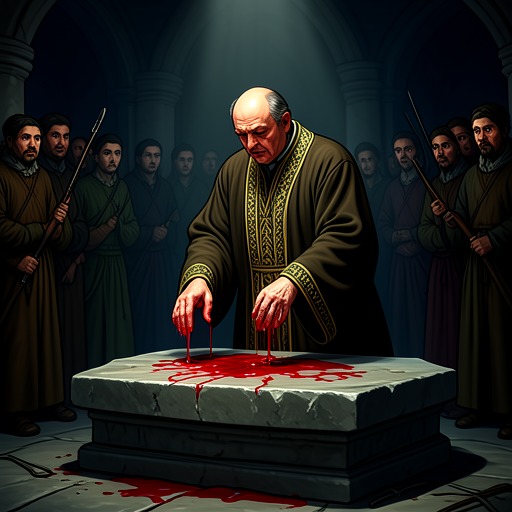
Candor’s argument unfolds under the machinery of a public execution. The lights reveal a guillotine, then gradually disclose a whole forest of guillotines. Around this spectacle, Lady Duncan washes her hands emphatically and mechanically, while a servant brings in tea and serves the company. The juxtaposition places a domestic ritual beside the apparatus of mass killing. As Candor speaks about guilt, historical necessity, and posterity, the court listens with the ease of spectators at an entertainment.
Duncan finally interrupts to say that Candor’s speech is too long and asks Lady Duncan whether she is bored. He dismisses torture but orders Candor put to death, then announces that Candor’s soldiers are to be executed with him. Duncan gives their number as 137,000 and says they must finish by dawn. The number converts the abstract logic Candor has described into a concrete sentence against an enormous defeated force. Candor’s own execution is ordered, while the surrounding guillotines and the decree against his army enlarge the consequence of defeat beyond the captive before the court.
Candor’s final significance lies in the collision between his lucid account of victor-made justice and the regime’s ability to enact that justice as spectacle. He neither claims innocence nor persuades Duncan to relent. Instead, he names the mechanism by which defeat becomes criminality and leaves the court with a warning whose bleak logic is confirmed by the order to execute his followers. His words challenge the language of legitimacy even as the execution scene shows how little power the condemned have to determine the history that will be told about them.