Dynastic succession and bloodline
The KillerDynastic succession and bloodline is the means by which Macbett makes political power extend beyond an individual ruler, and the source of a prophecy that violence cannot simply erase. Banco’s expected descendants become a target when Macbett learns of them; later, the revelation that Macol is Banco’s son turns a concealed genealogy into a claim on the throne. Yet the play makes inheritance more complicated than blood alone: adoption, family names, and public acclamation all help determine what a dynasty means.
Prophecy and the promise of a line
Banco first considers succession while reflecting on the Witches’ predictions. Macbett, he reasons, is to become king after being Baron Candor and then Baron Glamiss; the predictions have come true one by one. Banco recognizes that Duncan’s death was necessary to this ascent, since Duncan could not constitutionally transfer the throne through abdication. He also notes that the predictions did not tell him that Lady Duncan would become Lady Macbett, or that Macbett would gain wealth, fame, power, and a wife while Banco received nothing.
That imbalance shapes Banco’s understanding of his own future. He admits to having helped kill Duncan out of a grudge and feels remorse, but lacks Macbett’s success and reputation to quiet it. The Witches, he recalls, said he would not become archduke or king, but would father a line of kings, princes, presidents, and dictators. The prophecy offers consolation: political influence might continue through descendants even if Banco never rules himself. At the same time, it has altered his ambitions. He says that before meeting the Witches he wanted only to serve his king; now envy and an insatiable desire for advancement have taken hold. He imagines marrying, starting a family, becoming chamberlain, and eventually curtailing Macbett’s power from behind the throne. The predicted lineage is thus both a promise of future rule and a force that draws Banco into present-day political rivalry.
Macbett turns inheritance into a target
Hidden nearby, Macbett overhears Banco’s reflection. What unsettles him is not merely that Banco resents the advantages Macbett has gained, but that the Witches have supposedly promised Banco a royal line. Macbett realizes that his own seizure of the crown might place Banco’s descendants on the throne. He interprets the prophecy as a sinister plot and resolves to defeat destiny by attacking its point of origin: Banco himself.
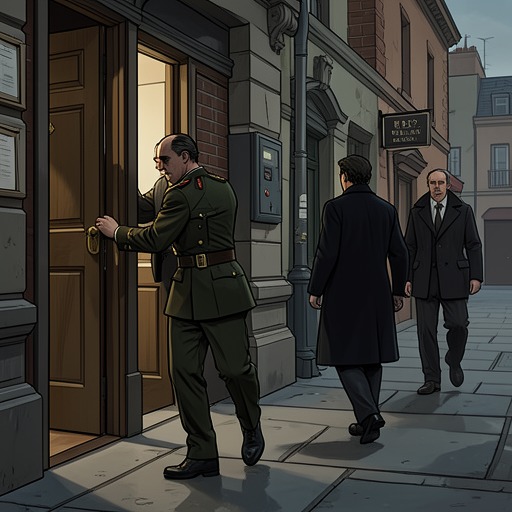
The decision converts a future succession into an immediate act of political violence. Macbett calls Banco over and stabs him in the heart. As Banco falls, Macbett asks where the promised kings are and declares that they will rot with Banco, nipped in the bud. His reasoning treats descendants as if they were already present inside their father, so that killing the father can seem to annihilate a whole future dynasty at once. The murder is an attempt to make the prophecy impossible through force, but its very urgency exposes how powerfully Macbett fears the possibility that his crown will not determine what comes after him.
In a later confrontation, Banco tells Macbett that he trusted and followed him, then says that Macbett and the Witches put a spell on him. Macbett answers that Banco sought to substitute his progeny for Macbett’s and claims that Banco’s children, grandchildren, and great-grandchildren died in their seed before being born. The exchange gives Macbett’s earlier murder a dynastic meaning: he regards it as the destruction of a competing bloodline, not merely the elimination of a former ally. Banco’s warning that Macbett will face surprises, however, places that claimed finality in doubt.
Macol and the divided inheritance
The later revelation about Macol overturns Macbett’s belief that Banco’s line has been extinguished. Lady Duncan explains that Macol is not her biological son. Duncan adopted him, but Banco was his father; his mother was a gazelle transformed into a woman by a witch, who changed back into a gazelle after giving birth. Lady Duncan also discloses that she secretly left court before Macol’s birth so that no one would know she was not pregnant. Duncan wanted an heir, and Macol was taken for the son of Duncan and Lady Duncan.
Macol therefore occupies two lines of descent at once. He is Banco’s natural son, linking him to the bloodline that Macbett tried to destroy, and Duncan’s adopted son, linking him to the ruler whose place Macbett took. Lady Duncan urges Macol to honor Duncan’s care: Duncan sent him to Carthage University, she says, and Macol should carry on the family name. Macol instead declares that he will resume his father’s name and found a dynasty lasting centuries. He intends to avenge both his natural and adoptive fathers, but refuses to surrender his own name. The conflict is not resolved by a simple choice between biological and adopted kinship; Macol claims agency over which inheritance to carry forward, even as both fathers shape his claim.
Public succession and the limits of extinction
Macbett’s invulnerability prophecy gives him confidence when Macol confronts him. He dismisses the danger, insisting that no man of woman born can harm him. Macol replies that the Witches have deceived Macbett. In the same encounter, the hidden parentage is disclosed, tying the prophecy of Banco’s descendants to the person now standing against Macbett. Bloodline, concealed birth, and supernatural prediction converge at the moment Macbett’s rule is challenged.
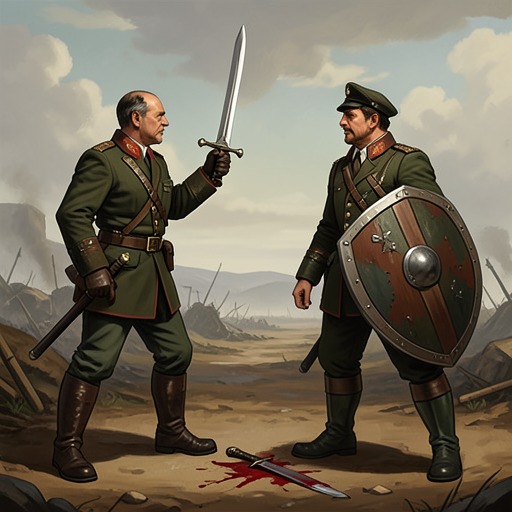
The final public gestures make the succession visible. Some guests raise placards reading “Macol is always right,” and the guests acclaim, “Long live Macol! Long live Banco's dynasty! Long live the king!” Bells sound; Macol stands by the throne as the Bishop comes to crown him. The sequence joins three claims without making them identical: Macol is the new king, Banco’s line has survived, and Macol’s accession is publicly endorsed. The dynasty Macbett tried to prevent thus returns through a son whose identity had been obscured by adoption and secrecy.
The play presents succession as a struggle among blood, political recognition, and the stories rulers tell about the future. Macbett treats murder as a way to control what history will inherit from him, while Macol’s genealogy shows that the line he believed erased has continued beyond his knowledge. Yet lineage does not operate as an automatic guarantee: Macol chooses to keep his name, Lady Duncan argues for obligations to Duncan, and the guests’ acclamation supplies a public form to the claim. The dynastic future emerges from the interaction of descent, adoption, choice, and collective recognition—not from a crown’s power to command the past.