
The Answer Hidden in Plain Sight
The Killing RoomThis thread follows the novel’s insistence that truth emerges when investigators stop being distracted by conspicuous clues and attend to overlooked details.
increasing Bearing strength in each event
 decreasing
Bearing strength in each eventdecreasingA Case Lost in Procedure

Evidence That Cannot Speak
The vanished exhibit
At a Beijing murder trial, Li Yan confidently explains how shoe impressions and traces of blood implicate a suspect. The defense then asks to see the shoes, only for the prosecution to admit that they cannot produce them. Evidence that once seemed conclusive becomes useless because the chain of custody has failed.
The obvious omission
Li Yan knows the shoes were sent to the procurator’s office, but his certainty cannot substitute for an exhibit in court. His anger at a killer’s possible release is mixed with humiliation at being made to look careless. The scene establishes a governing tension: a fact may be true, but without its supporting detail it cannot persuade anyone who needs proof.
The episode also prepares Li Yan to distinguish conviction from demonstration. Later in Shanghai, instinct and suspicion repeatedly tempt the investigators to leap ahead of what they can establish. The missing shoes show why disciplined attention matters: justice depends not only on seeing a pattern but on preserving the particulars that make it credible.
The Pattern Beneath the Procedures
Reading the Wounds
Small marks, large consequences
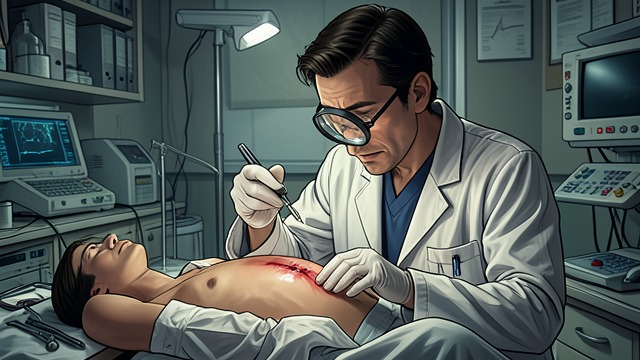
Margaret Campbell examines the victims’ bodies and notices details that the initial official account has obscured: Betadine discoloration, clotted blood, cautery marks, and sutures tied around vessels. Taken together, they show that the women were alive when the procedures began. A superficial resemblance to ordinary postmortem dissection conceals a radically different crime.
Correcting expectation
Dr Lan’s early interpretation had treated the bodies as possible teaching material or research subjects. Margaret Campbell does not simply contradict him; she explains how decomposition, mud, and expectation can make a pathologist overlook what is present. Her careful examination changes the investigation from a search for careless student practice into an inquiry about deliberate killing.
The sequence makes observation an ethical responsibility. The distinction between a body opened after death and a person cut open while alive lies in minute physical traces, but those traces restore the victims’ human status. Looking closely is not just technical competence: it is refusing to let an expedient story erase what happened to them.
The Shared History of Abortion
A Common Mark
From isolated clues to a pattern
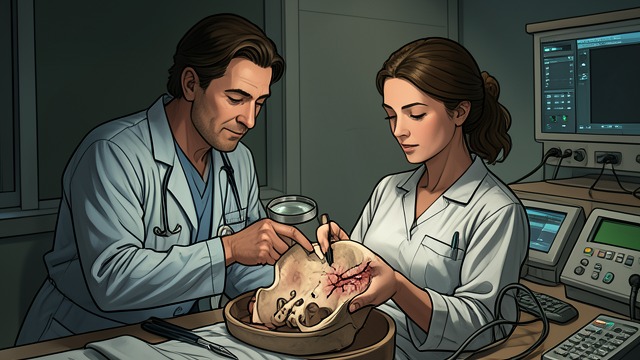
After Margaret Campbell considers whether the identified victims had children, she returns to the pelvic organs and studies their scarring. Different procedures have left different injuries: adhesions in the uterus, scarring in the fallopian tubes, and damage associated with saline abortion. The marks are not identical, but they point toward the same hidden history.
The statistical shock
The revelation is not that some women had undergone abortions; that would be unsurprising in a city where the procedure is common. The startling fact is that every victim examined, including the woman found in Beijing, had evidence of one. The shared feature makes random selection implausible and gives the investigators a new route toward the clinics and records that might connect the victims.
The breakthrough also shows how an abundance of information can obscure what matters. Each autopsy had produced a mass of medical particulars, but no one had initially asked the right comparative question. The common history emerges only when Margaret Campbell reframes the inquiry and connects details that had been treated separately.
The Height of the Driver
A Riddle About Attention
Numbers as misdirection
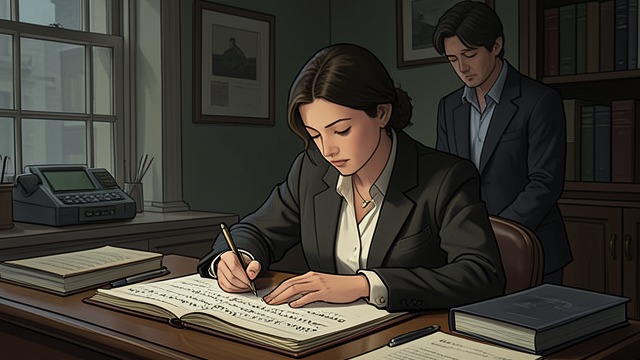
Mei Yuan gives Margaret Campbell a bus-driver riddle: passengers board and leave at successive stops, inviting the listener to calculate a changing total. Margaret becomes absorbed in the arithmetic and fails to notice that the question has already supplied the answer: the driver is the person being addressed.
A method for investigation
Later, in the mortuary, the riddle returns to Margaret Campbell’s mind. She recognizes that the case has likewise buried a simple connecting fact beneath an intimidating accumulation of medical evidence. The victims’ reproductive histories, rather than the more sensational surgical details, provide the crucial common thread.
The riddle is a compact statement of the novel’s investigative ethic. Questions direct attention, and badly framed questions can keep an investigator busy without bringing that person closer to truth. Solving the case requires not merely collecting information but noticing what the question itself has made visible.
Memory in the Computer
Traces Left Behind
An apparently empty machine
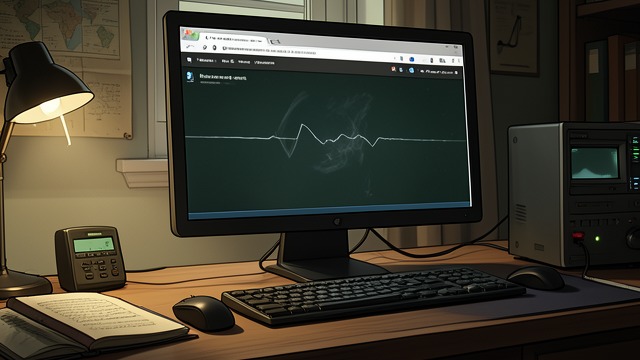
After police enter the Shanghai World Clinic, its patient records and physical rooms have been cleared. The Macintosh computer appears nearly empty too, with its files removed but its operating system intact. The clinic’s effort to erase its past seems, at first, to have succeeded.
The residue of use
Margaret Campbell recognizes that deleting files does not necessarily destroy them. She opens the browser history and retrieves the last visited site, which leads to Transplants Online. The machine’s remembered activity turns a seemingly blank screen into a trace of the clinic’s international business and helps the investigators understand why the victims’ organs were taken.
The discovery echoes the autopsies: both bodies and machines retain evidence their users tried to hide. In each case, close attention to residue defeats a clean official surface. The truth survives not as a neat confession but as fragments left behind by action, waiting for someone to interpret them.
At the opening Beijing trial
During the first Shanghai autopsies
During the overnight re-examination in Shanghai
On the drive from Beijing back to Shanghai
During the raid on the Shanghai clinic
