Huang Kills Mei-Ling and Dies by Suicide
The Killing RoomSection Chief Huang’s killing of Mei-Ling Nien and subsequent suicide turn Li Yan’s investigation into a direct confrontation with the corruption inside his own police team. In the apartment, Li finds Mei-Ling dead and Huang armed; Huang’s confession reveals how a transplant arranged by Cui Feng made him complicit in concealing the source of organs taken from murdered women. Before killing himself, Huang also identifies the motive for Xinxin’s kidnapping and provides information that can lead Li toward her.
Discovery and Confrontation
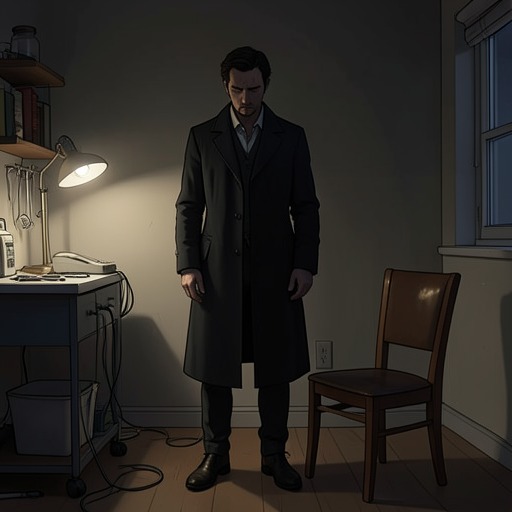
Li enters the apartment after telling Margaret Campbell to remain outside. The dark, narrow hallway and the pervasive smell of disinfectant recall the setting of Jiang Baofu’s home, connecting the apartment to the investigation’s earlier trail. In a bedroom, Li finds a woman lying lifeless beneath a sheet. A movement in another room draws his attention, and Section Chief Huang switches on a lamp while holding a gun.
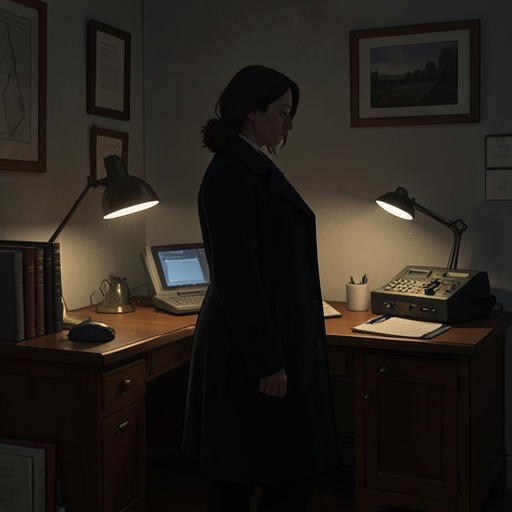
When Li recognizes Huang, Huang lowers the weapon. The pause between them ends as Li notices a figure lying just beyond the doorway. He pushes the door open and finds Mei-Ling Nien on the living-room floor. He checks for a pulse, but she is already dead. Her familiar clothes and the remembered vitality of her smile and laugh sharpen the shock of the discovery: the colleague whose judgment and loyalty had mattered throughout the investigation has been killed by the superior who had resisted its progress.
Huang tells Li that he did not intend to kill Mei-Ling. He explains that she was going to arrest him and that he could not allow it. His account makes the immediate cause clear, but the scene also exposes the larger reason she had become a threat: Mei-Ling had recognized that Huang’s obstruction of the investigation was connected to Cui Feng’s clinic and the organ trade.
Huang’s Confession
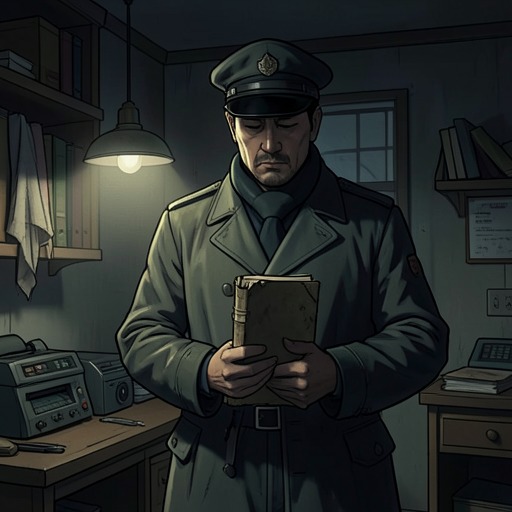
Huang admits that Mei-Ling had long suspected his involvement. She had questioned why he opposed bringing Li into the investigation, why he resisted approaching Cui Feng, and why he would not support Li’s request for a search warrant. Huang also reveals that Mei-Ling had been quietly advocating for Li behind closed doors. Her work against Huang’s obstruction was therefore both professional and personal: she was trying to move the case forward while the man responsible for blocking it had once been her lover.
Huang explains that he and Mei-Ling had been in a passionate relationship and that he had planned to leave his wife. That changed when his wife was diagnosed with terminal liver disease. He says he could not bring himself to abandon her, whether from guilt or lingering love, and that Mei-Ling never recovered from his choice. The confession places the murder against a history of intimacy and abandonment, but it does not excuse it; when Mei-Ling moved to arrest him, Huang answered the threat by killing her.
The transplant that saved Huang’s wife’s life became the means by which Cui Feng bound him to the criminal operation. Cui waived the fees and presented the transplant as a favour, creating a debt Huang could not repay. Huang says he later understood that the supposed gift of life had also made him permanently indebted to Cui. His wife needed continuing care and expensive medication to prevent rejection of the transplanted liver, so Huang believed that any action against Cui could put her life at risk.
Complicity and Its Cost
Huang’s contribution was not limited to looking away. He supplied official certifications stating that organs Cui sold abroad had been legitimately obtained from executed prisoners. The paperwork gave Cui’s clients a credible cover story, drawing on the widely known practice of taking organs from executed prisoners while concealing that the actual donors in this case were murdered women. Huang acknowledges that he did not know the full extent of the crimes until the bodies were found at Lujiazui. He also admits that he chose not to ask questions before then.
Li confronts him with the human cost of that choice. Huang’s justification rests on his fear for his wife and his sense of being trapped by Cui, but the women whose lives were taken remain the measure of what his compliance enabled. Huang’s account does not resolve that moral conflict: he describes both his dependence on Cui and his failure to consider the real donors. The revelation that his wife died despite the transplant makes the bargain more devastating. Her body eventually rejected the organ, and after three years she returned to terminal decline and died. Huang’s efforts to preserve her life had not only helped Cui exploit other victims; in the end, they had failed to save her as well.
Xinxin and the Final Disclosure
After Huang’s confession, Li turns to the urgent question of Xinxin’s whereabouts. Huang says Cui arranged her kidnapping to distract Li from the investigation and gain time to cover his tracks. He does not know whether she is still alive, but guesses that she may have been taken to the safe house where the kidnapped women were held while an organ recipient was brought in and prepared for surgery.
Under Li’s questioning, Huang identifies Cui’s clinic near Suzhou, about sixty kilometres from Shanghai. He explains that the women were kept in a basement accessible by canal from the rear of the building, allowing them to be moved by boat at night. The setting creates a bleak contrast between Suzhou’s reputation for beauty and its use as a concealed holding place in Cui’s operation. For Li, the disclosure offers a possible route to Xinxin, but no assurance that she is alive.
Margaret enters the apartment and sees Mei-Ling’s body. Li moves toward Huang, who raises his gun to stop him. Huang then turns the weapon on himself and dies before Li can intervene. His suicide ends the interrogation without resolving every question or undoing the harm he has confessed to. It leaves Li with information about Cui’s operation and Xinxin’s possible location, while making the case’s cost personal in the most immediate way: Mei-Ling is dead, and the officer whose testimony might have been pursued through arrest has also silenced himself.
Significance
The paired deaths mark a reversal in the investigation. Huang, previously positioned as an obstructive authority within the police, is exposed as a participant who used official documents to protect Cui Feng’s business. Mei-Ling, whose private loyalty to Li was not fully visible to him, emerges as one of the people who had been working to overcome that obstruction. Her attempt to arrest Huang brings the institutional conflict into the apartment, where it ends in murder rather than a lawful reckoning.
Huang’s account also makes the novel’s central criminal arrangement more concrete: Cui converted a lifesaving transplant into leverage, and Huang’s official status supplied a false appearance of legitimacy. The disclosure links the case’s public investigation, the private history between Huang and Mei-Ling, his wife’s illness, and Xinxin’s danger. Yet confession and suicide do not amount to justice. Huang’s final disclosures may help Li act, but the victims remain dead, Mei-Ling cannot complete her arrest, and Xinxin’s fate is still unknown when the scene closes.