Li Yan–Huang Tsuo professional relationship
The Killing RoomLi Yan and Huang Tsuo’s professional relationship is established as a conflict between official authority and local command. Appointed by the mayor’s adviser to lead a high-profile investigation in Shanghai, Li arrives above Huang in the formal chain of responsibility but inside Huang’s department and under Huang’s day-to-day authority. Their first dealings are marked by reserve and resentment; a brief glimpse of Huang’s private distress gives Li context for that hostility without dissolving their professional conflict.
First encounter and divided authority
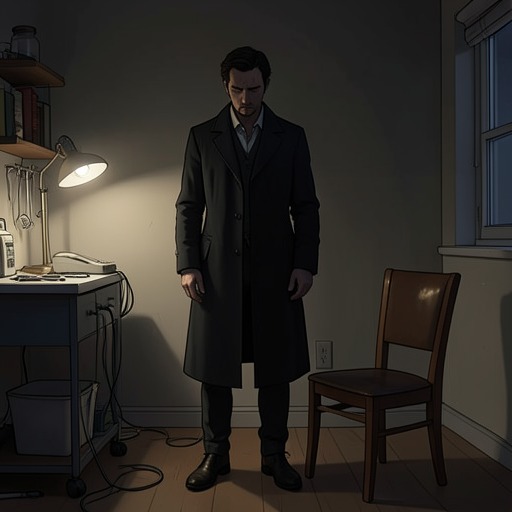
When Nien Mei-Ling brings Li into Huang’s office, the Section Two chief is on the telephone, standing beside a desk lit by a single lamp. He appears drawn and tired. After ending the call, he barely acknowledges Li before asking Mei-Ling about the condition of the person they have just discussed. Her quiet question and Huang’s short, pessimistic answer establish that an urgent personal concern is already occupying him, though Li does not yet know its nature.
Mei-Ling introduces Huang as her boss and identifies him as the chief of Section Two, the unit responsible for serious crime, including murder and robbery. Huang gives Li a cold, cursory handshake and scarcely meets his eyes. Rather than welcome the visiting deputy section chief, he immediately instructs Mei-Ling to arrange a full briefing for after he and Li return. He then takes his briefcase and coat and ushers Li out to an appointment with the mayor’s policy adviser. The encounter places them together on official business while making clear that Li’s arrival has not been received as a collegial introduction.
Appointment and contest over command
The reason for Huang’s resentment becomes explicit in the car. Director Hu explains that the murders have caused severe embarrassment because they were exposed before a worldwide television audience, and that the publicity could damage Shanghai’s inward investment. The mayor wants a rapid, highly visible solution. Li initially offers to assist, subject to permission from his superiors in Beijing, but Hu tells him that permission has already been secured and that the mayor expects him to lead the inquiry, not merely contribute to it. Hu also makes Li personally responsible for any failure.
The appointment gives Li the public authority to direct the investigation while bypassing Huang, the local chief whose department is conducting it. Li understands why Huang resents his presence, and notes that Yue is cool toward him as well. The imbalance is not settled by the formal announcement. When Director Hu’s motorcade stops and leaves Li and Huang by the roadside in the rain, Huang tells Li that he will report to him, regardless of Hu’s instructions. His clenched delivery turns an institutional disagreement into an immediate demand over who will command their work.
Working together under pressure
At the subsequent briefing, Huang publicly announces that Li will lead the investigation in collaboration with his deputy. This is a practical acceptance of the appointment, even though it does not erase the private challenge he has just made. Nearly twenty detectives attend, and the room’s guarded, interested, and sometimes hostile attention reflects the lack of affection between Shanghai and Beijing. Huang’s announcement places the new arrangement before the team; Li must now exercise authority in front of officers who may regard him as an outsider.
The briefing itself offers few answers. Detectives have gathered statements from people present at the ceremony at Lujiazui, and the team has learned that a night watchman worked at the site but could not be found during the day. Mei-Ling reports the number of bodies and Dr Lan’s initial thoughts; the disclosure that partial autopsies have already been performed unsettles the room, but produces no useful proposals. Li takes control of the discussion, using a joke about the detectives who offered him cigarettes to ease the tension before proposing a search of missing-persons files for women between fifteen and forty. The exchange establishes an early contrast: Huang controls the department and its chain of command, while Li must win the team’s attention and direct its investigative priorities.
Their cooperation is therefore real but uneasy. Huang does not publicly obstruct Li’s leadership during the briefing, and Li does not use the meeting to challenge Huang’s authority directly. Instead, they proceed with the work under competing understandings of the reporting line: Hu has made Li answerable for the investigation’s outcome, while Huang insists that Li answer to him.
Private grief and limited understanding
After the briefing, Li interprets Huang’s conduct as humiliation at being passed over by a junior officer. Nien Mei-Ling corrects that account without denying the professional slight: Huang’s wife is terminally ill, and she believes that losing the person he loves matters more to him than losing face. Li then recognizes that the explanation makes Huang’s discourtesy intelligible, though not justified. He does not turn the disclosure into a confrontation or demand an apology; he redirects the conversation toward interviewing the night watchman.
This moment supplies the relationship with its first qualification. Huang is not presented only as a resentful superior defending his position: his brusque manner exists alongside fear and grief over his wife’s condition. At the same time, the information comes to Li through Mei-Ling, and it does not remove the structural tension created by the mayor’s appointment or Huang’s insistence on command. Their early professional relationship remains defined by that unresolved division—Li carries responsibility from above, Huang asserts authority from within the local unit, and the investigation requires them to work together despite the personal pressure surrounding both roles.