Social and Ethical Controversies of the One-Child Policy
The Killing RoomThe One-Child Policy, examined in the novel through its social and ethical controversies, is more than a demographic rule: it reaches into family life, medical practice, and the investigation of a series of women’s deaths. Its consequences emerge through competing claims about population and public welfare, but also through the experiences of Li Yan, Xinxin, and Margaret Campbell. When investigators discover that every victim had had an abortion, a policy debated at a banquet becomes directly relevant to the case.
Demographic Arguments and Political Defense
At a banquet, Margaret is asked by Cui Feng, a personal friend of Director Hu, what she thinks of the policy. She calls it harsh and barbaric. Cui agrees that it is severe but argues that it is necessary: without measures to reduce births, he says, China could not feed its population and millions might die. He supports his argument with figures about Shandong Province, asserting that its population would have approached 150 million without birth control but stood at 90 million, and that the birth rate had fallen by more than half since 1970. He also cites an infant mortality rate of 34 per thousand, below the world average of 50. These are Cui’s defenses of the policy in the discussion, not an independent assessment by the narration.
The exchange also makes the policy’s implementation a matter of institutional and financial interest. The Procurator General points out that Cui opened joint-venture clinics in Shanghai five years earlier and obtained the government contract to perform the city’s abortions. Director Hu says that 300,000 abortions a year in Shanghai place a heavy demand on limited government resources. Cui later defends the clinics as businesses that provide advice and counselling, and argues that they offer a more humane process than state hospitals performing procedures on a production-line basis. Margaret, angered by what she sees as profit from suffering, challenges that defense. The scene places public arguments about population management beside the question of who administers the resulting medical services and who benefits from them.
Family Consequences
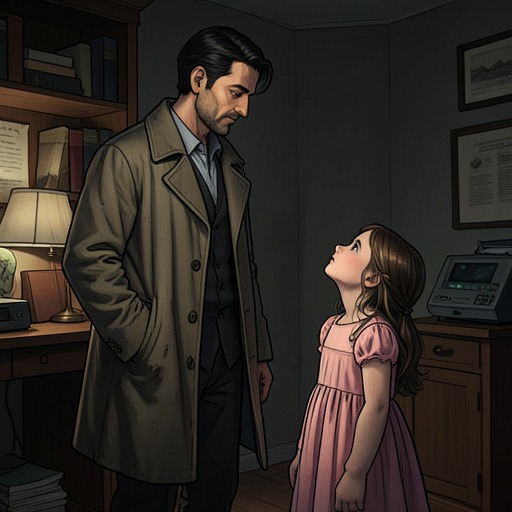
The policy’s effects are also revealed in a private conversation between Li Yan and Nien Mei-Ling. Li explains that his six-year-old niece, Xinxin, lives with him. After Li’s sister became pregnant again and learned that the child was a boy, she left Xinxin with Li and went into hiding, hoping to have the son she had long wanted. Xinxin’s father had wanted Li’s sister to have an abortion; after she left, he rejected both mother and child. Li describes the policy as a source of problems as well as a solution, pointing to unwanted girls and children growing up without siblings, aunts, or uncles.
The account makes those consequences concrete in Li’s daily responsibilities. Xinxin stays in his apartment, but his work can keep him away at all hours, so he must arrange for someone else to care for her. The policy is not presented here as an abstract demographic calculation: its pressures are registered in a child’s separation from her parents and in an uncle’s effort to provide a home and supervision. The family’s choices, as described by Li, also show that the policy does not operate alone; preferences for a boy and the decisions of Xinxin’s parents shape what happens to her.
A separate personal history informs Margaret’s response at the banquet. She recalls that emotional pressure from David Webber led her to end her own pregnancy, and says that the decision left her with lasting pain and guilt. She distinguishes that experience from an abortion undertaken for convenience, and rejects the idea that the policy can justify forcing women into the procedure. Nien Mei-Ling takes the opposing position in the exchange, arguing that women who already have children and become pregnant again have a duty to comply. Their disagreement gives the debate an intimate dimension: the speakers are not considering policy only as a statistic, but through sharply different judgments about responsibility and choice.
From Policy Debate to Investigative Evidence
The novel makes the connection between reproductive policy and the murder investigation through the victims’ medical histories. During an autopsy, Margaret recognizes adhesions and scarring in the uteruses of some of the women. She recalls that Dr Wang in Beijing had noted similar scarring in a body found there and had associated it with careless abortions. Margaret’s reasoning draws together her autopsy observations, Li’s account of an acrobat’s abortion, and Dr Wang’s earlier comment. The narrative presents the scarring as a clue that prompts a new line of thought, not as proof of the circumstances of any individual woman’s abortion.
Margaret then tells Li that every victim had had an abortion. That shared history changes the investigation’s direction: the women could not, in Li’s view, be treated as unrelated victims selected at random. He reports that relatives of four of the five women identified so far said their abortions had been performed at clinics belonging to Cui Feng. The connection matters because Cui had already been associated with Shanghai’s abortion services at the banquet, but it does not by itself establish criminal involvement. Section Chief Huang objects that Cui’s organization performs most abortions in Shanghai, making the connection unsurprising. Li’s proposed next step is to request access to Cui’s records and compare them with missing-person files, in the hope of identifying the remaining dead women.
Significance
Across these episodes, the policy appears through several distinct forms of power: public arguments about population and living standards, clinic contracts and medical administration, and decisions made within families. The narrative does not reduce those layers to one verdict. Cui argues that population control prevents deprivation and that his clinics make the process more humane; Margaret emphasizes the harm and the interests attached to providing the service; Li’s family account shows a child bearing consequences of adult choices; and the investigation turns abortion history into a means of identifying victims.
That final turn is especially consequential. A medical history first discussed as part of a divisive policy debate becomes a common feature linking the murdered women and a practical lead for investigators. Yet the evidence remains specific: a shared history of abortion and, for four identified victims, reported treatment at Cui’s clinics. The novel uses that distinction to make the policy relevant to the crimes without treating the policy, the clinics, or the women’s histories as proof of who committed them.