Wu Liyao
The Killing RoomWu Liyao is an acrobat and trainer whose disappearance transforms her private routines into evidence. Though she is not present in the scenes that reconstruct her life, the details reported by her husband, Sun Jie, give her a distinct place within the troupe and the investigation: she was preparing to return from an ordinary shopping trip, and she had already noticed a stranger following her. Her history connects the intimate uncertainty of one family’s loss to the possibility that other women were watched and abducted in the same way.
Identity and Life in the Troupe
Wu Liyao belonged to a circus troupe where performance and daily life were closely bound. A woman from the troupe described Wu and Sun Jie as having trained its younger performers. Wu no longer performed herself: in the woman’s account, she had grown too old for the demands of the stage and had injured one foot in a fall. The injury, she said, left Wu unable to produce the required level of performance. Her assessment places Wu not simply among former performers but among the people who passed the troupe’s skills on to its next generation.
The troupe woman also insisted that Wu had no life outside the circus. Her response conveys the strength of that community’s shared identity, while making the claim in the course of an inquiry into whether Wu had enemies beyond it. It does not establish that Wu had no private attachments or concerns; Sun Jie’s account, instead, restores the domestic particulars that the troupe’s all-encompassing description leaves out. Wu was a wife, a person with family correspondence unfinished, and someone preparing clean clothes for an upcoming tour.
Wu’s injured foot also becomes an investigative detail. When police asked Sun Jie to identify a badly decomposed woman’s body, they explained that the victim had stress fractures in one foot, which the pathologist thought might have resulted from a sports injury. That resemblance provided a reason to ask Sun Jie to make an identification, not confirmation that the body was Wu’s. The physical clue brings the troupe’s account of Wu’s fall into contact with the forensic investigation while leaving her identity unresolved in this exchange.
Disappearance and Interrupted Plans
Wu disappeared after going shopping on a Saturday morning and did not return. Sun Jie recalled that people had not believed him at the time, regarding him as a distraught husband making excuses for a wife who had chosen to leave. Against that suspicion, he set the unfinished business of the morning. Wu had left soup simmering on the stove, begun a letter to her mother, and put in a wash so she could pack clean clothes for a tour. These details do not prove what happened to her, but they make a planned departure seem unlikely to Sun Jie: he believed she expected to come home.
The particulars matter because they mark a future Wu had still been preparing to enter. The letter had not been completed; the laundry was tied to the practical demands of touring; the soup had been left on the heat. Her disappearance thus appears not as a clean break but as an interruption in the middle of domestic and professional plans. In the investigation, the contrast between these unfinished tasks and the initial assumption that she had simply left gives Sun Jie’s recollection a particular weight, even as his interpretation remains his own.
The Stalker’s Appearances
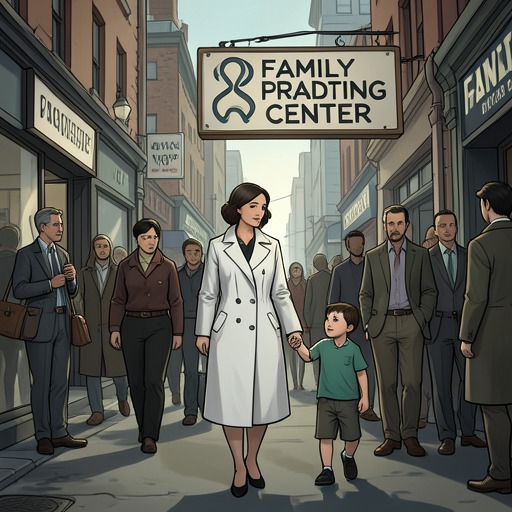
Before Wu vanished, she told Sun Jie that a man had appeared repeatedly along her routes. The first time, she was returning from the theatre after a performance. Sun Jie was ill in bed, and Wu saw the man in the theatre atrium and again on a bus. At first she did not think much of it. A few days later she noticed him across the road from a bus stop outside an exhibition hall, smoking and watching as she boarded. She remained not especially concerned, but when she saw him again in her street, standing just inside an alley entrance, she recognized that he was watching her and became frightened. That was when she told Sun Jie.
The sequence turns ordinary locations into a pattern: the theatre, the bus, the stop by the exhibition hall, and finally the entrance to an alley in Wu’s own street. No single sighting initially seemed conclusive to her; repetition altered their meaning. Her fear followed the accumulating appearances, rather than preceding them, and the eventual report to her husband supplies an account of how the danger first became legible to her. Sun Jie had mentioned the sightings before, but the novel gives their detail investigative force when he recounts them to Li Yan and Nien Mei-Ling.
Sun Jie described the man as short, squat, and thick-set, with long, greasy hair and an ugly scar on his upper lip that Wu thought might be a hare-lip. She had noticed him, Sun Jie explained, because his face was hard to forget; she also thought he looked Mongolian. The description is a reported recollection, not an independent identification of a suspect. Still, Li Yan had already anticipated that Sun Jie might describe someone resembling Jiang Baofu, so the account offers the investigation a pointed comparison without establishing that the watcher and Jiang Baofu were the same person.
Significance in the Investigation
Wu’s story alters the meaning of her disappearance. What had been dismissed as a possible marital departure becomes, in Sun Jie’s recollection, a case in which a woman who expected to return home had first noticed a persistent watcher. Li Yan recognized the account as the first indication that the women under investigation might have been stalked and snatched. Wu’s experience therefore supplies a possible link between the individual circumstances of a missing woman and a broader pattern the investigators have only begun to detect.
Her importance rests on the conjunction of incomplete evidence. The injured foot offers a possible connection to a recovered body; the unfinished letter, simmering soup, and tour preparations support Sun Jie’s belief that Wu intended to return; and the stranger’s repeated appearances suggest a threat without proving what became of her. Wu remains a person reconstructed through other people’s accounts, but those accounts do more than identify her as a possible victim: they preserve the route by which fear emerged, was communicated, and became a lead in the search for the truth.