
The Yellow Sign and Responsibility
The King in YellowThis flow traces the Yellow Sign as an object that moves from curiosity to recognition, obligation, and fatal possession.
increasing Bearing strength in each event
 decreasing
Bearing strength in each eventdecreasingSymbolic Mark
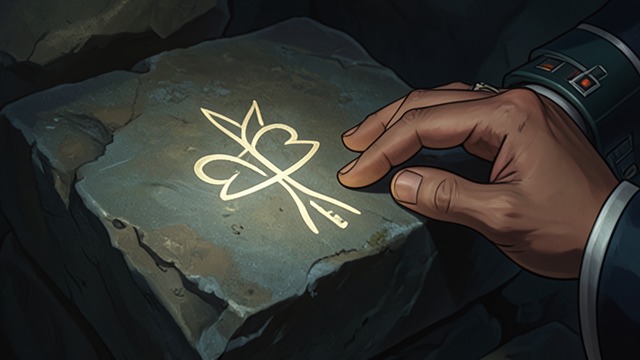
Symbolic Mark
The Yellow Sign appears as a mysterious emblem associated with the King in Yellow.
Unreadable Meaning
Its script resists ordinary language and therefore attracts interpretation.
Latent Authority
The sign's power begins as a promise that recognition can unlock hidden truth.
Hildred's Writ

Hildred's Writ
Hildred Castaigne sends the Yellow Sign to people whom he intends to command.
Political Token
The emblem functions as a summons within his imagined empire.
Fearful Compliance
Its effectiveness depends less on supernatural proof than on the recipient's terror and vulnerability.
Tessie's Keepsake
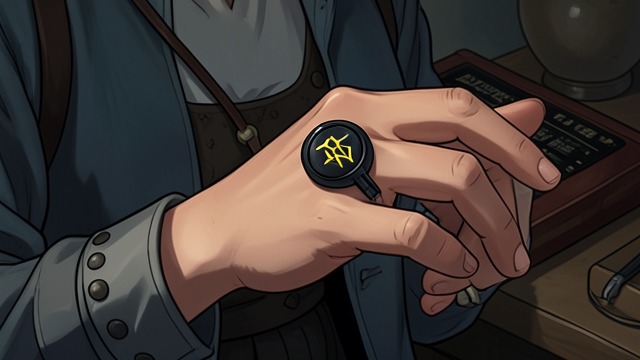
Tessie's Keepsake
Tessie Reardon gives Mr. Scott a black onyx clasp marked with the Yellow Sign.
Innocent Gift
She treats the object as a found keepsake rather than a dangerous emblem.
Hidden Link
The gift joins romantic intimacy to the supernatural threat already surrounding the watchman.
Shared Recognition
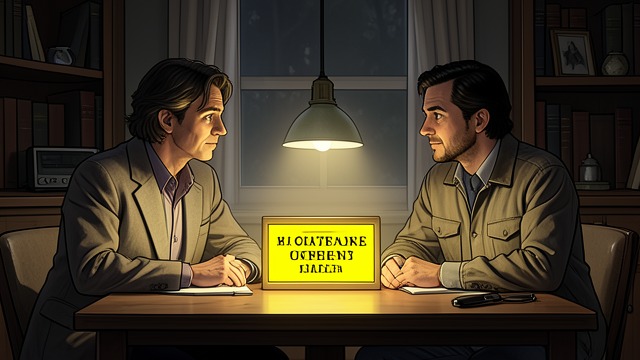
Shared Recognition
Mr. Scott and Tessie Reardon read The King in Yellow and understand the Yellow Sign together.
Intimate Knowledge
The sign becomes a bond that no ordinary conversation can contain.
Exposure
Their shared recognition makes them visible to the force that has pursued the emblem.
Claimed Sign

Claimed Sign
The watchman takes the Yellow Sign from Mr. Scott's coat after entering the locked studio.
Possession Reversed
The object that seemed to offer knowledge becomes proof of vulnerability.
Fatal Completion
Its removal coincides with Tessie's death and Mr. Scott's collapse.
During the first reading of The King in Yellow
Late spring 1920
The winter before The Yellow Sign's final events
The night after the book is opened
The final moments in the studio
