
The Pallid Mask and the Self
The King in YellowThis flow follows the mask motif as characters confront disguises, self-deceptions, and identities that cannot remain hidden.
increasing Bearing strength in each event
 decreasing
Bearing strength in each eventdecreasingThe Unmasked Stranger

The Unmasked Stranger
Cassilda and Camilla demand that a stranger remove his mask, but he claims to wear none.
Identity Crisis
The exchange makes concealment more frightening than disguise.
Foundational Image
The absent mask becomes a symbol for truths that appear directly in the face.
Hildred's Crowned Face
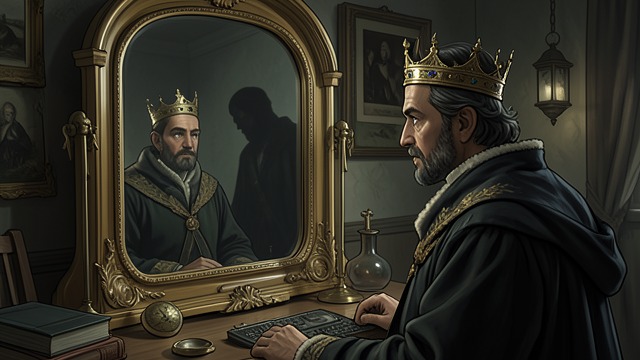
Hildred's Crowned Face
Hildred Castaigne studies his crowned reflection and sees a king where Louis Castaigne sees illness.
Self-Crowning
The mirror confirms an identity created by desire rather than public recognition.
Fractured Perception
The face in the glass becomes more authoritative to him than the people who oppose it.
Alec's Emotional Mask

Alec's Emotional Mask
Alec realizes that his calm friendship has concealed his love for Geneviève.
Self-Deception
The mask initially protects Boris Yvain and Geneviève from his sorrow.
Unmasking
Geneviève's fever removes the disguise and reveals feelings that can no longer be controlled.
Scott's Confession

Scott's Confession
Mr. Scott records the events around Tessie Reardon while refusing the outside world's explanations.
Narrative Control
Writing becomes his last attempt to distinguish supernatural fact from public speculation.
Final Vulnerability
The confession ends as physical life fails, leaving truth sealed between him and the priest.
Selby's Mirror
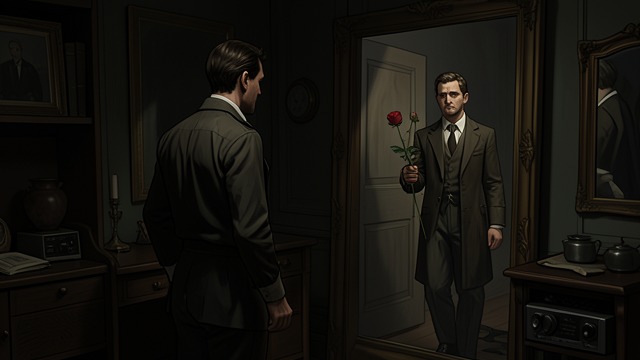
Selby's Mirror
Selby sees his own reflection and recognizes the shame behind his pursuit of Rue Barrée.
Sudden Clarity
The mirror strips away the romantic story he told himself.
Ethical Retreat
He leaves with a rose, accepting that desire does not entitle him to possession.
In the opening scene of The Mask
The morning before his arrest
During Alec's recovery
While Mr. Scott writes his final account
Inside Rue Barrée's room
