Dr. John Archer
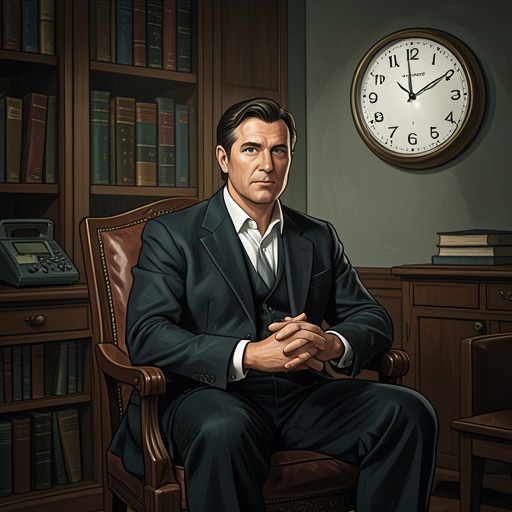
The King in YellowDr. John Archer is the physician whose mistaken diagnosis and private confinement of Hildred Castaigne become a formative grievance in Hildred’s mind. Although he later declares Hildred cured, Archer’s medical authority is remembered not as benevolent care but as an unjust exercise of power, and the imagined or actual revenge directed against him helps expose the collapse of Hildred’s judgment.
Medical Authority and the Riding Accident
Hildred’s relationship with Dr. John Archer begins after Hildred falls from his horse and is found unconscious on the pavement. Someone mercifully shoots the injured horse, while Archer, judging that Hildred’s brain has been affected, places him in a private asylum and subjects him to treatment for insanity. The account is presented by Hildred himself, whose insistence that his mind was always as sound as Archer’s, if not sounder, immediately makes the medical history inseparable from the question of unreliable narration.
The accident nevertheless changes Hildred’s conduct in ways he considers positive. He describes himself as having been transformed from a lazy young man about town into someone active, energetic, temperate, and ambitious. The physical pains in the back of his head and neck eventually disappear, and after four years Archer decides that there is nothing more to cure. Hildred therefore accepts the physician’s release while continuing to regard the original diagnosis as an intolerable mistake.
The Grievance After Release
When Archer dismisses him, Hildred pays the physician’s fee, jokingly treating it as tuition for the period of confinement. Hildred tells Archer, smiling, that he will get even with him for the mistake; Archer laughs heartily and invites him to call from time to time. Hildred does return, ostensibly hoping for an opportunity to settle the account, but Archer gives him none, so Hildred says that he will wait.
This apparently cordial exchange contains the relationship’s decisive imbalance. Archer treats the episode as a finished medical error, while Hildred preserves it as an unresolved personal debt. The physician’s later absence from the visible action does not lessen his importance: for Hildred, the diagnosis becomes proof that respectable authority has tried to deny his identity and suppress his supposed destiny.
Archer as a Target of Hildred’s Delusion
Hildred’s hostility is signaled even in ordinary conversation. At Hawberk’s house, the word lunatic provokes feelings he refuses to explain, and he goes upstairs to visit Mr. Wilde, whom others openly regard as insane. Hildred’s sensitivity to that label reveals how deeply Archer’s institutional judgment remains embedded in his self-conception: he can recognize madness in others only by fiercely denying it in himself.
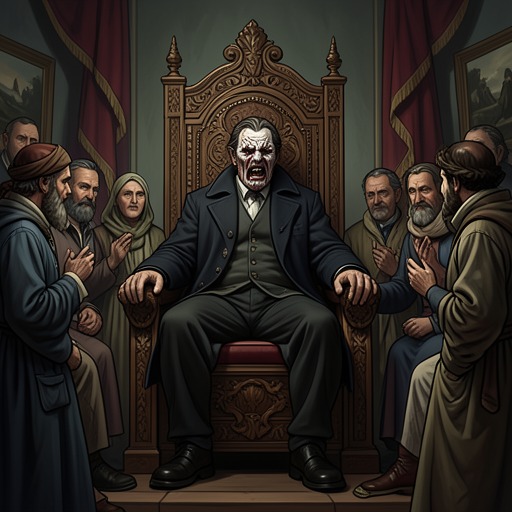
Later, Hildred tells Louis Castaigne that Archer somehow learned the secret of the Imperial Succession and attempted to deprive Hildred of his right. He alleges that Archer used the riding accident as a pretext for declaring him mentally deficient, restraining him in his own house, and seeking either to drive him insane or poison him. Hildred then announces that he visited Archer the previous night and that the interview was final. The statement is not corroborated by an independent witness, and its grand political language places Archer inside Hildred’s expanding fantasy of crowns, succession, and empire.
Archer’s alleged fate becomes part of Hildred’s threat against Louis. Hildred says that Archer will be found in the cellar with his throat open, and he associates the killing with Vance’s knife and an order bearing his own signature. Whether this confession reports an actual murder or a delusional construction, it marks the point at which a medical grievance becomes murderous political theater. Archer is no longer merely the doctor who confined Hildred; he is recast as the conspirator whose removal supposedly clears the path to imperial power.
Consequences and Narrative Significance
Dr. John Archer never receives a direct defense or a final independent account. His characterization is filtered through Hildred’s memory, resentment, and increasingly disordered interpretation of events. The text thus sets medical diagnosis against subjective testimony without allowing either side to settle the matter comfortably: Archer may have made a grave clinical mistake, but Hildred’s certainty about secret succession and poisoning shows how a real injury can be absorbed into a delusional system.
Archer’s importance lies in this ambiguity. His diagnosis initiates the institutional history that Hildred uses to explain his suffering, while Hildred’s later accusations turn the physician into a symbol of social control. The result is a tragic inversion of medical care: confinement is remembered as persecution, release as an unfinished debt, and the patient’s demand to be recognized as sane culminates in conduct that leads to his confinement in the asylum for the criminally insane. The editor’s final notice states that Hildred died there, leaving Archer’s original judgment shadowed by the possibility that it was both unjust in its beginnings and grimly vindicated by the end.