Marriage
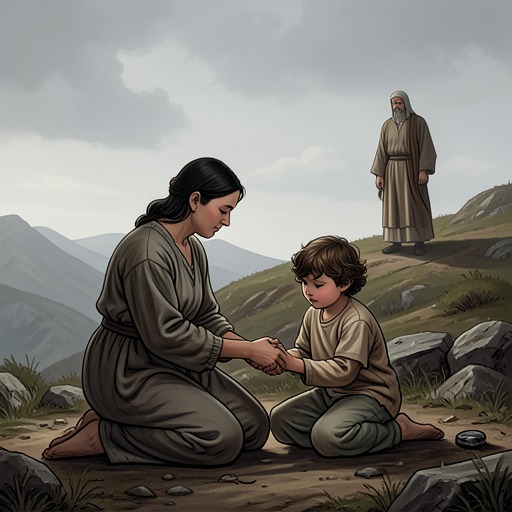
The King in YellowMarriage is presented across the book as both an intimate promise and a public or psychological pressure point. It joins Louis Castaigne and Constance Hawberk in a relationship that Louis describes with uncomplicated happiness, while Hildred Castaigne treats the proposed union as an intolerable political and personal threat. In the Paris siege narrative, marriage is less a ceremony than a precarious household allegiance: Jack Trent and Sylvia Trent share poverty, danger, and domestic tenderness until an older secret makes their union morally unstable.
Marriage as Promise and Possession
Marriage first becomes decisive when Louis Castaigne tells Hildred Castaigne that he is going to marry the sweetest girl on earth. The announcement immediately changes the emotional balance between the brothers. Hildred conceals his shock, though he believes for a moment that his heart has stopped, while Louis continues joyfully, treating marriage as the natural fulfillment of his love rather than as a source of conflict.
The wedding is originally planned for the following September, but military orders abruptly accelerate the separation from courtship to married life. Louis's regiment is ordered to the Presidio in San Francisco, and he and Constance Hawberk are to leave the next day. Louis imagines the move as an extension of his happiness, even planning to obtain his squadron as a wedding present and envisioning himself as Captain and Mrs. Louis Castaigne's proud household head. The abrupt military summons therefore gives the marriage a double character: it promises a shared future, but it also places that future under the authority of the regiment and the state.
Hildred Castaigne's Rejection of the Union
For Hildred Castaigne, Louis Castaigne's marriage is not merely an unwanted family decision. It becomes entangled with his claim that Louis must renounce a crown and accept exile, or face death. Hildred therefore attempts to transform a private wedding into an act of political disobedience. His language treats marriage as evidence that Louis is abandoning a destiny Hildred believes belongs to him, and the proposed union becomes the immediate trigger for open violence.
Hildred forbids Louis to marry and threatens him with death if he refuses to surrender the supposed crown. When Louis tries to calm him, Hildred draws a long knife and bars his way. He further declares that Dr. John Archer will be found in the cellar with his throat cut, while invoking Osgood Oswald Vance, a knife, and an order signed by Hildred himself. The scene turns marriage into the point at which fraternal rivalry, delusion, ambition, and threatened murder converge. The relationship that Louis experiences as loving commitment is recast by Hildred as betrayal and usurpation.
Domestic Marriage under Siege
In the Paris siege narrative, Jack Trent and Sylvia Trent embody another form of marriage, grounded in repeated acts of care amid public catastrophe. Sylvia is nineteen when Jack organizes a birthday dinner for her, inviting friends and arranging food in a city where ordinary abundance has disappeared. The meal includes sardines and soup, but Sylvia interrupts the celebration to carry soup downstairs to the old concierge and her husband. Her domestic generosity extends beyond the apartment, showing marriage as part of a wider network of mutual obligation rather than an isolated romantic arrangement.
The tenderness of the household is set against bombardment and military duty. Sylvia embraces Jack, asks him not to go out that night, and draws him down into her lap; Jack kisses her but insists that he must leave. Their marriage cannot create a private refuge beyond history. Shells cross the sky, cannon fire rolls from the Prussian positions, and the streets fill with people waiting for news of a sortie while sick, starving, and freezing. Jack's departure is therefore both a marital wound and a civic duty: Sylvia seeks his physical presence, whereas the siege demands his participation in the crisis outside their rooms.
Secrecy, Rival Claims, and the Meaning of Husbandhood
The marriage between Jack Trent and Sylvia Trent is later shaken by Sylvia's confession that another life binds her to another man. She explains that when Jack declared his love, it was already too late, because another man had claimed and treated her well. Her plea that he must not die, since the other man matters to someone else, reveals that marital identity in the novel is not secured by simple affection or present domestic intimacy. It is crossed by prior promises, concealed histories, and obligations that remain active even when they are not spoken.
Jack's response is described through stunned silence and a whirl of thought. He had shared student life and the desolation of the siege with Sylvia, had been quietly fond of her, and had treated her with a mixture of teasing and affection. Her revelation forces him to see the apparently familiar wife as someone whose emotional and moral life exceeds the role he had assigned her. Marriage consequently shifts from companionship to crisis: the household remains physically present, but its assumed exclusivity has been broken.
Marriage, Survival, and Transformation
The siege makes marriage inseparable from survival. Paris is described as freezing, hungry, and threatened by artillery; streets become nearly deserted, a gamin scavenges a still-warm rat from a sewer, and crowds wait for military signals without knowing whether the next announcement will bring a sortie or further starvation. Against this setting, the marital household is measured not by comfort but by endurance, shared food, protection, and the willingness to confront danger.
That pressure culminates when Jack reunites with Sylvia after the city receives the shattered remnants of an army. The returning troops enter through the gates as a starving, exhausted mass, while the crowd watches in misery. Elsewhere, Hartman is marched behind a file of bayonets and apparently executed by a volley, making the surrounding world one of public death and irreversible loss. Within this devastation, Jack embraces Sylvia and the child, whispering, “Ours.” The word gives marriage its most concentrated form in the evidence: not a social announcement or a claim to rank, but an assertion of shared responsibility amid collapse. Yet because it follows Sylvia's revelation of another binding relationship, the gesture is emotionally unresolved. Marriage offers belonging and survival, but the narrative refuses to make either one simple or secure.