Tessie Reardon
The King in YellowTessie Reardon is a model and the beloved companion of Mr. Scott whose apparently ordinary presence becomes the human center of the story’s supernatural terror. Her recurring dream of a hearse, her recognition of its driver, and her instinctive fear of the Yellow Sign establish a pattern that Mr. Scott first treats as imagination but later experiences as prophecy. Her love briefly creates a refuge of mutual understanding, yet it also binds her to the onyx clasp and to the force that comes for it. When the King in Yellow enters the house, Tessie dies while Mr. Scott survives only long enough to record the catastrophe.
Identity and Introduction
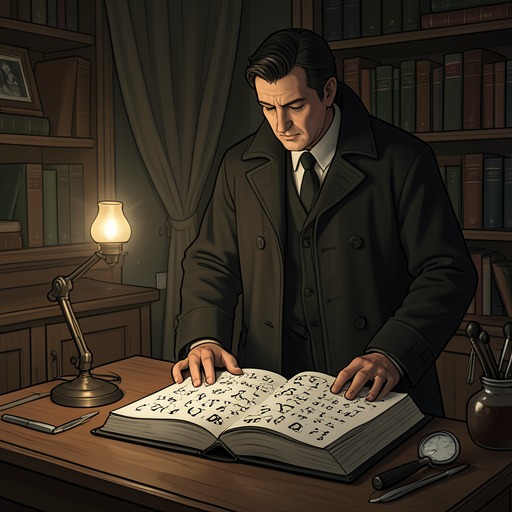
Tessie is introduced through the painter’s studio, where she is posing for Mr. Scott. Against the disturbing presence of the man in the churchyard, she remains physically unchanged: her “clear flush of health” colors her neck and cheeks while Mr. Scott discovers that his painting has become sallow and unhealthy. The contrast makes her the visible image of ordinary vitality, set against the grave-like repulsion produced by the other man. Her body is present as a model, but the scene also establishes her as a perceptive participant in events that Mr. Scott initially fails to understand.
Her practical connection with the painter gives the relationship an established intimacy. She has posed for him often enough to know his work and his habits, and she speaks to him directly when she notices his unease. Yet her role is not confined to that of an object being observed. She becomes the person who supplies the story’s first sustained account of the hearse and who later identifies the threat that the painter’s rational explanations attempt to minimize.
The Hearse Dream and Recognition
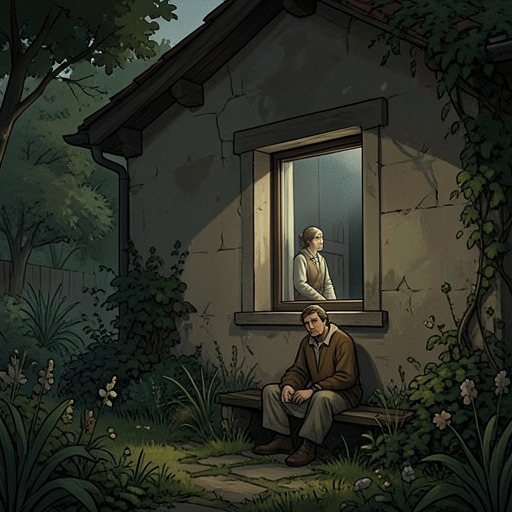
Tessie recounts a dream that has repeated across several months. After posing for Mr. Scott, she lies awake through the ringing of ten, eleven, and midnight, then seems to be compelled toward the window. Twenty-fifth Street is deserted and black, and the sound of approaching wheels becomes something she feels destined to await. The vehicle that finally passes beneath her window is a hearse, whose driver turns and looks directly at her. She awakens standing beside the open window, shivering in the cold.
The dream returns in March and again on the rainy night when she tells Mr. Scott about it. Each time, the boundary between sleep and waking weakens: she does not merely remember the hearse but finds herself physically positioned at the window after awakening. On the last occasion her night-dress is soaked by the rain. The repetition gives the dream an accumulating force, while the precise setting and recurring gesture make it less like an isolated nightmare than a visitation pressing into ordinary life.
Tessie then connects the dream to the unhealthy man in the churchyard. She insists that the face of the man below is the face of the hearse driver. Mr. Scott dismisses the driver’s occupation as honest and asks whether she truly saw the hearse, but her recognition marks the first explicit link between the dream, the churchyard watchman, and the approaching death that later overtakes the house. Her testimony is treated as excessive fear until the final scene confirms that her perception was tragically accurate.
Love and Shared Understanding
Tessie’s relation to Mr. Scott changes from professional closeness to openly declared love. When he asks whether her concern is for him, she answers that she cares for him. Her confession shocks him because he has not prepared an honest response and has been emotionally divided by an earlier passion associated with Brittany and Sylvia. Before he can retreat into laughter, evasion, or polite reassurance, he kisses Tessie. The kiss commits him to the relationship and makes the danger that follows a shared danger rather than a private haunting.
Her affection is not presented as passive dependence. Tessie repeatedly attempts to protect Mr. Scott, particularly when she urges him to discard the black onyx clasp marked with the Yellow Sign. She recognizes the object as a source of peril and pleads with him to tear it from his breast and throw it into the fire. Mr. Scott cannot explain his refusal, even while admitting that he wishes to remove it. Tessie’s clearer judgment therefore confronts his inexplicable attachment to the object: she sees the material danger, while he remains bound to it by an impulse he cannot name.
Their final conversation produces a temporary intimacy beyond ordinary speech. As they sit together into the night, they speak of the King in Yellow, the Pallid Mask, Hastur, and Cassilda, while fog presses against the windows like waves on the shores of Hali. Tessie and Mr. Scott understand that the mystery has been exposed between them; their thoughts answer one another swiftly and silently. This mutual comprehension offers a brief alternative to isolation, but it cannot protect them from the force already approaching.
Death and Narrative Function
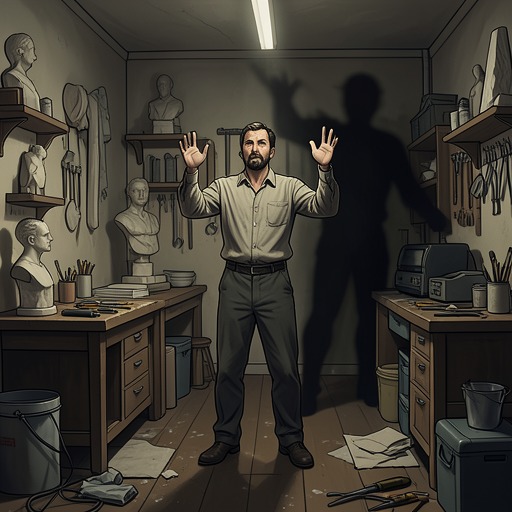
The recurring sound from Tessie’s dream becomes real outside the house. Wheels approach through the fog, a black-plumed hearse stops before the door, and the churchyard watchman enters despite the locked bolts. The supernatural assailant envelops Mr. Scott in a cold, soft grasp, tears away the onyx clasp, and strikes him. During the attack, Tessie gives a soft cry and her spirit flees. Her death occurs at the precise moment when the hidden threat becomes physically undeniable, transforming her earlier warning into the story’s final proof.
The aftermath preserves her importance even though she can no longer speak. People in the house respond to an infernal scream and find one living person and two dead bodies: Tessie is dead, Mr. Scott is dying, and the watchman’s decomposed corpse lies on the floor. The doctor has no theory or explanation for how that corpse could have participated in the attack. Tessie’s fate thus remains tied to the story’s unresolved supernatural contradiction: she dies as a victim of the pursuer, while the apparent pursuer is also discovered dead.
Tessie’s narrative function is consequently both emotional and structural. Her health contrasts with the corpse-like figure in the churchyard; her dream anticipates the hearse; her recognition identifies the driver; her love gives Mr. Scott a reason to resist isolation; and her death completes the pattern that she alone initially perceived. The story’s final horror is not only that the hearse arrives, but that Tessie’s ordinary intimacy with Mr. Scott cannot survive the knowledge carried by the Yellow Sign. Her warning is vindicated, yet that vindication arrives only as death.