The Fates
The King in YellowThe Fates is Boris Yvain’s unfinished marble group and the most consequential work of art in the narrative. Conceived as a splendid, terrible creation, it remains half concealed in the marble when Boris’s personal catastrophe overtakes the studio. Its final, inexplicable likeness to Boris turns the sculpture from an artistic project into a record of suffering, while its later association with his grave gives it the role of memorial and unanswered testimony.
Conception and Artistic Ambition
The sculpture belongs to the professional world of the Parisian studios and salons, where Boris is recognized as an exceptionally gifted young sculptor. He is proud of his American birth, though his father is French and his mother Russian, and he is sufficiently established to have produced a celebrated work, the marble Madonna for which Geneviève sat. That sculpture had been the sensation of the previous year’s Salon, raising expectations that any new work by Boris would surpass ordinary academic accomplishment.
By contrast, The Fates is not ready for exhibition. Boris has completed and pointed up an academic Ariadne, but regards it as inadequate after the success of the Madonna. The unfinished group behind him is technically and imaginatively more important: it is described as splendid and terrible, yet remains half shrouded in the surrounding marble and must wait beyond the coming Salon. Its incompletion is therefore not a sign of artistic failure. It marks the work as a more dangerous undertaking than the finished pieces that have already won public approval.
The Sculpture in Boris Yvain’s Studio
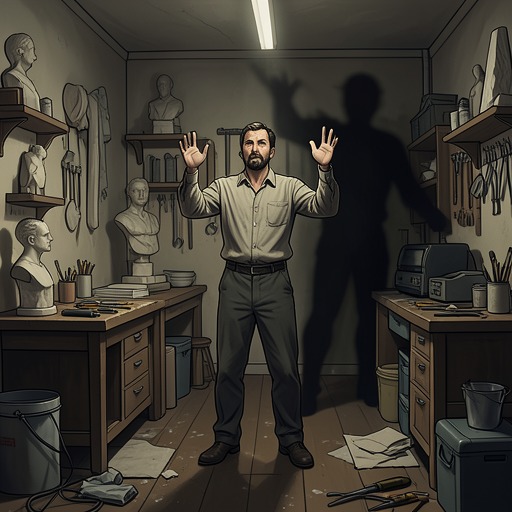
When Alec visits Boris, the two men sit in a corner of the studio near the unfinished group. Boris leans back on a sofa, turns a sculptor’s chisel in his hand, and discusses the lesser Ariadne that he can actually send to the Salon. The physical placement of The Fates gives the conversation a silent counterpoint: behind them stands the work that matters most, present but not yet fully disclosed.
The group also binds Boris to his closest friends. Jack Scott and Alec claim Boris as their own, and Boris returns that familiarity to them, addressing no others in quite the same way. Alec’s love for Geneviève intensifies the emotional charge of the sculpture’s surroundings. Geneviève loves Boris instead, and Alec’s formal congratulations to his rival cannot conceal the knowledge shared between the two men. The studio thus contains artistic competition, romantic defeat, and loyal companionship before any of them has been openly resolved.
The Final Transformation
The Fates acquires its most disturbing feature during the last night of Boris’s life. According to Jack Scott’s account, Geneviève has been rendered unconscious by drugs and is said to have been completely out of her mind. Boris continues working while Jack watches in silence. Before midnight, the third figure of the group—the figure looking directly ahead and out over the world—has taken on Boris’s face, not the face his friends knew in ordinary circumstances, but the face he wore then and retained until the end.
The likeness is not explained by the surviving witnesses. Jack can identify what he saw but cannot say how it happened, and the uncertainty makes the sculpture more than a portrait. Its gaze outward suggests an awareness exceeding the immediate room, while its resemblance to Boris makes the group a physical counterpart to his altered condition. The work’s title invokes the powers that govern mortal destiny; its unfinished state, suddenly marked by the artist’s own face, gives that destiny a terrifyingly personal form.
Death, Erasure, and Memorial Function
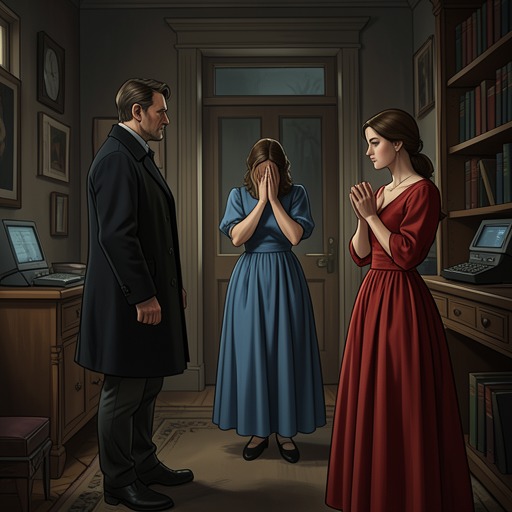
Soon after the change in the third figure, a door opens sharply and a rush is heard in the adjoining room. Boris and Jack arrive too late to prevent Geneviève from entering the pool, where she is found dead with her hands across her breast. Boris then shoots himself through the heart. The sculpture remains as the one visible object that directly links the artist’s final state to the deaths, but the surrounding material evidence is deliberately eliminated.
Jack drains the pool, washes the marble clean, empties Boris’s laboratory solution into the waste-pipe, and destroys the contents of the jars and bottles. He burns Boris’s papers, notebooks, and letters, smashes the empty bottles, and carries them to the cellar furnace until nothing remains that could help recover the formula Boris had discovered. This destruction protects the public from the experiment’s possible consequences, but it also removes the explanatory context that might have made the sculpture intelligible. The Fates survives where the formula, documents, and scientific trail do not.
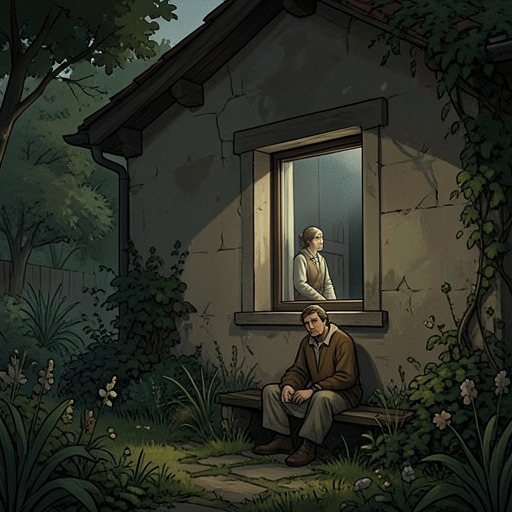
After Alec recovers, Jack gives him a letter and the keys to Boris’s house and tells him what happened. Boris has been buried in the cemetery at Sèvres. When Alec and Jack visit the grave, Jack asks whether The Fates should be placed in the little grove above it. Alec answers that only the Madonna should watch over Boris’s grave. The decision separates the two works: the Madonna, associated with Geneviève and public artistic success, becomes the chosen guardian of the dead, while The Fates remains marked by the violence and mystery of the final night.
Narrative Significance
The Fates operates simultaneously as artwork, witness, and unresolved puzzle. Its public destiny is interrupted before the group can be completed or exhibited, yet its unfinished surface records the moment when Boris’s identity appears to enter the sculpture itself. The work therefore reverses the normal relation between artist and creation: Boris does not simply shape the marble; the marble seems to return his changed face to the people watching him.
Its significance also depends on the contrast between preservation and suppression. The government later places a marble group of The Fates before the first Government Lethal Chamber on Washington Square, identifying it as the work of Boris Yvain, who died in Paris at twenty-three. In that civic setting, the sculpture becomes part of an official architecture devoted to death, surrounded by a garden, fountains, Ionic columns, and a bronze door. Yet the narrative’s private account gives the same work a far darker history: it is connected with Geneviève’s drowning, Boris’s suicide, and the destruction of every surviving aid to understanding his discovery. The public monument and the secret studio version coexist, making The Fates an emblem of how art can be beautified, institutionalized, and displayed even when its deepest meaning remains bound to catastrophe.