Arthur Tudor
The King's CurseArthur Tudor, Prince of Wales, was the eldest son and heir of Henry VII and Elizabeth of York. His youth brought the promise of a settled Tudor succession, while his appearance and lineage kept the Yorkist inheritance visible within that promise. Entrusted to Margaret Pole’s care, he died before he could rule; the unresolved question of his marriage to Katherine of Aragon then became consequential to the next king’s claim and the future of the dynasty.
Identity and dynastic position
Arthur was the son of Henry VII and Elizabeth of York, and the Prince of Wales. To Margaret, who cared for him, his looks and charm recalled the House of York: at thirteen he was already taller than she was, with what she regarded as Yorkist good looks and charm. She saw little of the House of Tudor in him apart from his copper-colored hair and occasional anxiety. His person thus carried a dynastic contrast: the Tudor heir also seemed, in appearance and bearing, to preserve the Yorkist line.
That inheritance existed amid the violent elimination of rival claims. Arthur’s marriage prospects had depended on the Spanish monarchs being assured that England had no competing heirs. Margaret recalls that Henry VII had both her brother, Edward Plantagenet, and a pretender claiming to be the queen’s brother killed. Their different responses—one denying his name and raising no army, the other taking up arms—did not spare either man. Arthur’s expected marriage therefore rested on a succession secured by the removal of potential rivals, even as he represented a hoped-for reconciliation between York and Tudor.
A prince in Margaret Pole’s care
In spring 1500, at Stourton Castle, Margaret entered a monthlong confinement while her husband departed to escort Arthur to Ludlow Castle in Wales. She stood at the house’s great door to bid them farewell. Arthur knelt for her blessing; she placed a hand on his head, kissed both his cheeks, and embraced him. Her instructions were practical and affectionate: she warned him to be careful while jousting and riding, to seek shelter in the rain, and not to show off. She had promised his mother that no harm would come to him, and placed the burden of keeping that promise partly on the boy himself.
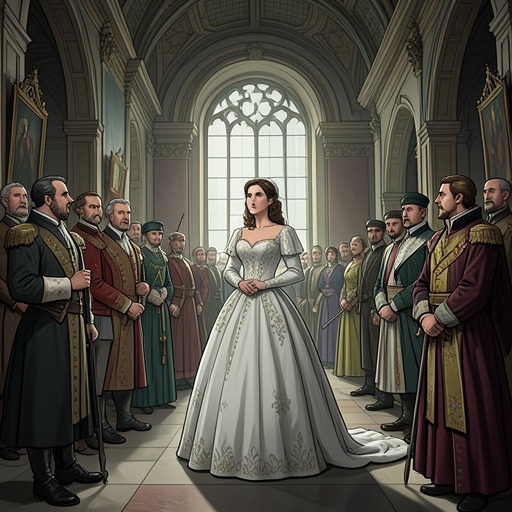
At court, Arthur’s position was formal as well as intimate. After returning from the stables, he and Margaret’s husband brought her through the great hall, where the household bowed to her, and she took her place between them and the Prince of Wales at the high table. Later, Margaret visited Arthur’s bedchamber while he said his prayers with his chaplain. He prayed for his father and mother, and for Margaret Beaufort, the king’s mother. The scene presents a prince formed by ceremony and devotion, but also as a young person whose daily life included the guidance of the woman entrusted with his care.
Arthur asked Margaret whether he would marry that year. She could give him no date, but told him there could now be no objection to the wedding. His question reveals the importance of the match to him; the circumstances behind it reveal its political stakes. Spain had conditioned the marriage on the absence of rival English heirs. When Arthur reached for Margaret’s hand, she was also privately reckoning with the deaths that had helped clear the way for his betrothal.
Marriage and contested memory
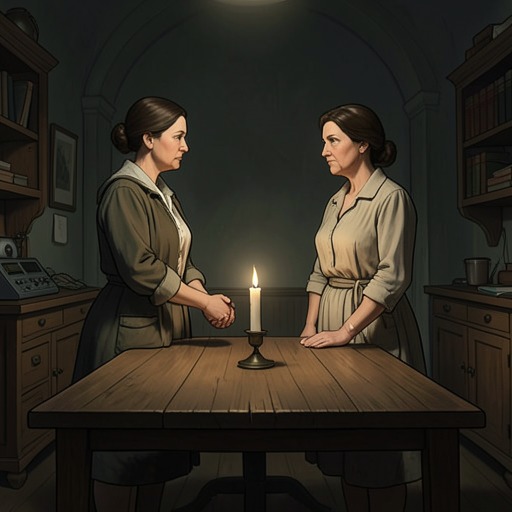
Arthur married Katherine of Aragon, but the marriage’s consummation remained disputed after his death. In a later confrontation, Margaret is pressed to confirm that Arthur and the dowager princess had been put together in her household once each week, as ordered. She acknowledges that the weekly visits took place; that fact does not establish what happened between them. The distinction becomes crucial when the queen insists that the marriage was never consummated and Margaret is accused of supporting that account.
The argument was not merely about a private recollection. The queen feared that if Katherine’s claim were accepted, the king could obtain a papal dispensation to marry his former daughter-in-law, with consequences for the royal household and succession. Margaret is urged to say that Katherine was wedded and bedded, but the evidence presented in these scenes leaves the central question unsettled. Arthur’s brief marriage thus continued to shape royal politics after he could no longer speak for himself.
Death and dynastic consequences
Arthur died in Margaret’s care. As his condition worsened, his confessor administered extreme unction. Margaret, overcome with grief, could not sustain the prayers expected of her and feared that she had failed to teach him to cling to life. The passage does not identify a definitive cause of death. It records the treatments attempted: prayers, leeches, herbs and oils, and a charred sparrow’s heart tied to his chest. None could save him. He was dead by the time the clock struck seven.
Margaret then tended to him in the familiar gestures of care. She straightened his collar, closed his eyes, drew the embroidered coverlet across him, and kissed him goodbye before sending for the midwives to prepare his body. The scene ends not with the prince’s public status but with the ordinary intimacy of someone who had cared for him: the boy she had warned about riding and rain was now being tucked in as if for the night.
Arthur’s death left Henry VIII, his younger brother, to inherit the throne and made the unresolved terms of Arthur’s marriage newly consequential. Later, a royal infant was found lifeless in its cradle after Henry had told Margaret that she would raise the next King of England. The narrative describes that loss through the image of an old curse ending the line that had killed the princes of York. In this recurring language of inheritance, the deaths of princes and children weigh on the succession as both personal bereavement and political crisis.
The prince as dynastic symbol
Arthur’s role in the narrative is defined by the distance between promise and outcome. He is presented as a beloved, carefully watched boy and as the heir around whom a dynastic settlement was supposed to take shape. His Yorkist appearance within the Tudor household gives that settlement a visible form, while the deaths of rival claimants show how insecure it was. His own early death breaks the expected succession and leaves his marriage open to political argument.
The later struggle over Katherine’s marriage demonstrates the durability of Arthur’s place in that history. Whether or not the marriage was consummated, its disputed status could be invoked to challenge the legitimacy of Henry VIII’s marital choices. Arthur’s brief life therefore survives in the plot less as a record of rulership than as an unresolved hinge: his birth promised dynastic continuity, his death redirected the crown, and the uncertainty surrounding his marriage became part of the next generation’s crisis.