Choosing life over loyalty or truth
The King's CurseChoosing life over loyalty or truth is a principle Margaret Pole insists upon in the face of political danger and inherited family loss. The novel gives that principle a double edge: Margaret counsels her children not to mistake death for honor, yet her own last act turns the desire to live into a refusal to submit to Henry VIII’s will.
A principle formed by fear
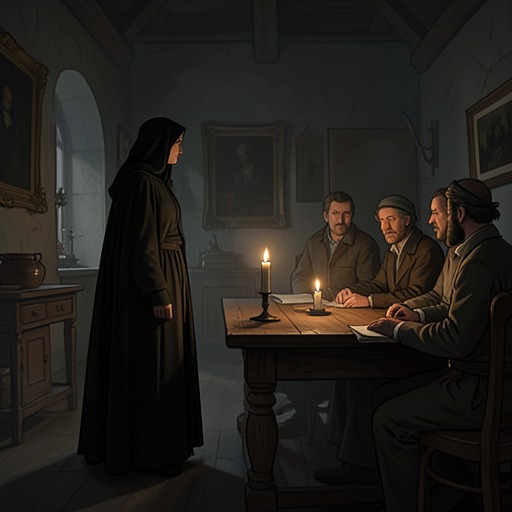
When Lord Montague says that Geoffrey Pole would have been better off killing himself than betraying his family, Margaret sharply rebukes him. She calls the thought foolish and wicked, insisting that it is never better to die. Her response is not abstract: she fears that Geoffrey may be taken, and that she and Lord Montague may be taken next. The possibility of losing her son and heir makes the choice between loyalty and survival immediate and personal.
Margaret explains that the Tower of London is a constant horror to her. She saw her brother enter and come out only to die, and her father died there after being charged with treason. Against that history, Lord Montague describes the Tower as the family’s oldest and truest seat, with its graveyard as a Plantagenet tomb. Their contrasting responses expose how danger can become inherited: he imagines the family’s fate as settled, while she refuses to accept death as the proper price of loyalty.
Counsel to her children
The novel frames Margaret’s instruction as recurring: she wants her children to cling to life, even at the cost of loyalty or truth. That counsel does not make survival a simple moral victory. In the exchange about Geoffrey, the reported bargain—betrayal in return for warmth, firewood, and food—places self-preservation beside the obligations of kinship. Margaret’s objection is narrower and more urgent: her son must not turn death into a noble alternative or speak as if fear can be mastered by wishing for it.
Her outlook is shaped by the danger surrounding her family, but it is not simply resignation. She recognizes her own fear and admits that the thought of the Tower’s reach terrifies her. By telling Lord Montague that she is afraid too, she makes the principle a shared discipline rather than a demand that her children show courage she does not feel herself. Life is to be clung to because it remains valuable under threat, not because survival guarantees safety or absolves every compromise.
The final refusal
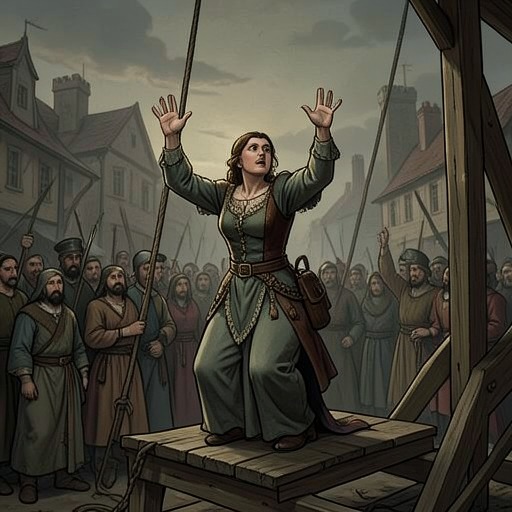
At the scaffold, Margaret initially prepares to comply with the execution procedure. Then a sudden desire for life overtakes her, and she refuses to remain in position. In the struggle that follows, her resistance becomes an assertion that she does not consent to Henry VIII’s will. The moment joins the two sides of her principle: she fights to stay alive, but also refuses to let the act be mistaken for willing submission.
Margaret does not survive. Her resistance ends in her death, yet the scene gives her final choice a meaning beyond the outcome: she continues to oppose what she considers a wrong done to her and her family. The contrast with her earlier warning to Lord Montague is central. She has never accepted death as preferable, and at the end she does not meekly choose it; she clings to life and resists until she can no longer do so.