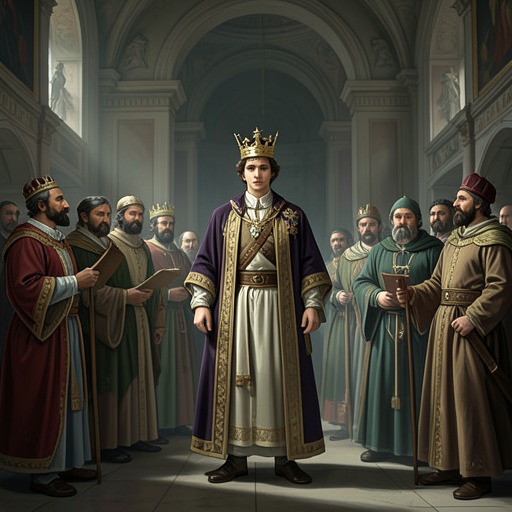
Creation of Henry FitzRoy as Duke of Richmond and Somerset
The King's CurseThe creation of Henry FitzRoy as Duke of Richmond and Somerset was a public display of royal favor that gave Henry VIII’s illegitimate son exceptional status. In July 1525, the six-year-old was made two dukes at once. To Margaret Pole, the honor suggested more than advancement: it raised the prospect that the king might prefer FitzRoy to his legitimate daughter, Princess Mary, as a successor.
Background and Ceremony
The creation took place amid anxiety over the Tudor succession. Earlier, Margaret Pole had imagined that a son born to Queen Katherine of Aragon would secure the queen’s position and quiet doubts about the succession. The king’s decision to honor FitzRoy instead gave those concerns a new, public form.
Margaret heard of the ceremony from her steward, who had returned from London. A great procession went to the old royal palace of Bridewell, where the six-year-old received the titles Duke of Richmond and Duke of Somerset. Thomas More read out the letters patent. The ceremony made the boy’s elevation legible to the court: his status was not merely a private favor but an announced royal distinction.
The Boy and the Symbol of the Titles
FitzRoy was Elizabeth Blount’s son and was described by Margaret as the king’s bastard. Yet the honor placed him conspicuously within the royal order. The double title struck Margaret’s steward as remarkable, while she recognized the political weight behind the display: the king publicly embraced and honored a Tudor son outside his marriage to Katherine.
Margaret’s inward response was shaped by loyalty to the queen. She imagined the pain Katherine would feel watching the golden-headed boy receive his father’s affection and be dressed in ermine. The ceremony’s spectacle thus carried two meanings at once: it magnified FitzRoy’s standing and sharpened the contrast between the king’s favored son and the queen’s daughter.
Succession Fears and Political Consequences
The elevation did not, in itself, formally declare FitzRoy heir. But Montague later treated the king’s presentation of FitzRoy as a sign that Princess Mary was in danger of being displaced. He proposed taking Geoffrey with him to Calais so that Geoffrey could meet Reginald, report on supporters in England, and carry messages to the Pope and the King of Spain. Montague hoped that a papal ruling against the king’s marital campaign would compel Henry to take Katherine back.
Margaret understood the proposal as a grave political choice. Montague argued that the family had to defend the queen and princess, and described the Plantagenets as the white rose, bound together by kinship and duty. In that account, FitzRoy’s advancement helped turn private concern about Mary’s position into a call for collective action. The episode shows how a ceremonial grant of titles could be read not only as a reward to one child but as a warning about the future place of another.