Execution of Robert Aske
The King's CurseRobert Aske’s execution at York marks the brutal reversal of the royal pardon that had ended the Pilgrimage of Grace. The king had publicly honored Aske and offered him a place on the Privy Council; later, the Crown treated his efforts to persuade the northern rebels to trust that settlement as evidence of treason. His journey from court favor to imprisonment and a public death exposes how little protection the king’s promises afforded once the political terms changed.
Pardon and the promise of settlement
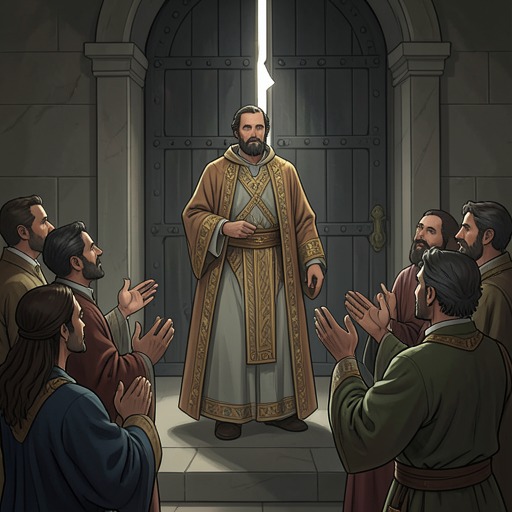
At court, Aske met the king as a rebel leader who had bent his knee without lowering his head. He spoke against Thomas Cromwell’s treatment of the monasteries and the poverty imposed on men expelled from them, arguing that the abbeys and the Church were central to the country. The king listened, gave Aske his own scarlet satin jacket and the gold chain from his neck, and offered him a place on the Privy Council. The gifts made royal favor visible: the chain rested on the shoulders of a man who had led an uprising against the Crown.
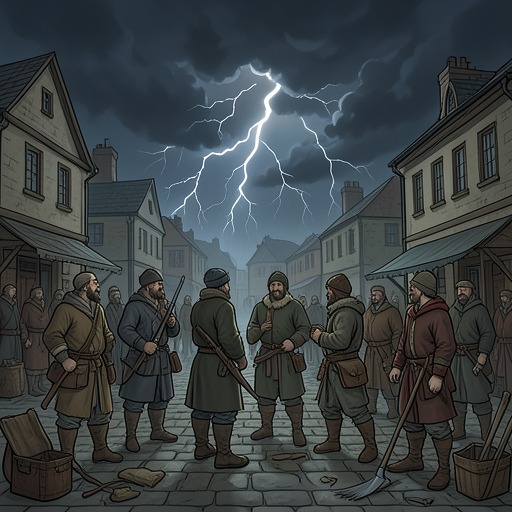
Thomas Howard later carried the king’s pardon north through freezing weather. At Doncaster, he waited outside in the cold while the Lancaster herald offered it to thousands of northerners assembled in patient, silent ranks. Aske told the pilgrims they had won a great victory, asked to be released from his captaincy, and removed the badge of the five wounds. He promised that they would wear no badge but the king’s. Margaret Pole put away the badge given to her by Lord Thomas Darcy, believing the pilgrimage was over, the pilgrims had won, and her sons would return home.
The pardon briefly seemed to promise more than an end to armed conflict. London’s church bells rang at Christmas, and the city celebrated what people understood as the saving of the country, the Church, and the king from himself. During the court’s progress from Westminster to Greenwich, crowds cheered the royal family from the frozen river. Princess Mary, officially reduced to Lady Mary, received the loudest welcome; she rode beneath the Tudor rose, whose red center appeared almost white, and her mother’s pomegranate flag. The public display of loyalty to Mary and the Old Faith stood alongside the apparent settlement with the northern rebels. The hopes attached to the pardon were therefore political as well as personal: people believed that the queen might be crowned in York, a free Parliament held, and the abbeys restored.
From truce to treason
That promise began to unravel when reports came that some pardoned pilgrims had taken up arms again. Thomas Howard arrested several men and sent their names to Thomas Cromwell, who remained in office. Northern gentlemen and lords feared that the region was becoming unruly, but Aske maintained that there was no rebellion against the king. He pointed to the pardon he carried and the scarlet jacket the king had given him as signs that the agreement remained in force. He insisted that opportunists who broke the peace did not invalidate the pardon or erase what the pilgrims had been promised.
The Crown nevertheless called Sir Thomas Percy and Sir Ingram Percy to court; on their arrival in London, both were arrested and sent to the Tower. Aske, too, was taken into custody. Margaret Pole recounts that eight men and one woman, including lords and gentry and two distant kinsmen of hers, were brought before juries on treason charges. Aske was among them. The scale of the prosecutions made clear that the crackdown was not confined to a few renewed acts of violence: it reached prominent northern figures and people known to Margaret as loyal Christians and subjects.
Cromwell’s case against Aske turned the meaning of his peacemaking inside out. Aske had told people that the pilgrimage had achieved its aims, because he believed there would be a northern Parliament and that the monasteries would be restored. Cromwell presented those assurances as treason: by telling the people that their demands had been secured, Aske had, in the government’s reasoning, encouraged the very political confidence that the Crown now sought to suppress. The pardon did not protect him. His attempts to persuade men to accept it and trust the king’s word became part of the argument against him.
Imprisonment and execution at York
The former recipient of the king’s satin jacket waited for trial in the Tower of London with little food, no money, and no change of clothes. No one dared send him anything; even if someone had tried, Margaret says, the guards would have stolen it. The contrast with the courtly scene was stark: the man once dressed in the king’s favor was now denied the ordinary means of comfort, while his full royal pardon offered no practical defense.
Aske was taken from the Tower to court for his trial and back to prison. The narrative recalls that on his previous visit to London he had feasted at court and been embraced by the king. Now he was transported north, not simply to die, but to die before the people who had heard him promise that the pardon would protect them. At York, the city was stunned and silent as he was paraded through it. He was taken to the top of Clifford Tower, read a confession, and hanged. The place and staging made his death a public answer to the hopes he had carried north: the leader who had urged people to trust the royal settlement was displayed before the community that had believed him.
The execution’s objects sharpen its reversal. The rope was put around Aske’s neck where the king’s gold chain had rested; iron chains were wrapped around him in place of the chain that had signified royal favor. The narrative does not treat the gifts as proof that the king’s earlier welcome was false. Rather, their transformation makes visible how quickly favor could give way to punishment, and how completely the Crown controlled the meaning of the same man’s public image.
The wider repression
Margaret and other lords appealed to Cromwell for mercy for the northern men. Her account records the plea as repeated and emphatic, but says that Cromwell had none. The trials continued, and those brought to London were found guilty. Churchmen were accused, including the prior of Guisborough and the abbots of Jervaulx and Fountains Abbey. Margaret Bulmer was prosecuted after urging her husband to flee when she feared the pilgrimage had failed; her chaplain testified against her. Sir John Bulmer was hanged and quartered at Tyburn, while Margaret Bulmer was burned at Smithfield. The account reduces the grim logic of the prosecutions to a distinction between the husband’s alleged treason and the wife’s love for him.
Aske’s death thus belongs to a broader punishment of the North after the pardon had raised expectations of reconciliation. Its central irony is not merely that a rebel was executed, but that the Crown made his confidence in the promised settlement appear criminal. The golden chain, the pardon, and the assurances of peace had briefly seemed to bind king and people together; at Clifford Tower, the iron chains and the silent crowd revealed the coercion beneath that bond.