Margaret Pole imprisoned
The King's CurseMargaret Pole’s imprisonment unfolds in stages: first she is sent to Cowdray House while her property is seized, then, in May 1539, she is taken to the Tower of London. Her confinement is bound to the political prosecution of her family. An Act of Attainder brands the Plantagenets traitors without trial or evidence, and an old badge is treated as evidence against her. In the Tower, detention becomes not only the loss of freedom but a deliberate narrowing of family contact, daily life, and expectation.
Arrest and Seizure of Her Estate
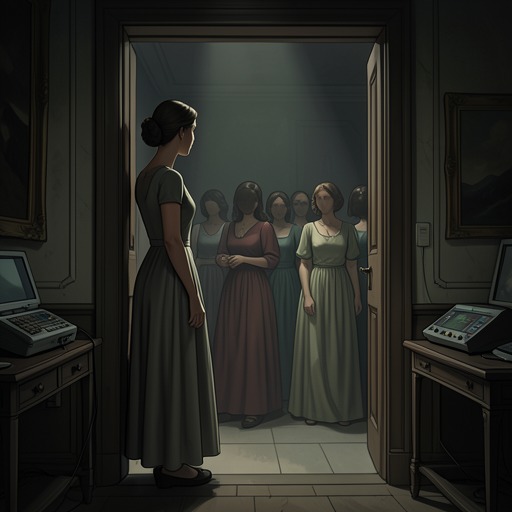
At dinner, William Fitzwilliam tells Margaret that she is to be his guest; the bishop then makes the consequence explicit: she is to be imprisoned at Cowdray, and her goods are to be seized. Margaret objects that her presence at home is needed to manage a large estate and keep the countryside calm, but the authorities decide to remove her. When she asks whether Warblington Castle is being taken, William confirms that it is and orders her to prepare to leave. The exchange makes clear that this is not a voluntary visit: custody and confiscation arrive together.
The journey south to Midhurst takes two days because flooding and poor roads repeatedly slow the party and cause them to lose their way. The route also shows the consequences of the closure of religious houses. Where travelers had previously been able to find shelter and guidance at monasteries, they now pass an abbey with its windows broken and its roof stripped. At an inn in Petersfield, hungry beggars stand at the kitchen door and in the street; the narrative connects their need to the loss of abbey kitchens, a hospital, and charitable provision. This landscape does not alter the immediate terms of Margaret’s confinement, but it places her dispossession within a wider dismantling of institutions that had offered practical support.
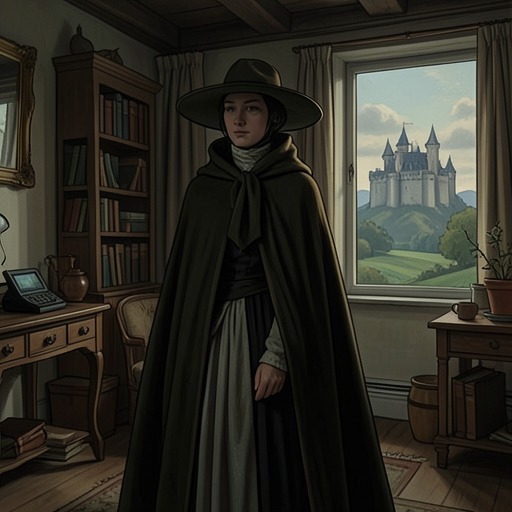
Margaret reaches Cowdray House in winter 1538. It belongs to William Fitzwilliam, whose acquisition of the property is described as a source of pride. For Margaret, the house is a place of custody rather than a replacement home: she misses her own fields and hopes to return, to see her sons return, and to reach a future beyond the present separation. Her hope remains explicitly uncertain. The seizure has removed her from the estate she says she must manage, while the confiscation of her goods deprives her of control over the property itself.
Transfer to the Tower
In May 1539, Margaret is taken from Cowdray toward the Tower of London. The destination is first named as the place she most dreads; the transfer then proceeds under guard, with Margaret riding behind one of William Fitzwilliam’s men. At Lambeth, the party boards a plain barge without a standard. The account explains that Thomas Cromwell does not want London’s citizens to see her following her sons into the Tower. The unmarked vessel therefore carries a political purpose as well as a prisoner: it keeps the transfer from becoming a public spectacle.
The move marks a change in the character of her imprisonment. Cowdray had held her away from her home and estate; the Tower places her within the same institution that already contains her sons. The journey is presented through Margaret’s sense of having shed her family standards and name, an image that connects physical removal to the dangerous inheritance attached to her Plantagenet identity. Her recollection of Geoffrey listening for the first cuckoo of spring at Syon Abbey sharpens that loss: the abbey has since closed, and Geoffrey is described as destroyed. The family’s separation and the loss of familiar religious places converge in the passage to the Tower.
Attainder and the Evidence Against Her
In Parliament, Thomas Cromwell presents an Act of Attainder declaring the Plantagenets traitors without trial or evidence. The act puts their good name under suspicion, makes their goods forfeit to the Crown, and disinherits their children. Margaret and Gertrude Courtenay are listed among the dead, although both are alive. The legal measure thus reaches beyond the people imprisoned: it also changes the status of the family’s property and descendants.
The material offered against Margaret includes letters attributed to Gertrude and a letter Margaret wrote to her son Reginald Pole to assure him of her love, which was never delivered. Cromwell also produces the Badge of the Five Wounds and White Rose, a white silk badge given to Margaret by Thomas Darcy. Its presence in an old box is presented as conclusive evidence, although the account emphasizes that possessing an embroidered badge is not itself a crime and that no specific offense is charged. The Houses of Commons and Lords respond little. The badge’s association with the Pilgrimage of Grace gives it political resonance, but the passage shows the weakness of the case as well: it is the evidence Cromwell has, not proof of a defined crime. Margaret is nevertheless kept in the Tower at the king’s wish, alongside her grandson Harry Pole, Gertrude, and Gertrude’s young son.
Life in the Tower
By the winter of 1539, Margaret’s account of imprisonment is organized around stillness and endurance. Cold weather freezes the water in the jugs, while dripping water forms icicles; within that confined setting, the daily pattern is spare. Harry Pole is allowed to attend Prince Edward’s lessons and to dine in the Courtenay rooms, where the table is better than Margaret’s. Margaret and Gertrude exchange messages of goodwill but do not write directly to one another. Their contact persists, but only in a restricted form.
The Tower also contains the long history of other prisoners. Margaret’s cousin William de la Pole dies there after thirty-seven years of captivity. Margaret prays for him but tries not to dwell on his fate. Her own practices are reading when there is enough light, sewing beside a window, and praying at a small altar. She does not let herself imagine release, freedom, or the future; instead, she studies endurance. The contrast between the decades of her cousin’s confinement and her own uncertain prospects makes the Tower more than a temporary holding place in her account: it is a space where waiting itself becomes a discipline.
News from outside continues to reach her through Ursula Pole. She learns that Constance and Geoffrey Pole have had a daughter, Catherine, and that the king is to marry again. These reports establish that births and changes at court continue while Margaret remains confined. Her imprisonment therefore creates a sharp division between a family life still unfolding beyond the Tower and her narrowed existence inside it. The passage does not resolve that separation; it leaves Margaret in custody, measuring time through routine and choosing not to build her endurance around an imagined release.