The Tudor Curse of Male Heirlessness
The King's CurseThe Tudor Curse of Male Heirlessness is a recurring fear that Henry VIII would never secure a living son to continue his line. It is not presented as a confirmed supernatural fact: Geoffrey Pole presses Margaret Pole to say whether a curse exists, while she repeatedly refuses certainty. Instead, the idea gathers force wherever a child dies, a possible heir rises or falls, or the Tudor claim to rule is linked to the deaths of York princes. The curse gives dynastic anxiety the shape of a family accusation, but leaves its cause unresolved.
Origins and Meaning
The curse is associated with the suspicion that Tudor rule began through violence against the York succession. At a riverside conversation, Lord Montague asks Margaret whether Henry VIII’s line is cursed because his father had the blood of innocents on his head, specifically for killing the two York princes and Margaret’s brother. Margaret says she tries not to think about the matter. When pressed on whether the Tudors killed the princes, however, she answers that no one else gained from their deaths and judges that the Tudors have shown themselves capable of almost any sin. Her words connect the curse to a politically charged interpretation of earlier deaths, not to proof of who caused them.
The idea therefore carries two related meanings. It predicts the failure of Henry VIII to produce a living male heir, and it frames that failure as a consequence of the bloodshed by which the Tudors secured power. The family’s history supplies the accusation; the repeated loss of children makes it feel, to those who fear the curse, like an unfolding judgment. Yet the novel does not settle the supernatural question or establish the accusation as fact.
The Lost Infant and the Stakes of Succession
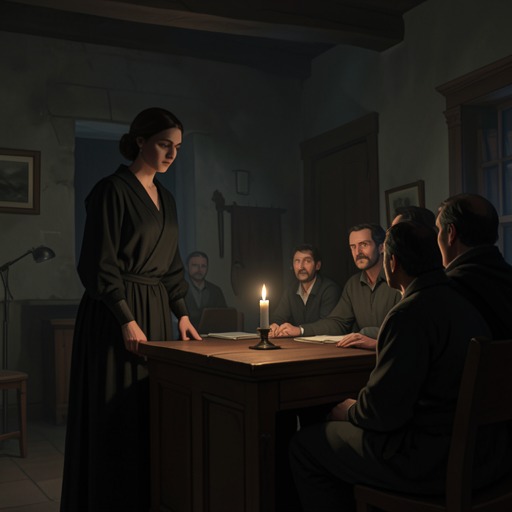
An early scene gives the fear an intimate and consequential form. Henry VIII presses a goblet into Margaret’s hand and tells her that she will raise the next King of England. Soon afterward, a nurse calls Margaret to the nursery, where the infant has died in his crib. Margaret carries him and then returns him to it before going through the adjoining door to the queen’s confinement room. The king’s confident prediction and the child’s death stand close together: an imagined future ruler is lost before he can occupy any place in the succession.
A later confinement makes clear how much more than personal hope is invested in the birth of a boy. With Princess Mary flourishing at two years old, the household hopes that the queen’s early labor may produce another child who will thrive, and especially a son. Such a birth, the narration observes, would answer those who call the queen weak, infertile, or cursed; it would also alter her standing beside Thomas Wolsey and redirect the king’s attention from the women at court. Instead, the child is a stillborn girl. The loss deepens the contrast between the court’s political expectations and the queen’s private bereavement, while leaving the hoped-for male succession unresolved.
Dispute Within the Family
The curse is not accepted even by those who discuss it. Geoffrey asks Margaret directly whether there was a curse, and she answers that she does not know. Lord Montague objects that Henry FitzRoy could still disprove the idea: if the king’s son were poised to become heir and displace Princess Mary, Montague argues, the existence of a possible male successor makes talk of a curse pointless. His argument treats the curse as a claim to test against events, not an explanation that everyone shares.
That counterargument also shows how the question changes with the political position of the children. Geoffrey describes Princess Mary, Elizabeth I, and Henry FitzRoy as sharing an uncertain status, but stresses that FitzRoy has a castle, lands, and a palace in London, while Mary has only recently been released from confinement and Elizabeth is still a weak infant. Montague, by contrast, holds open the possibility that Jane Seymour may yet give Henry a legitimate son. The curse is thus debated amid competing prospects: the children’s standing and the resources attached to them matter alongside the question of whether a boy can live.
Henry VIII’s Grief and the King’s Body
When Henry FitzRoy dies, Henry VIII himself turns to the language of a curse. Grieving, he asks why he loses everyone he loves and why God would take FitzRoy from him if there were no curse. He also invokes Elizabeth Blount, FitzRoy’s mother, and asks what either of them had done to deserve such a loss. The fear has moved from the king’s succession to his personal bereavement: the presumed curse seems to explain not only the absence of a secure heir but the repeated removal of people he loves.
The scene makes the distance between royal office and human vulnerability visible. Henry’s attendants hesitate to approach him, and it takes six men to lift him from the floor to his bed. Margaret notices his new title, Majesty, which reflects his claim to imperial stature after breaking with Papal authority; the title’s grandeur contrasts with a king so overcome by grief that his servants must carry him. In this juxtaposition, the curse becomes a story about the limits of power as well as dynastic survival: royal authority can reshape institutions and titles, but it cannot command a child to live or prevent grief.
The Heir Question Remains Open
In 1537, news reaches Margaret that the queen has had a boy. The announcement gives the succession narrative a striking reversal after so many hopes have been disappointed. But the report establishes only the child’s birth, not his survival or the eventual stability of the dynasty. Within the evidence presented here, it cannot serve as a final confirmation or refutation of the curse.
That restraint preserves the idea’s central uncertainty. The losses invite a supernatural reading, while political suspicion offers a human cause rooted in the struggle over the York inheritance. Henry’s grief shows how readily the curse can become an explanation for private suffering; the family debate shows how readily it can be challenged by the appearance of a possible heir. Its significance lies less in resolving whether a curse exists than in binding childbirth, succession, legitimacy, and remembered violence into one unsettled question.