
The Court as a Stage
The King's CurseCourt ceremony, courtly love, and royal performance conceal changing balances of power, especially as Henry’s image diverges from the suffering beneath it.
increasing Bearing strength in each event
 decreasing
Bearing strength in each eventdecreasingThe Prince Performs Promise
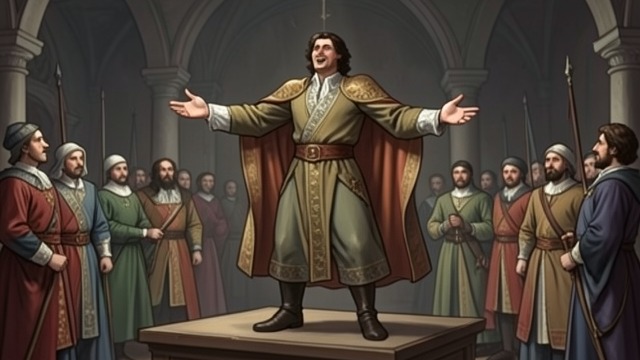
A Young Prince on Display
Virtues Presented
Henry displays learning, music, sport, and ambition before Margaret and the royal household. His performance suggests a prince prepared for a generous reign.
A Role Becoming Identity
The court praises him for being exceptional, reinforcing his expectation that affection and admiration are his due. The performance will later make it harder for him to accept decline.
Jousting as Kingship

The New Arthur
Spectacle and Skill
Henry performs daring horsemanship and presents himself as a knightly king. Margaret admires his skill but notices his intolerance when she compares him with Spanish riders.
A Warning in Play
The king’s need to be unmatched emerges inside a festive performance. His joke about destroying a disobedient horse hints at a harsher understanding of loyalty.
Anne Changes Precedence
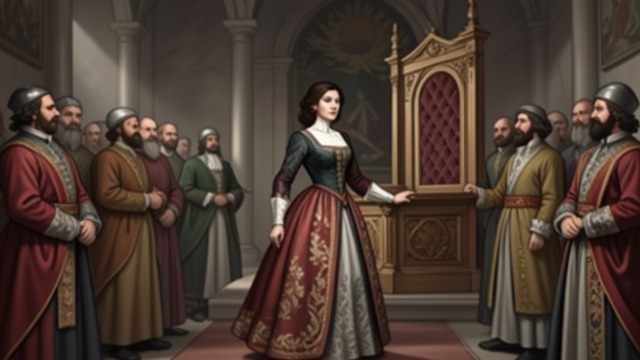
A Masque Becomes a Challenge
Refusal to Withdraw
Anne Boleyn remains in the hall after Katherine leaves, refusing the ritual that places her below the queen and other noblewomen.
Power Made Visible
The king permits the breach, turning court ceremony into a public declaration of favor. Margaret recognizes that a small change in etiquette can signal a large political shift.
The King as Loving Father

An Image for Mary
A Visit at Richmond
Henry performs warmth and attention during a visit to Mary, praising her learning and treating her as a cherished daughter.
Performance and Reality
Margaret recognizes that the visit is carefully staged while Katherine remains excluded. The king’s public charm can disguise a private campaign to separate his family.
The Frozen Procession

A Court on Display
Royal Ceremony
The court processes across the frozen Thames with lavish clothing, standards, guards, and music. Mary rides in white and receives the strongest cheers from the crowd.
Public Acclamation
The ceremony suggests reconciliation and victory, but Mary remains legally diminished and Margaret stays outside the court. The spectacle promises more than the king has actually restored.
Autumn 1501
Spring 1511
May 1527
Summer 1530
Christmas 1536
