Harry Pole
The King's CurseHarry Pole is the young grandson of Margaret Pole and son of Montague. His imprisonment in the Tower of London makes the persecution of the Plantagenet family immediate and intimate: to him, his grandmother’s arrival seems to promise a journey home, until he learns that she, too, is a prisoner.
Identity and Family
Harry is identified as Margaret Pole’s grandson and Montague’s boy. He is about eleven when Margaret joins him in the Tower. His family connection places him among the Plantagenet sons whom Henry VIII is gathering into custody, though Harry is a child and the account gives no accusation of wrongdoing against him.
Harry’s predicament belongs to a wider family crisis. At Warblington Castle in autumn 1538, Margaret arrives intending to take Edward Courtenay, the son of Gertrude Courtenay, into her care after his parents’ arrest. She is told that Edward has also been taken to the Tower. The later account places both boys in captivity, cousins separated from their parents and held because of their family names.
Imprisonment and Reunion
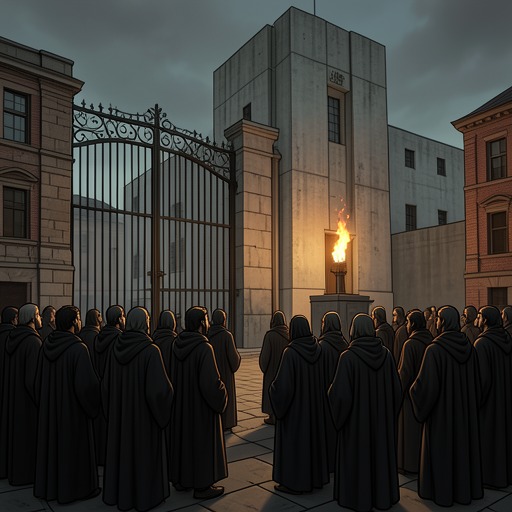
When Margaret reaches the Tower by barge, she recognizes Harry behind the Constable, William Kingston. Harry greets her with exuberant relief: he wraps his arms around her waist, dances about, and tries to board the barge, believing she has come to take him home. Margaret must explain that she is imprisoned too. His delight gives way to horror as he realizes that the reunion offers no escape.
The two are housed in the garden tower. Harry has a small room above Margaret’s, looking over the green; hers is larger, with a view of the river through a narrow arrow-slit. Their rooms are cold, without fires, and bare stone is marked by the names and insignia of earlier prisoners. Harry’s initial cheerfulness returns somewhat once Margaret is beside him, but their daily life is governed by confinement: he cannot leave her room unless a guard releases him, and the door is locked behind him when he visits.
Harry is also eager to see his cousin Edward Courtenay and asks Margaret to visit Gertrude Courtenay. Edward is housed with his mother in Beauchamp Tower, where their rooms are more comfortable; they have enough to eat and warm clothes, although Edward is bored and lonely. Harry is shocked to learn that he cannot simply go to them. His question about whether they will soon go home expresses a child’s expectation of temporary separation, an expectation Margaret nearly encourages before the family’s history checks her confidence.
The Family Name as a Sentence
Margaret understands the boys’ imprisonment as dynastic rather than criminal. Gertrude Courtenay can be released because she was born a Blount, but her son must remain because he is a Courtenay. The narrative places Harry within the same logic: the king is collecting Plantagenet sons, with no charge to explain why a child who has scarcely left home should be treated as a threat.
Harry’s hope of returning home is shadowed by Margaret’s memory of her brother Edward Plantagenet, whom Henry VII took into custody at a similar age. Edward emerged from imprisonment only to walk to the scaffold at Tower Hill. That recollection makes Margaret hesitate before reassuring Harry that he will soon be free. His innocence and youth do not protect him; instead, his family identity is what exposes him to danger. Harry’s joyful reunion with his grandmother thus turns into a stark measure of how far political fear has entered the family’s most private bonds.