Richard Layton
The King's CurseRichard Layton is one of Thomas Cromwell’s men charged with inspecting a priory and enforcing decisions against its religious community. In Margaret Pole’s account, he combines polished civility with the power to deliver commands that leave their recipients no effective recourse: he helps press for Prior Richard’s resignation and later claims authority to escort Jane Pole away from the priory to her betrothed.
Position and Inspection
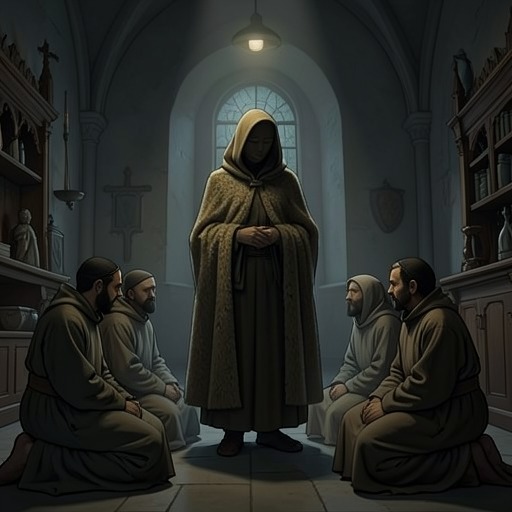
Layton arrives with Thomas Legh to investigate the priory. They stay for a week in its guesthouse, dine with the canons, and are woken at night by the bell calling the community to prayer. The small, stone-walled cells and the absence of fires except in the prior’s study and the dining hall expose the visitors to the austere conditions under scrutiny. The visit thus places Layton among the officials examining monastic life, while the discomfort of the lodging contrasts with the standards of comfort associated with his fellow visitor, Legh.
The narrator’s account also sets the visitors’ scrutiny against the visible wealth of their service. When Layton and Legh depart, Margaret observes their good horses and fine saddlery, as well as Legh’s well-dressed men. Her pointed contrast between the priory’s rigor and the visitors’ prosperous appearance makes the inspection seem bound up with the material rewards of royal service, though the passage does not specify Layton’s own household or personal wealth.
The Prior’s Resignation
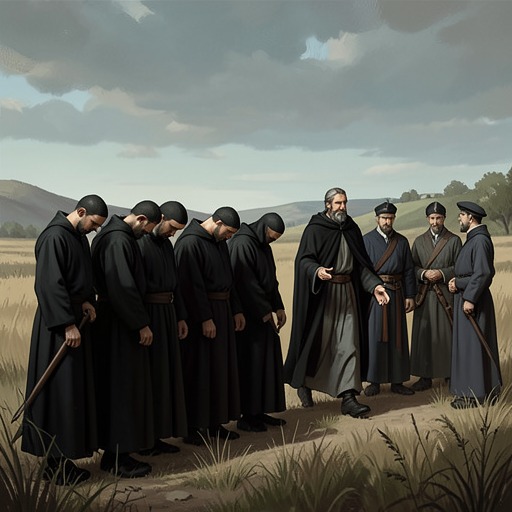
Layton and Legh leave with perfect civility, but the visit is followed by a demand that Prior Richard resign. Four days after their departure, the prior tells Margaret that the visitors have returned and asked for his resignation. When Layton comes into her private chamber with Legh, he remains composed as Margaret insists that the prior has done nothing wrong and will stay in office.
Layton unrolls a scroll and shows its seal. He presents the order for the prior’s resignation regretfully, but the command’s formality does not make it answerable to evidence: Margaret says there are no grounds and no proof, and announces that the prior will appeal. Layton replies that there is no appeal, that no grounds are required, and that the decision is final. His role here is not to debate the prior’s conduct but to convey an order whose authority excludes both explanation and remedy.
Jane Pole and the Limits of Consent
Layton’s authority appears again when Jane Pole is to be taken from the priory to marry Sir William Barrantyne. Margaret challenges the party’s escort of a novice and asks Layton whether they are abducting a nun. He answers smoothly that Jane has spoken with the prior, who has released her; he adds that no novice can be held if she changes her mind, that Jane is betrothed, and that he has been commanded to take her to her new husband.
Margaret counters that Barrantyne has taken Church goods and lands, while Jane insists that she is no nun and should never have been placed and kept in the priory. The exchange leaves the circumstances contested: Layton gives an official account of release and consent, while Jane’s protest and Margaret’s accusation expose the coercion that may sit behind that account. Layton’s defining function in these scenes is to make institutional decisions operative—first by delivering an unappealable order against the prior, then by escorting Jane under a claimed release whose legitimacy is challenged.