Richard Pole
The King's CurseRichard Pole is Margaret Pole’s husband, a loyal servant of the Tudors, and a guardian of Prince Arthur. The narrative presents him through the work of household and royal service, his care for his wife and children, and an early death that leaves Margaret widowed while pregnant. His quiet constancy contrasts with the increasingly dangerous political world surrounding the House of Plantagenet.
Identity and Court Position
Richard is introduced beside Margaret’s bed, waiting for her to wake after the news of her brother’s death. He is fully dressed in a red velvet waistcoat, with the gold chain marking his office as chamberlain to the Prince of Wales across his chest. His worried presence makes him both a figure of courtly standing and the person closest to Margaret in a moment of personal shock; he urges her to be brave and tries to comfort her.
Margaret’s account of their marriage places its origins in political calculation. Margaret Beaufort chose Richard for her, hoping that marriage would keep Margaret Pole out of public view. The match brought him two manors and a dilapidated castle, which Margaret describes as a meagre payment compared with what he might have demanded. Yet Richard does not appear as a man seeking advantage from the arrangement: Margaret remembers that he served the Tudors for their thanks, followed their cause without counting the cost, and cherished her at home.
Household, Lands, and Guardianship
Richard’s duties extend beyond the court. While he governs Wales from Ludlow Castle, Margaret stays at Stourton Castle, where she is pregnant and oversees the family’s lands, home, and children’s education. He visits her and is pleased with the care she has taken. Their discussion of rent books and household expenses shows a family living with limited means and planning carefully: by autumn 1504 they have four children, another is on the way, and their daughter Ursula will need a suitable dowry.
The household’s finances are also tied to Richard’s service. Margaret wishes the king would grant him more land, noting that he sends the fines from his court judgments to the Crown rather than keeping any for himself. Her complaint makes his loyalty materially consequential: he works for royal favor but, in her telling, does not turn that service into private wealth.
Richard is also guardian to Prince Arthur at Ludlow. Margaret knows that the prince’s mother wants her nearby because Richard is responsible for the boy’s safety, and Margaret reassures her that he will care for Arthur whether or not she can join them. She describes his guardianship as deeply attentive, treating the prince with the care due to a beloved child. This role joins Richard’s domestic reliability to the dynastic household he serves.
Marriage and Family
Margaret’s portrait of Richard is unusually intimate for a man whose public life is defined by office and service. She calls him a good man and recalls that the political match made for her proved to be a loving marriage at home. His concern is practical as well as affectionate: he worries about the children’s prospects, the family’s modest fortune, and Ursula’s future.
The couple’s children later become part of the wider kinship network that Margaret sees as both a source of strength and a political liability. Their daughter Ursula marries the son of a duke related to Margaret, while their sons are connected through marriage and upbringing to other powerful cousins. Margaret describes these close ties as a family system that concentrates land and influence; under suspicion, the same interwoven relationships can look like a faction or conspiracy. Richard is not shown directing those later political plans, but the family structure he helped establish becomes part of the danger his children inherit.
Death and Its Consequences
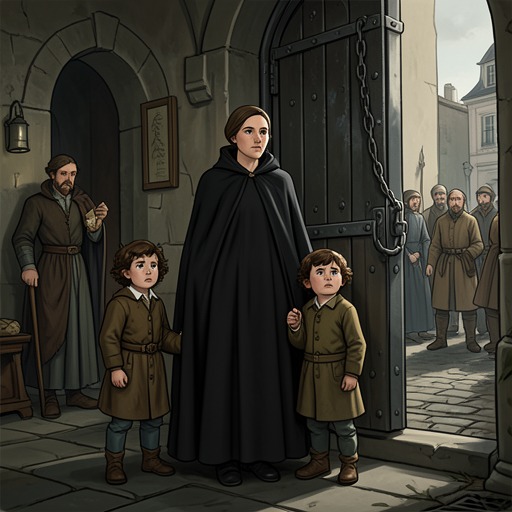
Richard dies at night while Margaret is again pregnant and staying at Stourton Castle. Jane, Margaret’s attendant, first says only that the master is the subject of the news; Margaret assumes he is ill, but Jane tells her that he is dead. The account gives no cause. The abrupt announcement turns the household she and Richard have managed together into a household Margaret must face alone, with their children and another baby on the way.
His death also marks the limit of his protective role. Margaret later remembers that he kept her obscure and short of money, shielding her from decisions and public leadership. In retrospect, that protection has left her unprepared for the political choices demanded of her, even as the family’s loyalties and Plantagenet connections draw her into danger. Richard’s absence is therefore not simply a private loss: it removes the person who had shared responsibility for the household and helped keep Margaret away from the political center.
Narrative Significance
Richard’s significance lies in the contrast between loyal service and the instability of the dynasty he serves. He is a Tudor retainer who cares for a woman of Plantagenet blood, raises their children within a network of influential relatives, and guards the future king at Ludlow. Margaret’s recollections present him as conscientious but not politically ambitious: his service earns thanks rather than the additional lands she believes he deserves.
The narrative gives Richard no later political action of his own; instead, his work and early death shape the conditions in which Margaret and their children act. His care for Arthur and his devotion to his household provide a domestic counterweight to court intrigue, while his death leaves Margaret to confront the family’s loyalties without the partner who had once protected her from public life.