The Wheel of Fortune
The King's CurseThe Wheel of Fortune describes the unstable rise and fall of human fortunes: positions change as if turned at random, leaving the favored exposed to loss and the fallen still able to hope for renewal. In the novel, the image gives form to Margaret Pole’s movement from the honors and abundance of royal life to an unmarked barge bound for the Tower of London. Its turns feel merciless, but the scenes also show political power determining who is made to fall.
The Image of Reversal
In its medieval philosophical sense, the wheel, or rota fortunae, represents the unpredictability of fate. Margaret’s story gives that abstraction a personal measure. At Cowdray House on a frosty evening, she looks across the fields and longs for her own home, trusting that she will see it again, that her sons will return, and that darkness will give way to a better morning. Her hope rests on a future she cannot secure, making the wheel’s uncertainty present even before the sharpest reversal arrives.
The contrast between evening and dawn makes fortune feel at once cyclical and precarious. Margaret imagines hardship as something that may pass, but the promise of renewal is only a hope: the wheel does not guarantee that those it has lowered will rise again.
From Royal Honors to the Unmarked Barge
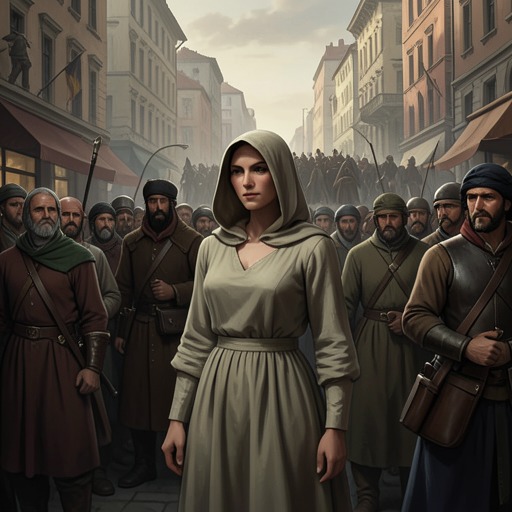
As Margaret travels toward the Tower, she measures her present against the life she has lost. She recalls crossing the river in the coronation barge as an honored guest and member of the royal family, and in her own barge beneath her own standard. She had been the wealthiest woman in England, held the highest honors, and seen four sons beside her, each suited to inherit her name and fortune. Now she has almost nothing; the barge carries no name or standard and moves down the river unobserved.
The journey’s measured sounds sharpen the change in status. A muffled drum and the rowers’ steady strokes accompany Margaret’s sense that her former life has been like a dream, now nearing its end. The scene turns the wheel into more than a maxim about change: Margaret’s remembered public honors are set against her present anonymity and the loss of the future she expected through her sons.
Family Loss and the Forces Behind Fortune
At the Tower’s water gate, Margaret recognizes her grandson Harry and learns that he has been arrested. The recognition breaks through the dreamlike quality of the journey: she understands that the catastrophe is real and that the family’s danger reaches another generation. The wheel’s turn is therefore not only a change in Margaret’s rank or wealth; it carries consequences through her family.
The image invites readers to consider the changing fortunes of Margaret’s family and of England, and to ask what drives those changes. In Margaret’s passage to the Tower, the reversal is not simply chance. Thomas Cromwell arranges for her to travel in an unmarked barge so that London’s citizens will not see her following her sons into the Tower. The language of Fortune captures how abruptly power can shift, while the journey reveals human authority helping to make the fall happen. The wheel is both a figure for life’s instability and a frame for the political forces that turn vulnerability into loss.