Ursula Pole
The King's CurseUrsula Pole is Margaret Pole’s daughter, a member of a family whose marriages and service bind it to the English royal court. Her story links the promise of advancement through kinship to the precariousness of that promise under Henry VIII: positioned to become a duchess and part of a powerful alliance, she instead becomes Lady Stafford, responsible for a diminished household and estate after her husband’s family is ruined.
Family and Place at Court
Ursula grows up within Margaret’s household and shares in the family’s return to royal favor. When Margaret resumes her place beside Katherine of Aragon, Ursula is kept in the queen’s rooms with her mother, while her brother Geoffrey Pole serves as the queen’s page and her brothers serve Henry VIII. The family’s London house is not to replace court life; it is a base alongside the household and service that give the children a place in the royal world.
Ursula also belongs to a closely interwoven network of Plantagenet cousins. Her marriage connects her to Edward Stafford, Duke of Buckingham, through his son, while Margaret’s sons have been raised in the household of George Neville, who is married to the duke’s daughter. Montague’s marriage to George Neville’s daughter adds another link. These ties unite land, inheritance, and influence among relatives. In the family’s own understanding, such intermarriage makes them a force able to act together; under suspicion, the same closeness can be recast as evidence of a faction or conspiracy.
Marriage and the Promise of Rank
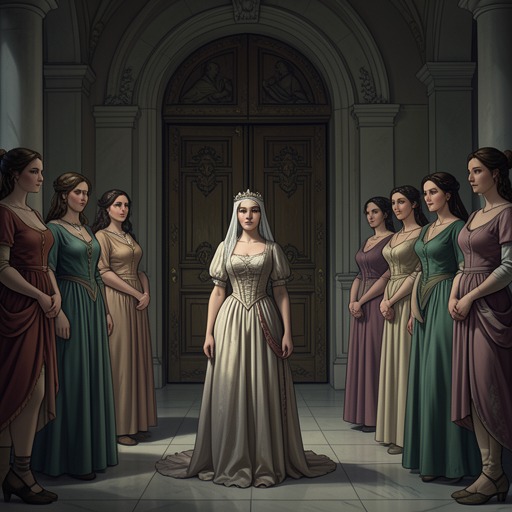
Margaret secures Ursula a marriage to Henry Stafford, the son and heir of Edward Stafford, Duke of Buckingham. Ursula is twenty, and she resists the match: Henry is seventeen and had been Geoffrey Pole’s playmate. Margaret answers her daughter’s objections with the future the marriage promises. Ursula will be an heiress and, in time, a duchess; at court she will live in the Buckingham rooms, continue serving Katherine of Aragon, and rank immediately behind the royal princesses among the women there.
The arrangement is both a family alliance and a calculation about status. Margaret describes Ursula’s marriage as a way to join her family to one of England’s greatest ducal houses. Ursula herself points out that a son of hers would have Plantagenet blood on both sides. Margaret acknowledges that inheritance of royal blood would remain, but distinguishes it from political power: the Tudors hold the throne, and a son born to Katherine of Aragon would be a Tudor prince. The exchange shows how Ursula’s marriage is made to carry dynastic hopes without displacing the reigning family.
Ursula later attends Katherine of Aragon during the Field of the Cloth of Gold, a great court gathering where her brothers Montague and Arthur Pole also appear prominently. Margaret notes that Ursula is pregnant and will go into confinement in the autumn. The family’s prospects seem tangible in the next generation as well: Ursula has given Edward Stafford, Duke of Buckingham, a grandson, whose cradle linen is embroidered with the duke’s strawberry leaves. The child represents a future in which the Stafford title, lands, and royal connections might continue through Ursula’s marriage.
Courtly Favor and Political Danger
The court’s atmosphere changes as Henry VIII’s circle shifts. Margaret observes that older relatives, including Edward Stafford, Duke of Buckingham, and George Neville, are edged away from the king’s private chamber, while the king’s younger companions become his favored inner circle. The change matters to Ursula because her marriage places her in the Stafford household at the moment its standing is becoming less secure. Her anticipated advancement depends not only on her marriage but on a courtly favor that can be withdrawn.
When danger closes around the family, Margaret sends a lady-in-waiting to Ursula with instructions to take her little son to L’Erber and remain there until the family knows what to do. The action is practical and protective: Ursula and the child are moved away from the immediate uncertainty while Margaret goes to court to see Arthur Pole. In the wider crisis, Montague argues that the family must defend Katherine of Aragon and Princess Mary Tudor against Henry VIII’s plans, and proposes using Geoffrey Pole to carry information and messages abroad. Ursula is not described as taking part in that proposal, but the instruction to remove her and her son shows how quickly family allegiance and royal politics place her household at risk.
Dispossession and Changed Circumstances
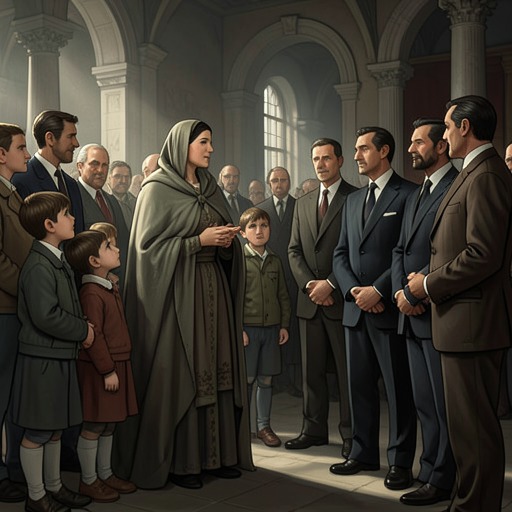
The marriage that promised a duchess’s rank instead exposes Ursula to the consequences of her father-in-law’s fall. After Edward Stafford, Duke of Buckingham, is executed on Tower Hill, his title and wealth are taken, and his lands are absorbed into the royal treasury. Ursula’s husband does not become Duke of Buckingham: he is left as Lord Stafford, with only about half a dozen manors and an income measured in hundreds of pounds a year. The family’s name is disgraced and its fortune forfeited to the king.
Ursula’s circumstances contract accordingly. She writes to Margaret from a new, modest home in Staffordshire; her gowns must be turned rather than replaced, and she must manage a small estate and try to make the most of dry land. The grandson once marked by ducal embroidery is gone, leaving no son to inherit what remains. The reversal is especially sharp beside Margaret’s earlier confidence that Ursula would become England’s wealthiest duchess: rank, land, and an heir had seemed to reinforce one another, but none proves secure against royal confiscation and political ruin.
Narrative Significance
Ursula’s trajectory makes dynastic marriage visible as both a route to security and a source of exposure. Her marriage brings her into the Stafford family, promises precedence at court, and joins two branches of royal blood; it also ties her future to the fortunes of a household vulnerable to the king’s power. Her experience parallels Margaret Pole’s larger struggle to preserve her children’s position and property. In Ursula’s case, the loss is recorded not only in titles and manors but in the daily adjustments of a reduced household and the absence of an heir. The movement from anticipated duchess to Lady Stafford gives the family’s political dispossession a domestic measure.