Elle’s seventeenth birthday
The Kissing BoothElle’s seventeenth birthday is both a family celebration and a marker of transition: she turns an age she had been anticipating while confronting new feelings for Noah Flynn and the prospect of his leaving for Harvard University. The day’s familiar rituals place that change among the people who have shared her life since childhood, while her exchanges with Noah give the birthday a more private expectancy.
Approaching Seventeen
Two months before the birthday, Elle measures her experience against the age she is about to reach. She has never been kissed, had a boyfriend, or gone on a date, and she resents Noah Flynn for warning boys away from her. Lee Flynn explains that Noah told them anyone who hurt Elle would have him to deal with. Elle recognizes the protective impulse but sees its consequence as unfair interference: in her view, looking out for her does not justify preventing anyone from dating her. At this point, she interprets Noah’s behavior as the overprotectiveness of someone who sees her as a vulnerable younger sister, even as she wishes there might be another reason behind it.
The approach to seventeen is therefore not simply a countdown to a birthday. It sharpens a conflict between being protected and being permitted to make choices. In a later argument, Elle insists that she can look after herself and rejects Noah’s attempts to control what she wears, whom she dates, and whom she talks to. Her birthday becomes a useful measure of the distance between the younger girl Noah seems to be guarding and the person asserting her own autonomy. The contrast does not mean that she has suddenly become experienced; the earlier account makes clear how little romantic experience she has. Rather, she is beginning to insist that inexperience does not cancel her right to choose.
By the time Elle admits that she may have fallen for Noah, the uncertainty that once surrounded his protection has changed into acknowledged romantic feeling. Her seventeenth year also brings the practical prospect of his college departure. When she asks what they will do when he goes away, Noah admits that he does not know and that he does not want to leave her, but names Harvard University as the opportunity before him. Elle ultimately tells him he has to go, accepting the importance of his future even though she does not want the separation. These developments give the birthday a place within a broader passage from guarded inexperience toward emotional recognition and difficult, independent choice.
Family Rituals and the Birthday Itself
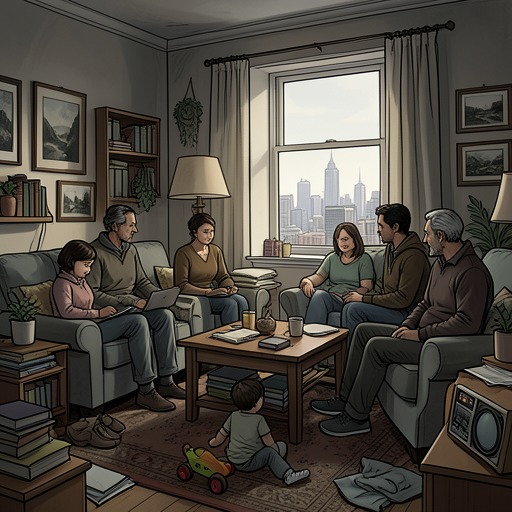
The birthday belongs to a recurring family practice. Elle says that the family goes out for lunch every year, with Lee, Lee’s parents, Elle’s father, and, while she was alive, her mother. Brad and Noah Flynn also join them; grandparents sometimes come when they are in town. The list makes the celebration more than a private occasion between Elle and Noah. It is a shared ritual that gathers the intertwined households and acknowledges the place Elle has long held within them.
On the morning of her birthday, Elle wakes after sleeping much of the previous day and spends time playing video games with Lee. Noah has gone to a scrapyard to look for parts for his motorcycle, and Elle cannot make much sense of his text about the errand because she knows little about mechanics. Then the date registers plainly: she has turned seventeen. Looking at the shapes the morning sun makes on her ceiling, she feels as though she has grown up over the past year. The moment is inward and quiet, set against the busy family celebration that follows; the change is first registered as her own sense of time passing.
For the family lunch, Elle dresses casually in denim shorts and a T-shirt, planning to change later, and twists her hair into a ponytail. Her father and Brad have risen early to bake a large chocolate cake with strawberry frosting and white icing spelling out a seventeenth-birthday greeting. Her father presents it before making pancakes. The homemade cake and breakfast give the day its particular domestic texture: the celebration is expressed through preparation and familiar teasing as much as through a formal announcement of her age.
The birthday is also anticipated at a gathering before the date itself. Tyrone arrives in cut-off denim shorts and without a shirt, dressed as the werewolf from Twilight; Lee mistakes the outfit for that of a Calvin Klein model before Elle identifies the character. Tyrone wishes Elle and Lee happy birthday for Sunday. The exchange treats them as joint celebrants and links the birthday to the playful social world surrounding it, rather than isolating Elle’s milestone from Lee’s.
Noah’s Messages and the Unanswered Surprise
Noah’s attention reaches Elle through a text exchange during the birthday celebrations. After she has little to add in reply to an earlier message, he asks what she is doing later and says he has something in mind for the birthday girl. The winking face makes Elle wonder whether he intends innuendo; knowing him, she expects something cheesy that she would enjoy. Her response captures the mixture of familiarity and uncertainty in their relationship: she can anticipate his teasing style, but she does not yet know what he has planned.
Later, Elle waits for a chance to speak with Noah alone. The household is occupied in separate ways: Lee is outside working on his new car stereo, Brad is watching television, and the parents are talking. Noah is loading plates into the dishwasher when Elle brings in empty glasses and asks what he had in mind. The ordinary kitchen task gives their exchange a private opening within the ongoing family gathering. The available scene establishes her expectation and her effort to get him alone, but does not disclose what the planned surprise is; its significance here lies in the anticipation and in Noah’s personal attention to her birthday.
A Threshold Between Familiarity and Change
The birthday’s meaning comes from the coexistence of continuity and change. The annual lunch, the family-made cake, pancakes, and time with Lee preserve routines that have shaped Elle’s life. At the same time, turning seventeen prompts her to recognize the past year as a period of growing up, while her developing relationship with Noah and his impending college move make the future more immediate. The day does not erase the imbalance she has challenged in his protectiveness, nor does it resolve the question of how they will manage his departure.
Instead, the milestone gathers those tensions into one point in time. Elle is still part of the family circle that has celebrated with her for years, but she is increasingly unwilling to have others make choices on her behalf. She moves from wondering whether Noah’s concern might mean something beyond sibling-like protection to admitting that she has fallen for him; she also supports his decision to pursue Harvard University despite the separation it will bring. Seventeen thus marks neither a completed adulthood nor a neat romantic resolution, but a year in which Elle’s feelings, agency, and understanding of change become harder to keep separate.