Noah Flynn
The Kissing BoothNoah Flynn, Lee Flynn’s older brother, is introduced through a combination of swagger, provocation, and force. At school he carries a reputation as a player despite rarely paying girls much attention, and he seems almost proud of the contradiction. His relationship with Elle exposes what that public image hides: not a simple transformation from bad boy into devoted boyfriend, but a young man whose protective instincts, desire, and fear of hurting someone he loves repeatedly collide with his tendency to control and use violence.
Identity and Introduction
Noah first appears leaning against the doorway while Elle and Lee are caught in an embarrassing moment. He greets Elle as Shelly, a nickname she dislikes and that he uses specifically to annoy her. The distinction matters: Lee is allowed to use the name, but Noah’s teasing establishes their charged, combative familiarity. While most people call him Flynn rather than Noah, his brother and parents use his first name. From the outset, names mark the intimacy and friction between the characters.
At school, Noah is a football player and is treated as a romantic prize by girls who assume they have a chance with him. Yet the narrative complicates the school’s story about him: he does not visibly give those girls much attention, even as he appears to take pride in his player reputation. That gap between reputation and conduct becomes important when Elle assumes that his interest in her could amount to no more than a hookup. His image precedes him, shaping what she fears and what he must eventually answer for.
Force, Protection, and Control
Noah’s physical aggression is both a recurring part of his reputation and a way he responds to perceived threats. During a school confrontation, he growls as a fight continues and stops only when Elle gets between him and the other person, pushing against his chest. In another aftermath, he explains that repeated fights have taught him how to look after himself. His familiarity with violence has become a practical skill, but it also makes fighting a readily available response.
He frames intervention as protection. After stepping into a school altercation involving Elle, he tells her that nobody should treat a girl that way, especially her. His concern is personal, not abstract: he is unwilling to watch her be hurt, although she points out that he could have let her throw a punch herself. Their exchange already contains the tension that will deepen in their romance—his wish to protect her, and her insistence that she can act for herself.
That tension becomes explicit when Elle challenges his objections to what she wears, whom she dates, and whom she talks to. Noah insists that he is trying to stop her from getting hurt; she refuses the premise that this gives him authority over her choices. His protective impulse is sincere, but sincerity does not erase its controlling effects. The same distinction later shapes his relationship with Lee: Noah has warned other boys to stay away from Elle and not hurt her, yet Lee accuses him of hypocrisy for becoming involved with her in secret.
Elle and the Cost of Secrecy
Noah’s attachment to Elle emerges against her distrust of his reputation and her loyalty to Lee. When she tells Noah she has a date with Cody, he uses her full name, Rochelle, and questions whether she really knows the boy. Elle pushes back by invoking Noah’s player image and imagining that he sleeps with girls and abandons them the next morning. Her accusation reveals the obstacle between them: she is attracted to him, but fears being treated as disposable and risking her friendship with Lee for a casual encounter.
When Elle makes clear that she will not become another girl he sleeps with and fails to call, she also says she will not risk her friendship with Lee for that. Noah challenges her assumption that he would treat her carelessly. Later, when Elle admits that their kiss meant something and says she will not make out with him if they are only hooking up, Noah gives her a direct account of his feelings: he likes that she is herself around him, has not looked at anyone else because of her, and cannot stop thinking about her. His confession overturns the picture suggested by his reputation, but it does not remove the consequences of keeping their relationship from Lee.
Their first sexual encounter makes Noah’s attentiveness concrete. As they kiss and begin to undress, he stops Elle, holds her hands, and tells her they do not have to continue and that he will wait. Elle understands the offer as evidence that he cares; her decision follows from feeling that she can trust him, rather than from a plan to go further that night. The pause is significant beside the rough, self-protective persona surrounding him: here, restraint rather than conquest allows intimacy to proceed on her terms.
The secret lasts for months and entangles Noah’s romance with Elle’s lifelong friendship with Lee. When Lee discovers the relationship, Noah initially tells him to stop blaming Elle. Lee counters that Noah’s warnings to other boys were hypocritical given his own conduct. As the argument sharpens, Noah grabs Lee by the collar and slams him against a wall, demanding to know whether Lee truly thinks he has no respect for Elle. Lee points to the months of concealment; Noah replies that the secrecy was Elle’s choice, a defense that acknowledges her agency even as it exposes how much their relationship has injured Lee’s trust. Noah leaves after the brothers’ argument, and Elle learns that he packed a bag without saying where he was going or how long he would be away.
Apology, Love, and Harvard
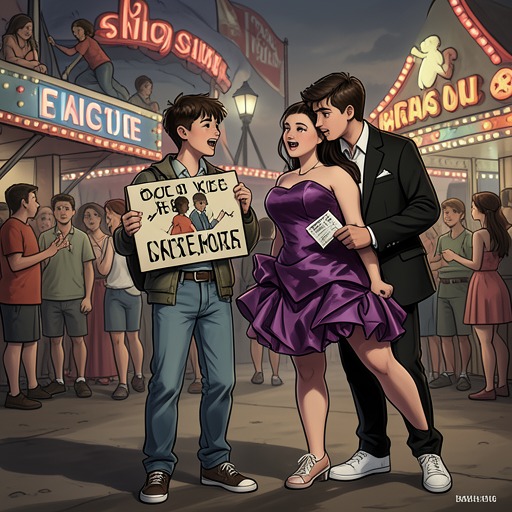
Noah’s return to Elle is framed not as an uncomplicated reunion but as an attempt to take responsibility. He asks her to the dance with a corsage, acknowledging that he has been a jerk, hurt her, and said and done things he regrets. Elle hesitates because accepting could be another bad decision, even though the gesture affects her. At the costume party, Noah removes his mask and tells the crowd that he is there because he is trying to show a girl he is sorry. He admits he has done things to her that he regrets, then calls for Elle. The public gesture makes his effort visible, but it does not itself settle their disagreements or guarantee forgiveness.
His more consequential change is visible in his willingness to speak plainly. After fireworks, Noah explains that taking Elle to the dance was an attempt to apologize, but that she deserves more than gestures. He struggles to say what he means, appearing frightened rather than invulnerable, and tells her that he loves her. The confession reverses the performance attached to his reputation: the boy associated with fighting and emotional coolness risks rejection by making himself unmistakably vulnerable.
Noah then tells Elle that he has been offered a place at Harvard on its Computer Science course. The opportunity turns their reunion toward separation. He admits that he wants to go but does not want to leave her, and Elle urges him not to give up an opportunity he would regret losing. Their exchange holds two truths together: their love matters to him, and his future matters too. At the airport, he squeezes Elle’s hand before facing her at the boarding gate and reassures her that things will work out somehow. Elle leaves him for Boston with the possibility of heartbreak acknowledged, but chooses to live in the present and remain in love with him.
Character Arc and Narrative Role
Noah’s arc tests the difference between protection and possession. He is quick to fight for Elle, yet she must insist that she can choose whom to date, what to wear, and how to respond to danger. His concern does not automatically make his decisions right; his violence against Lee and the months of secrecy show the damage that can follow when loyalty and desire are handled through force or concealment. The story gives him room to apologize and to change how he speaks, without pretending that an apology erases the breach of trust.
His romance with Elle also unsettles his player reputation through specific acts of restraint and accountability: he offers to wait, admits that he has hurt her, and risks public embarrassment to make his apology. These moments challenge a model of masculinity built on fighting, sexual status, and emotional control, while the recurring fights and possessiveness show that he has not simply outgrown it. At the ending, his declaration of love and departure for Harvard do not resolve every risk; they establish a hopeful but uncertain long-distance future in which care must coexist with Elle’s autonomy and Noah’s independent ambitions.