Noah Injures Patrick at Warren’s Party
The Kissing BoothNoah Flynn’s injury of Patrick at Warren’s party turns Noah’s protective instincts into an open conflict with Elle. After Patrick gets all over her and she tries to push him away, Noah acts against him; when Elle confronts Noah afterward, the disagreement is not only about what happened to Patrick, but about whether Noah’s protection gives him the right to decide how others may treat her.
Reputation and Provocation
Noah’s violence arrives against a reputation that is already at odds with what others observe. Although he is regarded as a player, Elle notes that he rarely seems to pay girls much attention, and that he appears almost proud of the reputation. The contrast helps frame the party incident: Noah’s public image is built around an aggressive, desirable persona, while his explanation to Elle casts the same force as an act of vigilance on her behalf.
At the party, Patrick is drunk and gets all over Elle; she is trying to push him off. Noah treats that visible resistance as sufficient reason to intervene. When Elle later accuses him of breaking Patrick’s rib, Noah does not deny that Patrick was hurt or express regret. He argues instead that Patrick deserved it for trying something with her, making protection—not the extent of the injury—the center of his defense.
Injury, Rumor, and the Limits of Protection
The confrontation turns on what Noah believes his intervention proves. Elle’s repeated shoves do not move him, and his smirk and confidence that Patrick will not press charges make clear that he does not measure the act by the consequences it might bring him. Instead, he treats Patrick’s attempt to approach Elle as sufficient grounds for punishment, even though the injury’s reported severity becomes a separate source of alarm for her.
That alarm eases when Elle later encounters Patrick outside the school. He tells her that his rib is only bruised, not broken, and that his mother took him to the hospital because she feared he had fractured something. His light-hearted account corrects the story circulating among students, but it does not erase Elle’s guilt: she immediately apologizes and says she never meant for him to be hurt. The aftermath thus separates the exaggerated report from the actual injury while leaving the conflict over Noah’s decision intact.
The incident belongs to a recurring clash between Noah’s protective rationale and Elle’s insistence on her own choices. In an earlier argument about a party, she objects specifically to his trying to dictate what she wears, whom she dates, and whom she talks to; he describes his purpose as preventing her from getting hurt. Later, when Elle asks about his ability to care for himself, Noah connects it to having been in so many fights that he learned how to look after himself. Together, these moments place the injury within a pattern in which violence is familiar to Noah and protection is his stated justification, while Elle resists having concern become control.
Later Recognition and Accountability
Much later, Noah describes taking Elle to the dance as an attempt to apologize, while acknowledging that an apology may not mean much and that she deserves better than him. He admits that emotional expression is difficult for him but says what he believes she deserves to hear. The admission does not establish that he is specifically apologizing for Patrick’s injury; rather, it places the party confrontation within a broader pattern of harm and attempted repair. Noah’s earlier insistence that Patrick deserved punishment contrasts with this later recognition that protective intent cannot by itself settle what his actions cost Elle, or substitute for meaningful accountability.
The Scene’s Physical Imbalance
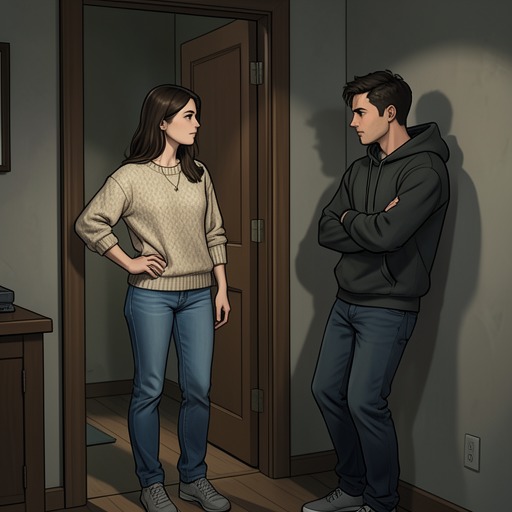
The confrontation is staged through a sharp contrast in physical scale and composure. Noah approaches after dropping his cigarette and stamping it out beneath his black boots, then slips his phone into his back pocket and affects innocence. Elle answers with repeated shoves, each one matched to a word in her accusation, while his body barely yields. The gestures make the disagreement visible before either can resolve it: her force registers as protest, his stillness as confidence that her protest will not change his judgment. The scene’s physical imbalance reinforces its central tension. Noah can describe his intervention as care, but his certainty and strength leave Elle struggling to make him answer for its consequences.