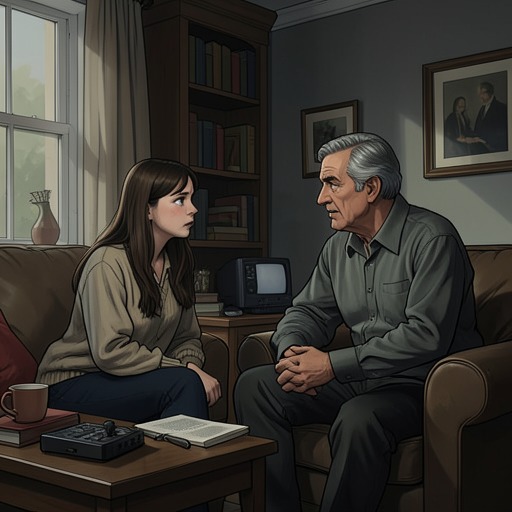
Noah Invites Elle to the Summer Dance
The Kissing BoothNoah Flynn’s invitation to the Summer Dance makes a reconciliation attempt tangible: rather than relying on an unannounced conversation, he returns to Elle’s porch with a corsage and asks her directly. The gesture is both romantic and uneasy. Elle is moved by his willingness to acknowledge past harm, yet she knows that accepting means facing Lee Flynn honestly instead of slipping back into concealment.
Background and Stakes
The invitation comes after Noah and Elle’s relationship has brought her attraction into conflict with her loyalty to Lee. Noah’s own words at the porch establish that the relationship has caused real hurt: he admits he behaved badly and regrets things he said and did. The scene therefore does not present a dance invitation as a simple return to courtship. Elle weighs a tender gesture against the possibility of repeating choices she already associates with lying, sneaking around, and betraying Lee’s trust.
Earlier encounters help explain why the prospect of romance carries both excitement and apprehension for Elle. On her first movie date with Cody Kennedy, she anticipated that he might kiss her, but recognized that she did not feel anything for him and was not ready. When he leaned closer, she turned her head and kissed his cheek instead, then hurried inside and sank to the floor in relief. Her response marks the distance between an expected romantic step and one she actually chooses.
With Noah, attraction becomes more mutual, but hesitation remains important. During one encounter, Elle begins to recognize what they are doing and tells him they cannot continue; he steps back. In a later intimate moment, Noah holds her hands still and tells her they do not have to proceed and that he will wait. These moments give the invitation a context of desire repeatedly tested against choice: closeness matters, but it does not erase the need to decide freely.
The Invitation on the Porch
Before Noah makes his request, Elle’s father warns him not to lay a finger on her. Elle sharply intervenes, and her father goes into the kitchen. Noah then steps outside, telling Elle he wants to do things properly. His departure leaves her confused; when the doorbell rings, she opens the door to find him back on the porch, holding a white calla lily corsage and kneeling.
The change in arrangement is small but decisive. Noah has not simply stayed inside to press his case after her father’s warning: he leaves, returns, and makes a formal request in a gesture Elle recognizes as extraordinary for him. He asks her to be his date to the Summer Dance. The ceremony contrasts with the reputation she associates with him—the supposedly tough, supposedly promiscuous boy—and she bursts out laughing before catching herself at his scowl. Her laughter registers how improbable the scene seems to her, not that she has already decided to accept.
Noah’s apology gives the gesture its emotional content. He asks her to give him some leeway, acknowledges that he has been a jerk and hurt her, and says he is trying to make up for what he regrets. As he offers the corsage, Elle sees his dimpled smile and the hopeful look in his blue eyes. The flower and the kneeling posture are not substitutes for that admission; they make his request visible, while his words recognize why she might refuse it.
Elle’s Decision
Elle wavers because she wants to say yes but believes doing so could be a terrible decision. She also knows that refusing would hurt. Her uncertainty is not resolved by Noah’s romantic staging alone: she pauses, breathes, and considers the choice against her better judgment. Then she holds out her wrist and agrees to go. Noah checks that he has heard her correctly; when she confirms it, he pins the corsage onto her wrist, and his grin widens.
Her acceptance is limited and specific. She agrees to attend the dance with him; the scene does not itself settle every problem between them or erase the harm he has acknowledged. That distinction keeps the moment from becoming an instant, effortless reconciliation. The corsage records a new decision, not proof that the difficult work is finished.
Consequences and Significance
Elle’s next concern is Lee. She feels horrible about lying to him by text and recognizes the familiar pattern beginning again: secrecy, sneaking around, and betrayal. She decides that she must tell him face to face, explain what has happened, and give him more than a text or phone call. Her intention makes the invitation consequential beyond the couple: choosing Noah also means taking responsibility for the friendship that their secrecy endangered.
The scene turns a private romantic choice into a test of whether the relationship can proceed differently. Noah’s formal invitation is unusual precisely because it contrasts with the careless image Elle assigns him; her acceptance is meaningful precisely because she knows the emotional cost. The event ends not with all conflict resolved but with Elle committed to honesty with Lee. In that sense, the gesture opens a path toward renewed closeness while making clear that trust, unlike a corsage, cannot be pinned into place in a single moment.