Assef
The Kite RunnerAssef is the novel's embodiment of unbridled cruelty and ethnic hatred, a sociopathic Pashtun supremacist whose acts of violence—from the rape of Hassan to the murder of Hassan and Farzana and the sexual enslavement of Sohrab—drive the story's central trauma and Amir's decades-long quest for redemption. His trajectory from a privileged, sadistic boy in Kabul to a high-ranking Taliban official in the late 1990s illustrates the catastrophic consequences of bigotry given political power.
Identity and Background
Assef is the son of Mahmood, an airline pilot, and Tanya, a German woman, and lives in a posh, high-walled compound in the Wazir Akbar Khan district of Kabul. Born with blond hair and blue eyes, he towers over other children and is known for his stainless-steel brass knuckles, which he uses with savage regularity. The neighborhood boys nickname him "Assef the Ear Eater" after he bites off the ear of a boy who fought him over a kite. Amir later learns an English word for what Assef is: "sociopath." Assef is the most relentless tormentor of Ali, the Hazara servant, and is the originator of the "Babalu" jeer, taunting Ali with cries of "Hey, Babalu, who did you eat today?" He also harasses Hassan, calling him "Flat-Nose" and "you slant-eyed donkey." Assef openly admires Hitler, telling Amir that "if they had let Hitler finish what he had started, the world would be a better place now." He articulates a vision of ethnic cleansing: "Afghanistan is the land of Pashtuns. It always has been, always will be. We are the true Afghans, the pure Afghans, not this Flat-Nose here. His people pollute our homeland, our watan." He vows to ask the new president, Daoud Khan, to "rid Afghanistan of all the dirty, kasseef Hazaras."
The Rape of Hassan and Its Aftermath
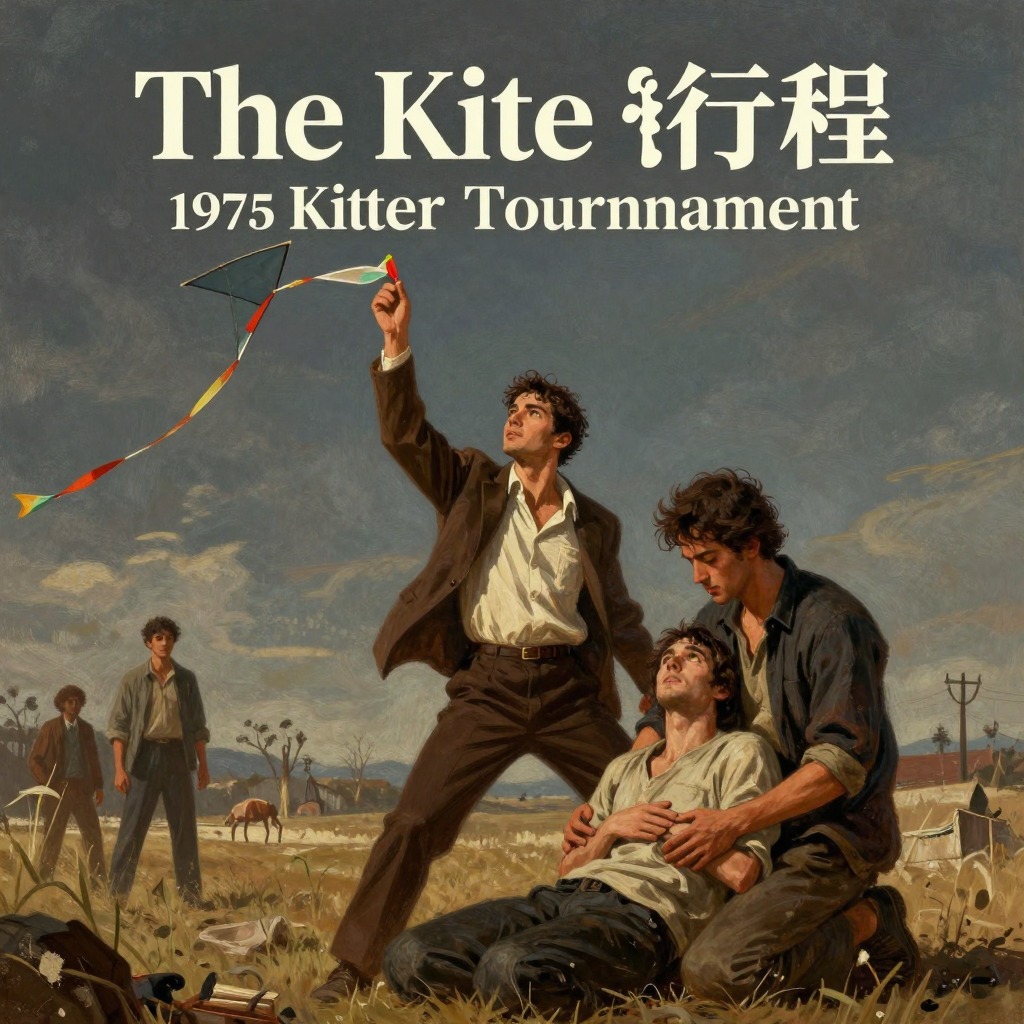
On the afternoon of the 1975 kite tournament, after Amir wins and Hassan runs the last blue kite for him, Assef corners Hassan in an alley with his friends Wali and Kamal. Assef demands the kite; Hassan refuses, saying "Amir agha won the tournament and I ran this kite for him. I ran it fairly. This is his kite." Assef mocks Hassan's loyalty, asking if Amir would do the same for him, and calls him "nothing but an ugly pet." When Hassan picks up a rock in defiance, Assef charges, and after a brief struggle, he and his friends pin Hassan down. Assef unbuttons his coat, folds it, and places it against the wall. He tells Wali and Kamal to hold Hassan down, and when they hesitate, he snaps, "It's just a Hazara." Assef then rapes Hassan while Amir watches from the corner of the alley, too afraid to intervene. The assault leaves Hassan with a dark stain on his pants and drops of blood on the snow. Assef's act is the foundational trauma of the novel, creating a wound that festers for twenty-six years.
Assef's Later Life and Transformation into a Taliban Official
Assef's family flees to Germany after the Soviet invasion, but he returns to Afghanistan and joins the Taliban. He tells Amir that he was imprisoned in Poleh-Charkhi under the communist regime, where a commandant with steel-toed boots kicked him until a kidney stone passed. Assef interprets this as a message from God: "He was on my side. He wanted me to live for a reason." He later finds that same commandant on a battlefield and shoots him in the balls. Assef becomes a high-ranking Taliban official, participating in the 1998 massacre of Hazaras in Mazar-i-Sharif, where he goes door-to-door shooting men and boys. He describes the experience as "liberating" and "breathtaking." After Rahim Khan leaves Kabul, Assef and other Talibs come to Baba's house, accuse Hassan of lying about living there, and shoot him in the back of the head. When Farzana attacks them, they shoot her too, claiming self-defense. Assef then moves into the house and takes Sohrab, Hassan's son, as a sex slave, forcing him to wear mascara and dance in a bell-trimmed costume for his entertainment.
Confrontation with Amir and Blinding
In June 2001, Amir travels to Kabul to rescue Sohrab. He meets Assef at a house on Sarak-e-Mehmana, the Street of the Guests. Assef immediately recognizes Amir despite his fake beard, saying "I never forget a face. Not ever." He taunts Amir about his father's death and boasts about his parents' comfortable life in Rockingham, Western Australia. Assef forces Sohrab to dance for Amir, then agrees to let Amir take the boy only if Amir can earn him in a fight. He puts on his brass knuckles and beats Amir savagely, breaking his ribs, puncturing his lung, splitting his upper lip, and shattering his jaw. During the beating, Amir begins to laugh, feeling at peace for the first time since 1975. As Assef raises his fist for another blow, Sohrab, who has retrieved his slingshot, shoots a brass ball from the table into Assef's left eye. Assef screams in agony, blood and vitreous fluid oozing from the socket, and Amir and Sohrab escape. Assef is left permanently blinded in one eye, fulfilling Hassan's childhood threat that they would have to call him "One-Eyed Assef."
Narrative Role and Thematic Significance
Assef functions as the novel's shadow figure, the embodiment of the ethnic hatred and violence that Amir must confront to redeem himself. He is the external manifestation of Amir's internal guilt: the rape of Hassan is the sin Amir fails to prevent, and the rescue of Sohrab from Assef's clutches is the act that allows Amir to "be good again." Assef's trajectory from a privileged, sadistic boy to a genocidal Taliban official mirrors Afghanistan's descent from a relatively peaceful society into a brutal theocracy. His final defeat at the hands of Sohrab—a Hazara child using a slingshot, the same weapon Hassan used to defend Amir years earlier—represents a poetic justice that breaks the cycle of victimization. Assef's character demonstrates how unchecked bigotry, when combined with political power, produces catastrophic violence, and how confronting that violence, even at great personal cost, is the only path to healing.