Brass Knuckles
The Kite RunnerAssef's brass knuckles are the most tangible emblem of the sociopathic violence that haunts The Kite Runner. Made of stainless steel and famously known to every child in the Wazir Akbar Khan district, the weapon is never merely a tool; it is a signature of Assef's character, a device that transforms abstract cruelty into concrete, unforgettable pain. The knuckles appear at three pivotal moments in the narrative, each time escalating the stakes of the story's central conflicts and marking a stage in Amir's long journey toward redemption.
Identity and Introduction
The brass knuckles are introduced as the defining object of Assef's reputation. The narrator describes them as "famous stainless-steel brass knuckles" that every kid in the neighborhood knows about, "hopefully not through personal experience." Assef, the son of an Afghan father and German mother, is a blond, blue-eyed boy who towers over other children and walks the streets like a "Khan strolling through his land." His word is law, and the knuckles are his "teaching tool." The narrator recalls witnessing Assef use them on a boy from the Karteh-Char district, pummeling him unconscious while grinning with eyes that glinted "with a light not entirely sane." This early description establishes the knuckles as an instrument of terror that defines Assef's power and his pleasure in inflicting harm.
The Confrontation on the Hill
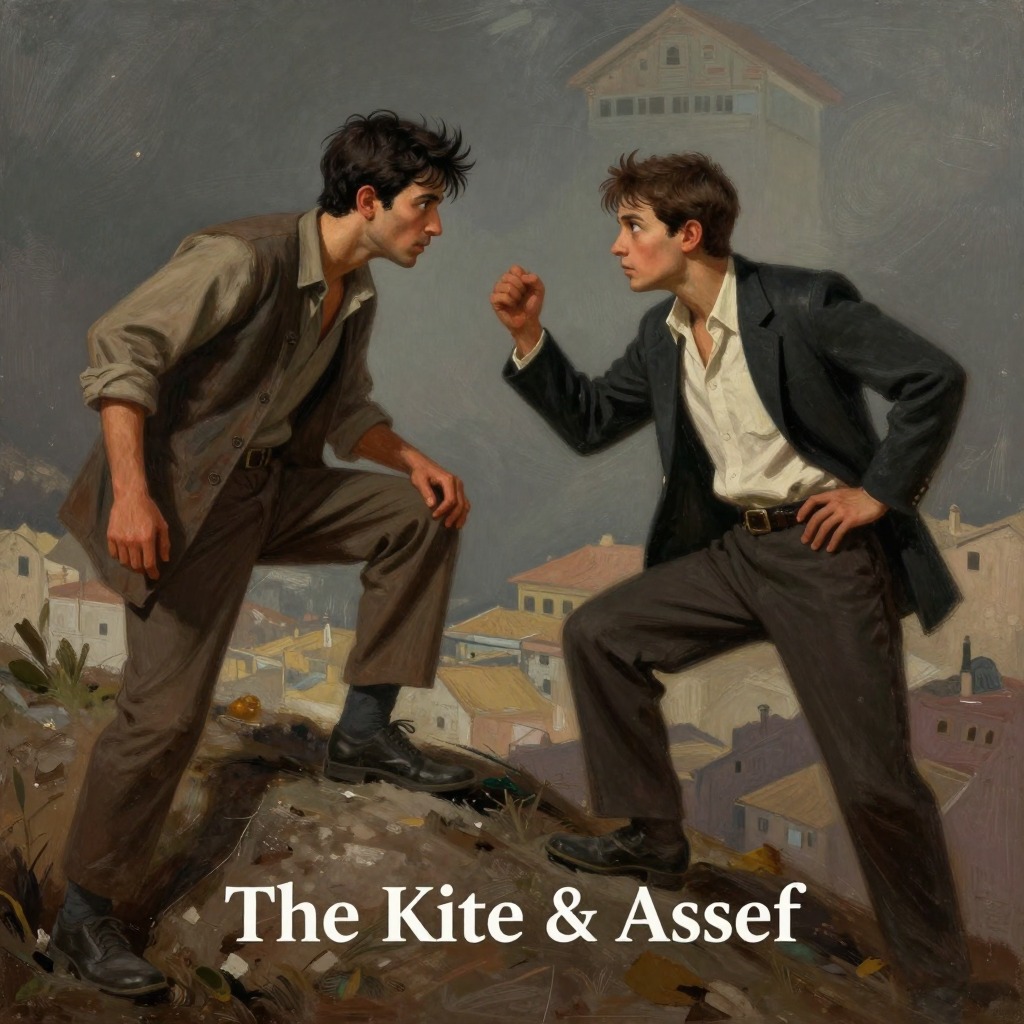
The knuckles first appear in action during the confrontation that follows the 1973 coup. Assef, accompanied by his friends Wali and Kamal, corners Amir and Hassan on a barren patch of land. When Amir refuses to back down, Assef fishes the brass knuckles from his back pocket, and they "sparkled in the sun." He slips them on and gives Amir an icy look, declaring that Amir is "part of the problem" for associating with Hazaras. The weapon is the catalyst for the scene's tension: it transforms a verbal threat into an imminent physical one. Only Hassan's intervention with a slingshot—a rock aimed at Assef's left eye—forces Assef to retreat, but not before he promises, "This doesn't end today, believe me." The knuckles thus become a promise of future violence, a threat that hangs over the rest of the story.
The Rape of Hassan
The knuckles return in the alley where Assef and his friends trap Hassan after the 1975 kite tournament. Assef is "twirling his brass knuckles" as he corners Hassan, who stands defiantly with the blue kite behind him. The weapon is a visual cue of the power imbalance: Assef is relaxed and confident, while his companions shift nervously. When Hassan refuses to surrender the kite, Assef unbuttons his coat, folds it, and places it against the wall—a ritualistic preparation that signals the violence to come. The knuckles are not used in the rape itself; instead, they serve as the threat that precedes it, the symbol of the force that will be brought to bear. Amir, watching from the mouth of the alley, sees the knuckles and is paralyzed. The weapon embodies the choice he faces: to intervene and risk being beaten, or to run. He runs, and the knuckles become a symbol of his cowardice and the price of his silence.
The Final Fight and Redemption
Twenty-six years later, the brass knuckles appear for the last time in the confrontation between Amir and Assef in Taliban-controlled Kabul. Assef, now a Talib official, reaches into his breast pocket and fishes out the same stainless-steel weapon. He turns on music before slipping them on, and the fight begins. The knuckles flash in the afternoon light, and Amir feels them cold against his skin before they warm with his blood. Assef uses them to shatter Amir's jaw, break his ribs, and split his upper lip. But the fight is not merely a beating; it is a ritual of atonement. Amir laughs as he is pummeled, feeling "at peace" for the first time since the winter of 1975. The knuckles, which once symbolized Assef's power and Amir's cowardice, now become the instrument through which Amir earns his redemption. The fight ends when Sohrab, Hassan's son, uses his slingshot to blind Assef with a brass ball from a table—a poetic reversal that echoes the earlier confrontation on the hill. The knuckles, finally, are rendered useless.
Thematic Significance
The brass knuckles are more than a weapon; they are a narrative device that marks the progression of violence and redemption in the novel. They first appear as a symbol of Assef's unchecked power and Amir's fear. They reappear in the alley as a reminder of Amir's betrayal. And they return in the final fight as the means by which Amir physically suffers for his past sins. The knuckles are also a marker of Assef's character: his sadism, his pleasure in inflicting pain, and his belief in violence as a tool of domination. By enduring the knuckles, Amir transforms them from a symbol of his cowardice into a symbol of his courage. The weapon that once defined his fear becomes the instrument of his healing.