Farzana
The Kite RunnerFarzana is the wife of Hassan and the mother of Sohrab, a gentle and devoted Hazara woman whose quiet strength and domestic care sustain the household of Baba's old home in Kabul through the chaos of civil war and the rise of the Taliban, until she is killed alongside her husband by the regime. Her presence, though often in the background, is a crucial anchor of the family life that Rahim Khan, Hassan, and Sohrab build together in the house where Amir grew up, and her death marks the final destruction of that fragile haven.
Identity and Introduction
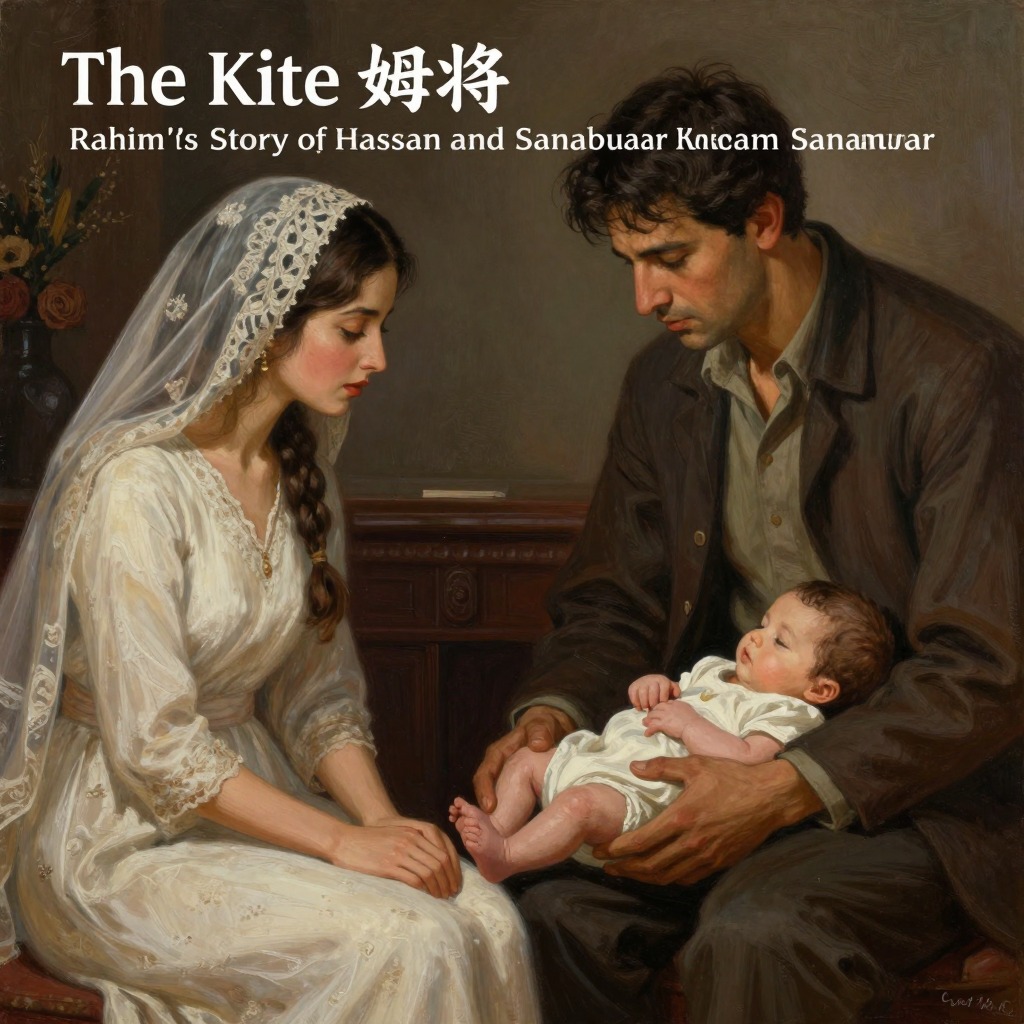
Farzana is introduced as a young, light-skinned Hazara woman, visibly pregnant, sewing a shawl in a corner of the adobe room when Rahim Khan first visits Hassan in his village near Bamiyan in 1986. She is described as shy and courteous, speaking in a voice barely higher than a whisper and refusing to raise her pretty hazel eyes to meet Rahim Khan's gaze. Her devotion to Hassan is immediately apparent: the way she looks at him, Rahim Khan notes, makes it seem as though Hassan might as well have been sitting on the throne at the Arg. She is the wife Hassan proudly presents to Rahim Khan, and she immediately sets about fulfilling the duties of hospitality, cooking shorwa with beans, turnips, and potatoes for the visitor.
Life in Baba's House
When Hassan agrees to move to Kabul to help Rahim Khan care for Baba's house, Farzana goes with him. Despite the spacious rooms available, she and Hassan insist on living in the mud hut in the backyard where Hassan was born, out of respect for Amir's eventual return. Farzana does all the cooking and cleaning alongside Hassan, and she is present when, in the fall of that first year, she gives birth to a stillborn baby girl. The loss is devastating: Farzana stays in the hut all day and wails, a sound Rahim Khan describes as heartbreaking, the wailing of a mother. Hassan kisses the baby's lifeless face, and they bury her in the backyard near the sweetbrier bushes, a little mound that Hassan covers with poplar leaves and where he places a flower every morning. Farzana becomes pregnant again in early 1990, and it is during this pregnancy that Sanaubar, Hassan's mother, arrives at the gate, disfigured and near death. Farzana, alongside Hassan, nurses Sanaubar back to health, feeding her and washing her clothes, and it is Farzana who, later that winter, gives birth to Sohrab, with Sanaubar acting as midwife.
Relationships and Domestic Role
Farzana's role is that of a steadfast caregiver. She cooks for Rahim Khan, who is ill, and worries when he barely eats the shorwa and rice she prepares. She is the one who, along with Hassan, tells little Sohrab that Rahim Khan is going to be well when he leaves for Pakistan, trying to shield the boy from the truth. Her relationship with Hassan is one of deep, unspoken partnership; they share the labor of maintaining the house and garden, and they share the grief of their stillborn daughter. She is also a witness to the family's history: when Hassan writes to Amir, he includes Farzana in his greetings, and she laughs at the stories of the mischief Amir and Hassan caused as children. Her life is entirely domestic, centered on the hut, the kitchen, and the small garden, a world she shares with her husband and son.
Death and Aftermath
Farzana's life ends violently at the hands of the Taliban. After Rahim Khan leaves for Pakistan, a rumor spreads that a Hazara family is living alone in the big house. Taliban officials come to investigate, accuse Hassan of lying, and order the family out. When Hassan protests, they take him into the street and shoot him in the back of the head. Farzana, upon seeing this, comes screaming and attacks the Taliban, who shoot her as well, claiming self-defense. Her murder, along with Hassan's, is dismissed by the authorities, and no one speaks out because they are merely Hazara servants. Her death leaves Sohrab an orphan, and it is this final act of violence that sets the stage for Amir's journey to Kabul to rescue his nephew. Farzana's quiet, devoted life is erased by the same brutality that destroys her husband, a stark illustration of the Taliban's systematic violence against the Hazara people.