Karteh-Seh
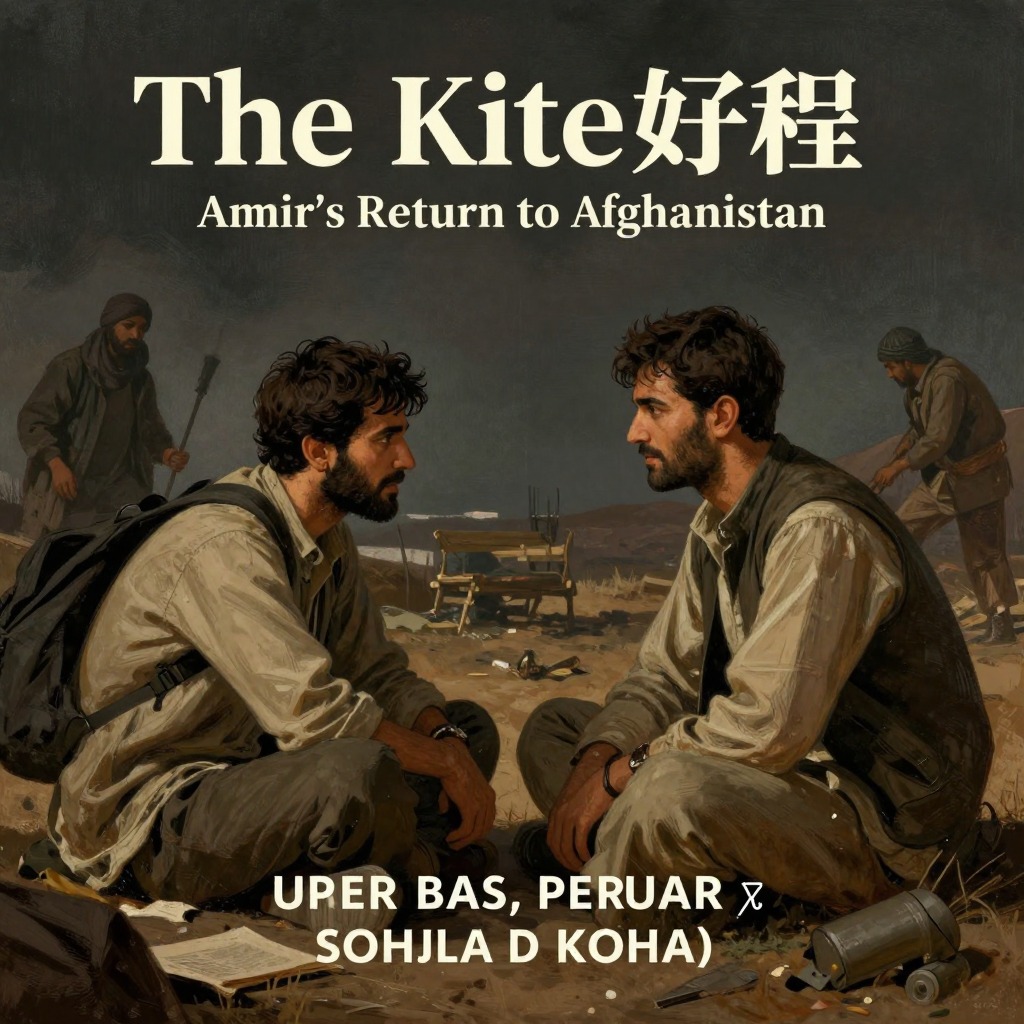
The Kite RunnerKarteh-Seh, a district in western Kabul, emerges in the novel as a landscape of almost total ruin, a place where the accumulated violence of decades has left little standing. It is here, along the banks of the dried-up Kabul River, that Amir and Farid find the orphanage housing Sohrab, and it is here that the reader witnesses the most concentrated evidence of what war has done to Afghanistan's children.
Location and War Damage
Karteh-Seh had been one of the most war-ravaged neighborhoods in all of Kabul. When Amir and Farid arrive, the evidence is overwhelming: the cratered streets are flanked by little more than ruins of shelled buildings and abandoned homes. They pass the rusted skeleton of an overturned car, a TV set with no screen half-buried in rubble, and a wall spray-painted with the words "ZENDA BAD TAL IRAN!" (Long live the Taliban!). The district's physical destruction mirrors the broader devastation Amir witnesses across the city, where entire blocks have been obliterated to rubble and a haze of dust hovers over everything. The contrast with the Wazir Akbar Khan district, where most of the Taliban and foreign fighters live and where houses still have roofs and standing walls, is stark and deliberate.
The Orphanage and Its Director
The orphanage in Karteh-Seh is a flat, barracks-style building with splintered walls and windows boarded with planks of wood. The director, Zaman, explains that the building was never meant to be lived in—it used to be a storage warehouse for a carpet manufacturer, so there is no water heater and the well has gone dry. He has asked the Taliban for money to dig a new well more times than he can remember, and they just twirl their rosaries and tell him there is no money. The conditions are desperate: there are not enough beds, not enough mattresses for the beds they do have, and worst of all, not enough blankets. Zaman shows Amir a little girl skipping rope with two other kids and tells him that this past winter, her brother died of exposure because the children had to share blankets. The orphanage has less than a month's supply of rice left, and when that runs out, the children will have to eat bread and tea for breakfast and dinner. Zaman makes no mention of lunch.
Sohrab's Fate and the Moral Compromise
It is in this orphanage that Amir finds Sohrab, but only after Zaman reveals a terrible compromise. A Talib official visits once every month or two, bringing cash—not a lot, but better than nothing at all. Usually he takes a girl, but not always. Zaman admits that this official took Sohrab a month before Amir's arrival. When Farid attacks Zaman in outrage, the director defends himself: he has not been paid in over six months, he has spent his life's savings on the orphanage, and if he denies the Talib one child, the man takes ten. "So I let him take one and leave the judging to Allah," Zaman says. "I swallow my pride and take his goddamn filthy... dirty money. Then I go to the bazaar and buy food for the children." The scene forces Amir—and the reader—to confront the impossible moral calculus that survival under the Taliban demands.
Narrative Significance
Karteh-Seh functions as the novel's most concentrated symbol of Afghanistan's destruction and the specific vulnerability of its children. It is the place where Amir learns that Sohrab has been taken by Assef, setting up the climactic confrontation. It is also where the reader sees the full scope of the orphan crisis: Zaman says the orphanage is filled beyond capacity with about two hundred and fifty children, and every day he turns away mothers who bring their children. The district's ruined landscape—the cratered streets, the rubble, the boarded windows—provides the physical correlative to the emotional devastation of Sohrab's story. When Amir later thinks of the orphanage, he remembers the rat that scurried between his feet in Zaman's office, and his chest tightens with anger at the way his countrymen are destroying their own land.