Mujahedin
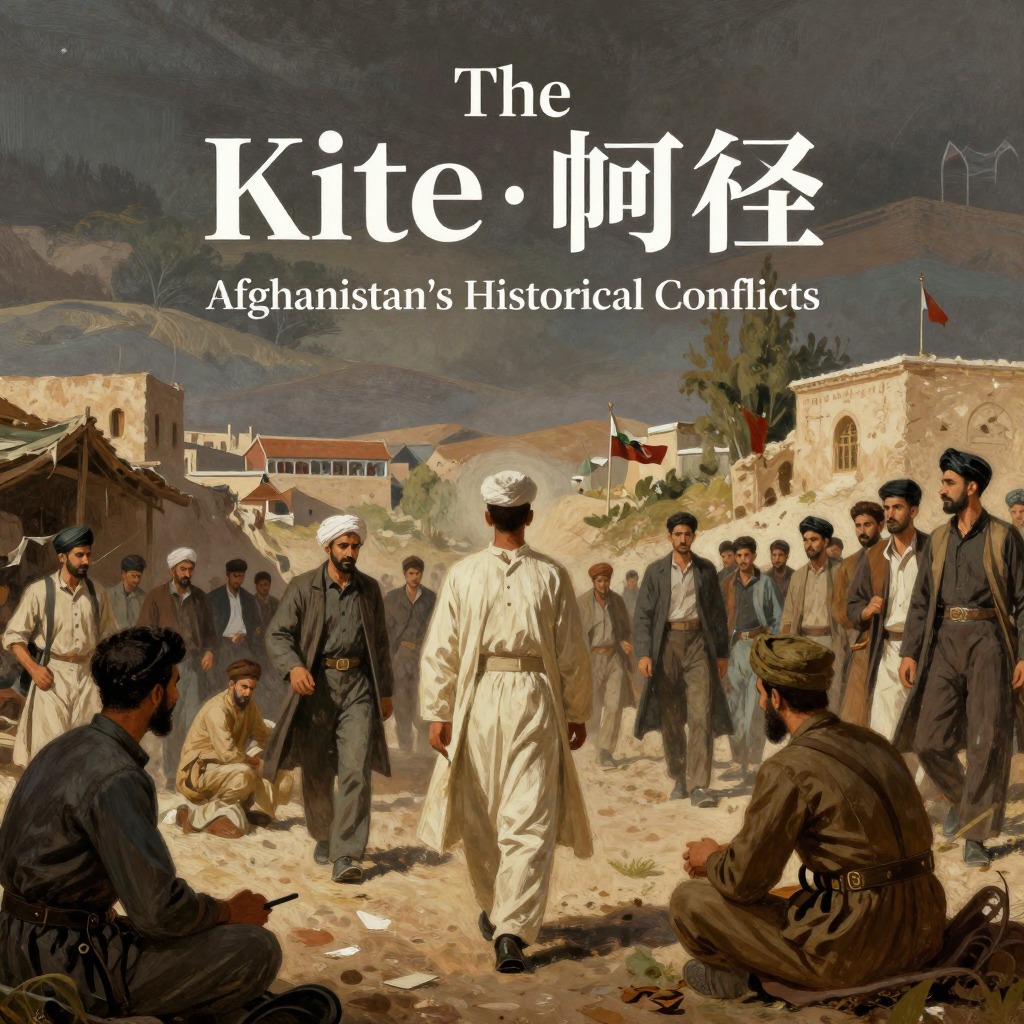
The Kite RunnerThe Mujahedin, a term meaning "those who engage in jihad," were the loose coalition of Afghan resistance groups that emerged to fight the Soviet occupation of Afghanistan after the invasion in December 1979. Their struggle, however, did not end with the Soviet withdrawal. After the fall of the communist government, the Mujahedin factions turned their weapons on one another, plunging Kabul into a brutal civil war that inflicted more damage on the city than the decade-long war against the Soviets had done. It was this internecine conflict, with its daily rocket fire, sniper attacks, and indiscriminate destruction, that created the chaos and exhaustion that allowed the Taliban to seize power in 1996, promising the peace the Mujahedin had failed to deliver.
Origins and the War Against the Soviets
The Mujahedin were not a unified army but a collection of ethnically and ideologically diverse factions, often backed by different foreign powers. Their common enemy was the Soviet Army and the communist government it propped up. The resistance drew on a deep well of Afghan independence and religious conviction. As the narrator, Amir, recalls, the British had learned earlier in the century, and the Russians would eventually learn by the late 1980s, that "Afghans are an independent people. Afghans cherish custom but abhor rules." The Mujahedin fought a guerrilla war from the mountains and valleys, using the terrain to their advantage. Farid, a Tajik who later becomes Amir's driver, fought alongside his father in the Panjsher Valley under the legendary commander Ahmad Shah Massoud, known to Tajiks as "the Lion of Panjsher." Farid was only fourteen when he joined the jihad, and his father was killed by helicopter gunfire. The war was brutal and personal, leaving deep scars on a generation of Afghan men.
The Civil War and the Destruction of Kabul
With the Soviet withdrawal completed in 1989 and the fall of the communist government of Najibullah in 1992, the Mujahedin factions entered Kabul. But instead of forming a stable government, they turned on each other. Rahim Khan, who lived through this period in Baba's old house in the Wazir Akbar Khan district, describes the horror: "If you went from the Shar-e-Nau section to Kerteh-Parwan to buy a carpet, you risked getting shot by a sniper or getting blown up by a rocket--if you got past all the checkpoints, that was. You practically needed a visa to go from one neighborhood to the other." People knocked holes in the walls of their homes to bypass the dangerous streets, moving from hole to hole. Others used underground tunnels. The Mujahedin did more damage to Kabul than the Soviets had. Rahim Khan tells Amir that the Northern Alliance, a coalition of Mujahedin groups, destroyed Baba's orphanage, a building Baba had designed and funded himself. "Collateral damage," Rahim Khan says bitterly, recalling "sifting through the rubble of that orphanage. There were body parts of children." The constant rocket fire, gunfire, and explosions made daily life a lottery of survival.
The Rise of the Taliban and the End of the Mujahedin Era
The relentless violence of the Mujahedin civil war created a desperate longing for peace among ordinary Afghans. When the Taliban rolled into Kabul in 1996, they were initially greeted as heroes. Rahim Khan admits that he himself danced in the street when the Taliban arrived, and that people celebrated at Chaman and Deh-Mazang, greeting the Taliban, climbing their tanks, and posing for pictures. "People were so tired of the constant fighting, tired of the rockets, the gunfire, the explosions," he says. The Taliban promised an end to the chaos, and for a brief moment, they delivered. But the peace came at a terrible price. The Taliban imposed a brutal, repressive regime, banning kite fighting, oppressing women, and massacring Hazaras in Mazar-i-Sharif in 1998. The Mujahedin, who had once been the symbol of resistance against a foreign invader, had squandered their legitimacy through infighting and destruction, creating the very vacuum that the Taliban filled. Their legacy is one of heroic struggle against the Soviets, followed by a tragic failure to build a nation, a failure that cost Afghanistan dearly.