Wazir Akbar Khan
The Kite RunnerWazir Akbar Khan is the affluent northern Kabul district where Amir spends his childhood, the setting of his father's grand estate, the kite-fighting tournament of 1975, and the site of both the family's privileged life and the assault on Hassan that shatters it. The neighborhood's physical decline over decades mirrors the destruction of the Afghanistan Amir knew, and his return to its ruined streets in 2001 forces him to confront the past he has tried to bury.
Identity and Setting
Wazir Akbar Khan was a new and wealthy neighborhood in northern Kabul, home to the most beautiful house in the district—a sprawling mansion of marble floors, wide windows, intricate mosaic tiles handpicked by Baba in Isfahan, gold-stitched tapestries from Calcutta, and a crystal chandelier. The house sat on a redbrick driveway lined with poplar trees, leading to wrought-iron gates that opened into an estate with a semicircular terrace, two acres of backyard, cherry trees, and a small vegetable garden along the eastern wall that Hassan and Amir called "the Wall of Ailing Corn." At the south end of the garden, in the shadow of a loquat tree, stood the servants' mud hut where Hassan was born in the winter of 1964 and lived with his father, Ali. The neighborhood was laid out in a grid of numbered streets at right angles, still developing, with empty lots and half-constructed homes between compounds surrounded by eight-foot walls. Just north of Baba's property rose a bowl-shaped hill topped by an abandoned cemetery with unmarked headstones and a pomegranate tree near the entrance where Amir carved their names: "Amir and Hassan, the Sultans of Kabul."
Life and Events in the District
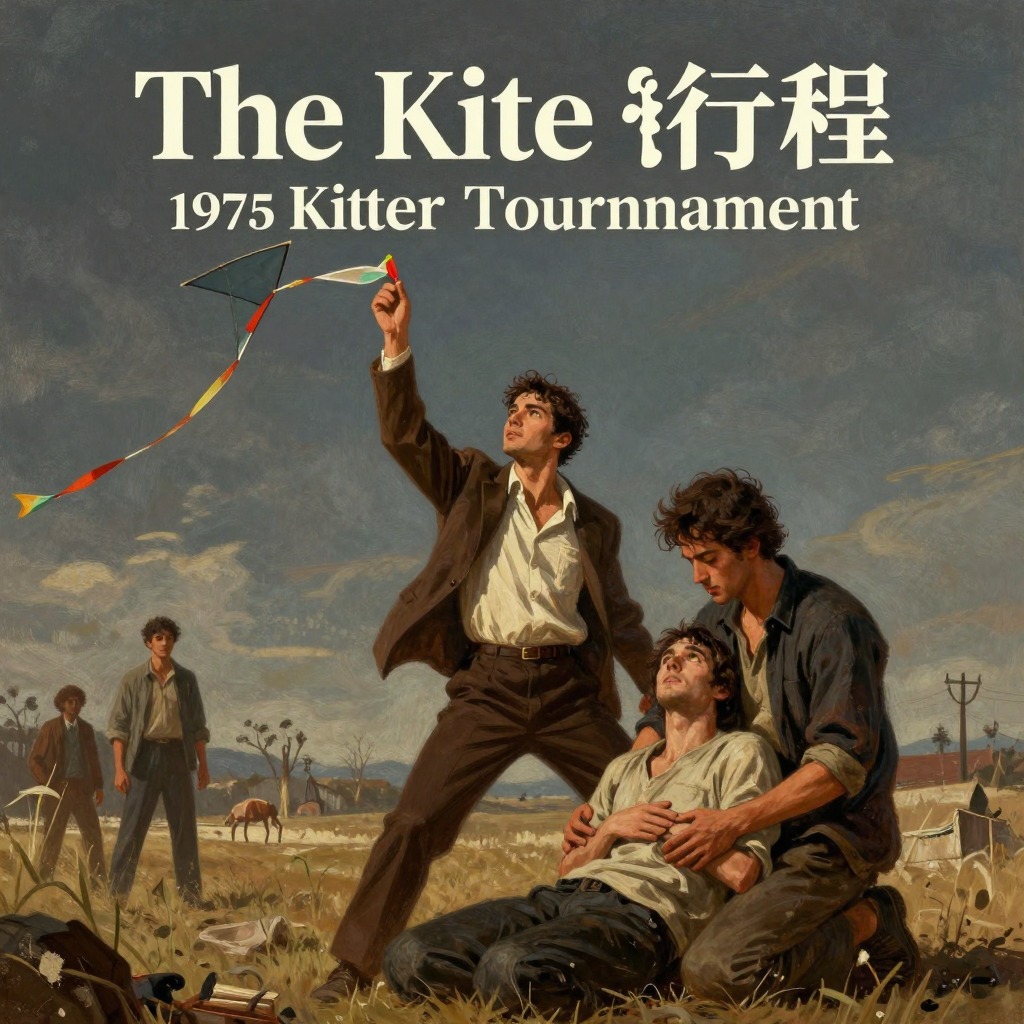
Wazir Akbar Khan was the stage for nearly all of Amir's childhood memories. He and Hassan climbed the poplar trees to reflect sunlight into neighbors' homes with a shard of mirror, fired walnuts at a one-eyed German shepherd with Hassan's slingshot, and chased the Kochi nomads who passed through on their way north. The district hosted the annual kite-fighting tournament in the winter of 1975, the biggest in twenty-five years, with several other neighborhoods invited. On the day of the tournament, rooftops were jammed with spectators, and Amir saw Baba and Rahim Khan sitting on their own roof, dressed in wool sweaters, sipping tea. After Amir won, he ran through the numbered streets of Wazir Akbar Khan searching for Hassan, who had gone to run the last kite. The alley where Assef and his friends trapped Hassan and where Amir watched the assault without intervening was in the bazaar area just beyond the district's grid. The neighborhood was also where Assef, the son of Baba's friend Mahmood, lived in a posh, high-walled compound with palm trees a few streets south of Amir's home, and where he walked the streets like a Khan with his entourage, his stainless-steel brass knuckles earning him the nickname "Assef the Ear Eater."
Decline and Transformation
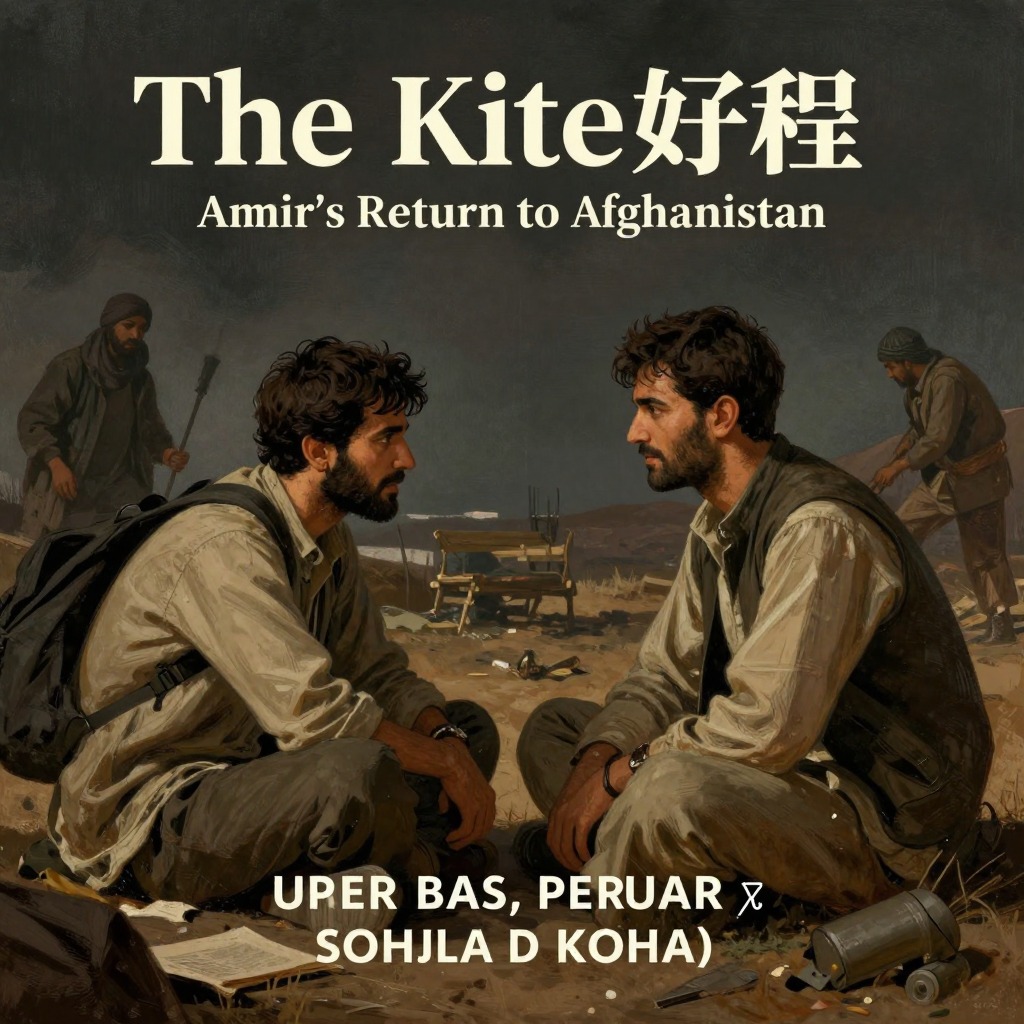
By the time Amir returned to Kabul in 2001, Wazir Akbar Khan had changed profoundly. Most of the houses still had roofs and standing walls, and trees still peeked over the walls—the district had fared better than war-ravaged areas like Karteh-Seh because "most of the important people live here now," including Taliban officials and the Arabs, Chechens, and Pakistanis who were the "real brains" of the government. The street called Sarak-e-Mehmana, or "Street of the Guests," housed these foreign fighters. Baba's house itself had fallen into ruin: the roof sagged, the plaster cracked, the windows were broken and patched with plastic or wooden boards, the paint had faded to ghostly gray, the front steps had crumbled, and the once-white mansion looked smaller than Amir remembered. The poplar trees had been mostly chopped down, the lawn turned brown with bald patches of dirt, and a stranger's jeep was parked in the driveway where Baba's black Mustang used to belong. The pomegranate tree on the hill above the district had stopped bearing fruit years before, and the carving "Amir and Hassan, the Sultans of Kabul" had dulled almost to invisibility.
Narrative Significance
Wazir Akbar Khan functions as the spatial anchor of Amir's lost childhood and the site of his deepest shame. The district's physical decay—the peeling paint, the broken windows, the weed-choked driveway—embodies the destruction of the Afghanistan he knew, a world of kite tournaments, parties, and family that was already ending the night of July 17, 1973, when Daoud Khan's coup overthrew the monarchy. When Amir returns to the house in 2001, he stands outside the rusty gates, remembering how he had watched Hassan and Ali load their belongings into Baba's car in a summer downpour, and he feels like a stranger. The neighborhood that once represented privilege and safety has become a place of Taliban occupation and the murder of Hassan and Farzana, shot in the street by the regime that then moved into Baba's house. The hill and the pomegranate tree remain as the only unchanged landmarks, and it is there that Amir sits, tracing the faded carving, before he goes to confront Assef and rescue Sohrab. The district thus spans the entire arc of the novel: the paradise of childhood, the fall into betrayal, the long exile, and the difficult return that offers a chance at redemption.