Zaman
The Kite RunnerZaman is the director of an orphanage in the Karteh-Seh district of Kabul, a man caught between the desperate needs of the children in his care and the brutal demands of the Taliban regime. He is the one who, after initial suspicion, reveals to Amir that Sohrab has been taken by a high-ranking Taliban official, setting the stage for Amir's final confrontation with Assef.
Identity and Role
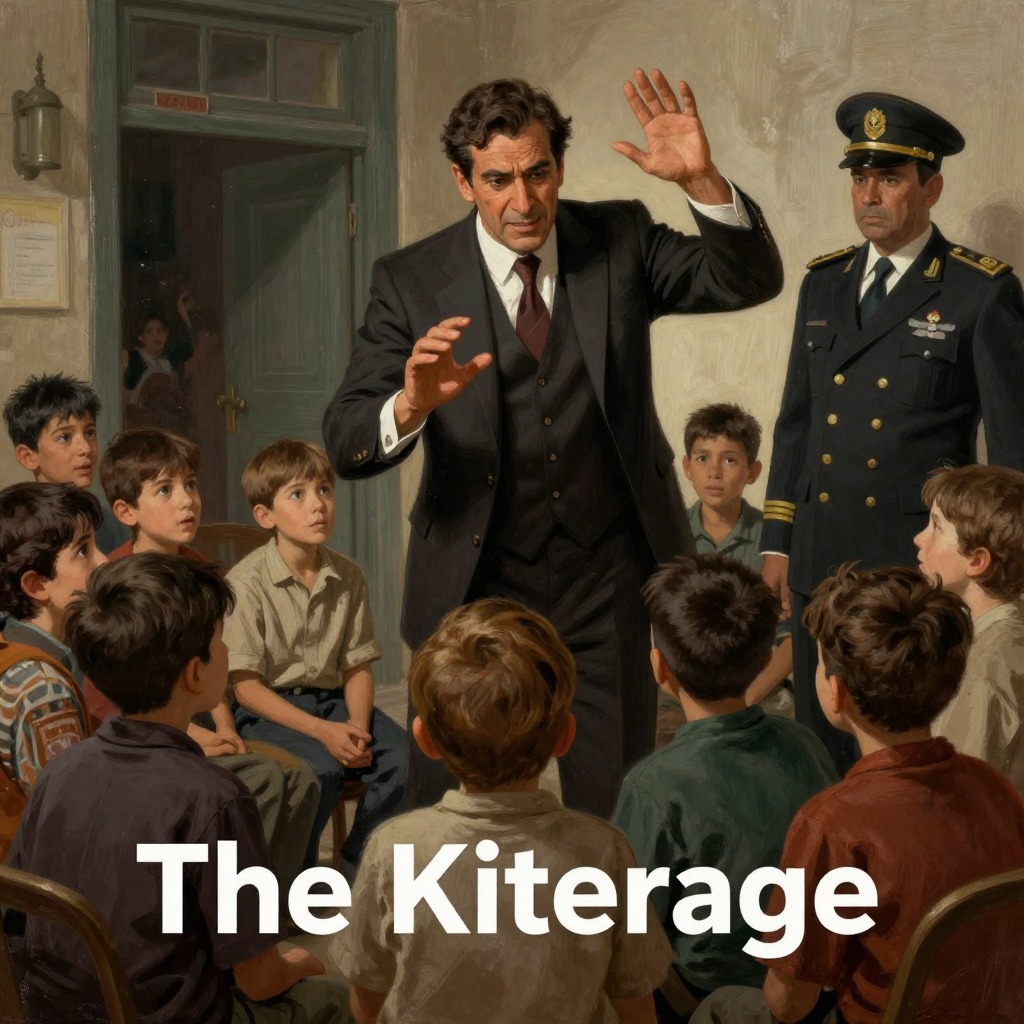
Zaman is a short, thin, balding man with a shaggy gray beard, a ragged tweed jacket, a skullcap, and a pair of eyeglasses with one chipped lens. His tiny eyes, like black peas, flit nervously from person to person. He runs a dilapidated barracks-style orphanage in Karteh-Seh, a building that was never meant to be lived in—it was once a storage warehouse for a carpet manufacturer. The facility has no water heater, a dry well, and windows boarded with planks of wood. Zaman explains that the orphanage houses more than two hundred and fifty children, though not all are true orphans; many have lost their fathers to war and their mothers, forbidden by the Taliban from working, cannot feed them. He describes the grim conditions: not enough beds, mattresses, or blankets; a little girl whose brother died of exposure the previous winter; less than a month's supply of rice left in the warehouse. When that runs out, the children will have to eat bread and tea for breakfast and dinner. Zaman makes no mention of lunch.
The Compromise with the Taliban
Zaman reveals the terrible compromise he has made to keep the orphanage functioning. A Taliban official visits once every month or two, bringing cash. Usually, the official takes a girl, but not always. When Farid, outraged, accuses Zaman of selling children, Zaman defends himself with bitter pragmatism. He has not been paid in over six months and has spent his life's savings on the orphanage, selling everything he owned to run it. He could have fled to family in Pakistan or Iran like everyone else, but he stayed. He argues that if he denies the official one child, the official takes ten. So he lets him take one and leaves the judging to Allah, swallowing his pride and taking the money to buy food for the children. When Amir asks what happens to the children the official takes, Zaman says only that sometimes they come back.
The Revelation of Sohrab
When Amir and Farid first arrive at the orphanage, Zaman is suspicious and denies knowing Sohrab, barely glancing at the Polaroid photograph Amir shows him. He tries to close the door, but Farid blocks it and speaks in a low, cautious voice, insisting they are not with the Taliban. Amir calls out through the door, revealing that he knew Sohrab's father, Hassan, and that he is Sohrab's half-uncle, come to take him to a safe place. Only then does Zaman relent and let them in. He leads them through the dim, grimy hallways to his office, a bare room with cracked walls, a mat on the floor, a table, and two folding chairs. A gray rat pokes its head from a burrow in the wall and scurries across the room. Zaman admits that the Taliban official took Sohrab a month ago. He tells Amir to go to Ghazi Stadium the next day, where he will see the official at halftime—the one wearing black sunglasses. Zaman makes Amir promise to keep his name out of it, saying he will live to regret the disclosure but that he believes Amir has the look of a desperate man. After the confrontation, Farid attacks Zaman, strangling him until Amir stops him by pointing out that the children are watching. Zaman, bloodied and with his glasses cracked, buries his face in his hands. He escorts them out, and as the truck pulls away, Amir sees Zaman standing in the doorway, surrounded by a group of children clutching the hem of his loose shirt, his broken glasses back on his face.