Carbonel Downs Elders' Council
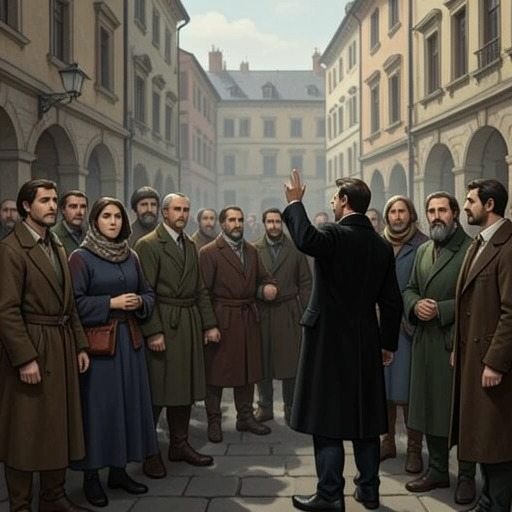
The Knife of Never Letting GoThe Carbonel Downs Elders' Council is the village's governing assembly, depicted at a moment when the threat of an approaching army turns local judgment into an urgent test of authority. Led by Doctor Snow, its eldermen hear competing accounts, confront armed suspicion, and authorize the separation of Todd and Viola from Ben. The episode shows a council that can temper accusation with deliberation, but whose decisions also put people under guard and invoke a law that Doctor Snow treats as binding.
Leadership and Role
Doctor Snow identifies himself as head of the council of eldermen when Duncan challenges his account of Ben's condition. The title gives his medical judgment an institutional dimension: he is not only a witness saying that Ben was sick and unconscious, but also the council's presiding authority, able to demand that his standing be recognized during a dispute. His leadership is visible in the way he addresses the other men, explains his assessment, and issues instructions once the argument turns to the village's immediate danger.
The council is first presented to Todd as a body that wants to speak with him before he leaves the village. Doctor Snow says the eldermen would like to talk about anything that might help. This early invitation suggests an interest in what Todd knows, although the scene does not specify what information the council seeks or what it intends to do with it. The later confrontation sharply changes the tone: the eldermen are no longer merely prospective listeners but participants in a security decision involving the newcomers and Ben.
Suspicion and the Approaching Army
The council's authority becomes visible as Doctor Snow crosses the bridge with Jacob Snow and a group of men. Todd sees that some carry rifles. Their arrival follows a conversation among Todd, Viola, and Ben, and their attention to the three makes the encounter immediately precarious. The armed men assess what they see while their Noise changes; the scene presents suspicion forming in real time, before the council has settled what the evidence means.
Duncan voices the fear that the villagers are exposed and asks whether the newcomers have revealed the village's preparations to the army. He raises his rifle toward Ben and threatens to end the perceived danger. The approaching force is therefore more than background: it shapes the council's interpretation of Ben and the young pair, and gives the armed faction's suspicion an immediate practical stake. Todd insists that he and Ben are not spies and that they are fleeing the army too. The council hears that denial in the midst of a dispute where one armed man has already moved from suspicion to threatened violence.
Deliberation, Law, and Orders
Doctor Snow answers Duncan directly, asking whether he is being called a liar and invoking his position as head of the council. The exchange sets personal testimony against an accusation of conspiracy, but also makes the council's internal hierarchy explicit. Duncan does not back down; he continues to describe the village as vulnerable and keeps his weapon trained on Ben. Authority here is contested rather than effortless: Doctor Snow can assert his office, but the threat persists until the council's decision takes shape.
Doctor Snow distinguishes the accusations from the larger danger. He says that Viola's wrongdoing was a lie that saved her friend's life, then turns the discussion back to the army, which may know how the village is preparing to meet it. This judgment does not establish that the council trusts the newcomers or dismisses every concern. Instead, it separates the immediate question of their alleged spying from the approaching military threat, while acknowledging the particular circumstances of Viola's deception.
The eventual order divides Todd and Viola: she is to go with the women, while he is considered well enough to fight alongside the men. Doctor Snow then tells Ben that, although he believes Ben is simply a man searching for his son, the law still applies. When asked whether this is his final ruling, he makes it conditional on the eldermen's agreement. The other men nod, though reluctantly, and the decision becomes collective rather than merely a personal command from the doctor. The scene does not explain the law's full terms; it establishes only that the council invokes it against Ben despite Doctor Snow's belief in his account.
Enforcement and Significance
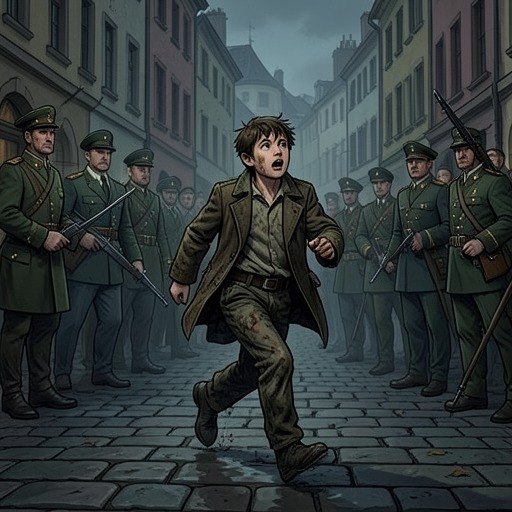
After the ruling, Doctor Snow apologizes to Todd, but the apology does not prevent its enforcement. One man steps forward and grabs Todd's arm; another takes hold of Viola as she resists. The council's deliberation thus ends not in voluntary cooperation but in physical separation and custody. Its stated concern about the army and its belief that Ben is not a spy coexist with a decision that still places the newcomers under control.
The council's portrayal rests on this tension between judgment and coercion. Doctor Snow listens, rebukes an armed accusation, recognizes the life-saving circumstance behind Viola's lie, and seeks the eldermen's assent before calling his ruling final. Yet the assembly's response is also shaped by rifles, fear of military exposure, gendered assignments, and a law applied even to a man its leader believes is searching for his son. The episode presents local governance not as a settled refuge from violence, but as a process trying to manage danger while making decisions that immediately constrain the people before it.