Prentisstown Exile Law
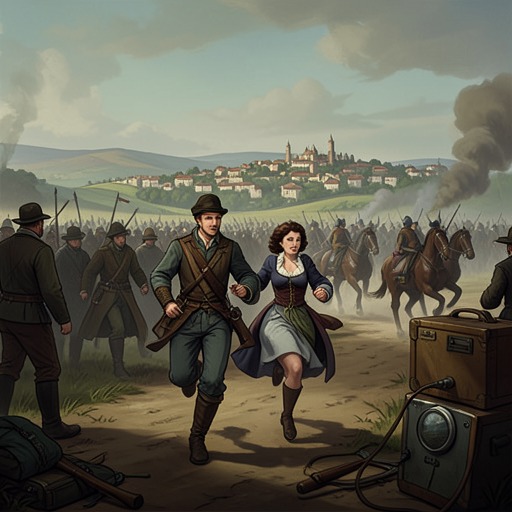
The Knife of Never Letting GoThe Prentisstown Exile Law made the swamp a boundary that the men of Prentisstown could not cross without risking execution. Presented by Ben as the settlement’s imposed fate after news spread of what Prentisstown had done, the law turned the town into a place of exile: its residents were declared criminals, forbidden to leave, and left beyond the protection or intervention of the wider New World.
Origins and Terms
Ben recounts that the declaration followed the spread of news about Prentisstown’s actions, carried outward by the few who had escaped. All men from the town were branded criminals, and the community was told it could not leave. The prohibition was specific and severe: any man from Prentisstown who crossed the swamp would be executed.
The Mayor reinforced the law with a personal threat. Prentisstown would remain a town in exile, expected to die slowly; if its men ever left, he would hunt them down and kill them himself. The stated rule and the Mayor’s promise made confinement both a public penalty and a continuing threat of violence.
Isolation and Enforcement
The swamp separated Prentisstown from the rest of the New World, helping make the boundary enforceable while also keeping the town at a distance from outside attention. When Viola asks why no one came to retrieve or pursue the men, Ben points to the prospect of another war with heavily armed men or the creation of a vast prison. In his account, the wider community chose not to intervene and instead left Prentisstown to its imposed isolation.
The law’s reach is also conveyed through its effect on escape. Asked whether people tried to get away, Ben says that they did, and that disappearances were not uncommon. His account does not specify what happened to each person who vanished, but it establishes that the prohibition did not end the desire to leave; it made departure dangerous and drove attempted escape out of public view.
Significance
The law converts the town’s separation from the New World into an explicit system of punishment: its men are excluded from the wider community yet remain subject to the threat of execution if they cross the boundary. The swamp is therefore more than a geographic obstacle. It marks the limit imposed on movement, while the Mayor’s promise to hunt down anyone who leaves extends his authority beyond the town itself.
Ben’s recollection also complicates the idea that the town was simply abandoned. The outside world knew enough to declare its men criminals and impose a consequence, but chose distance rather than intervention. Within that isolation, the repeated attempts to disappear show the human cost of a rule that made leaving both a possibility people pursued and a perilous act.